654 indexed papers · 430 research notes

Research archive

Reset

2026-11-10 · 2611.12861v1

Little Red Dots from Primordial Black Holes: Non-Gaussianity and Accretion Evade $μ$-Distortion Constraints

Shyam Balaji, Bryce Cyr, Sarah R. Geller, et al.

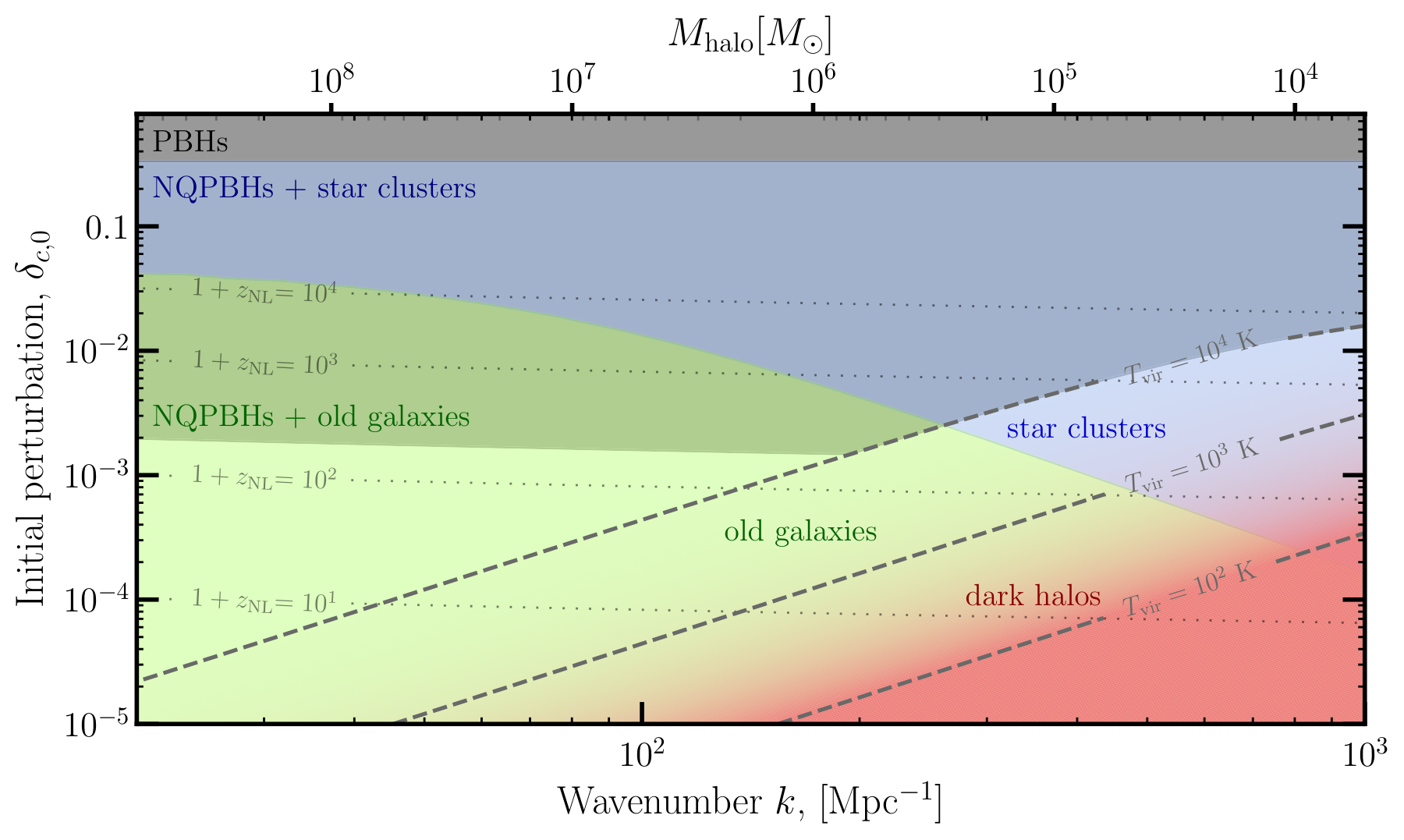
This paper asks whether primordial black holes can provide the massive seeds needed for the JWST little red dot population without violating COBE/FIRAS limits on CMB μ-distortions. Using MCMC fits for broad lognormal and cut-power-law primordial power-spectrum enhancements, including local non-Gaussianity, nonlinear density mapping, and post-formation accretion, the authors find viable LRD-seeding models with |fNL| of order unity and peak power A of order 10^-3 under standard Eddington-limited growth. Both positive and negative fNL branches can reproduce the inferred LRD abundance, but the negative branch is accretion-history dependent and disappears for low black-hole duty cycles (fduty ≲ 0.1). The result reopens a primordial-seed route to early SMBHs and makes future μ-distortion experiments a direct test of that scenario.
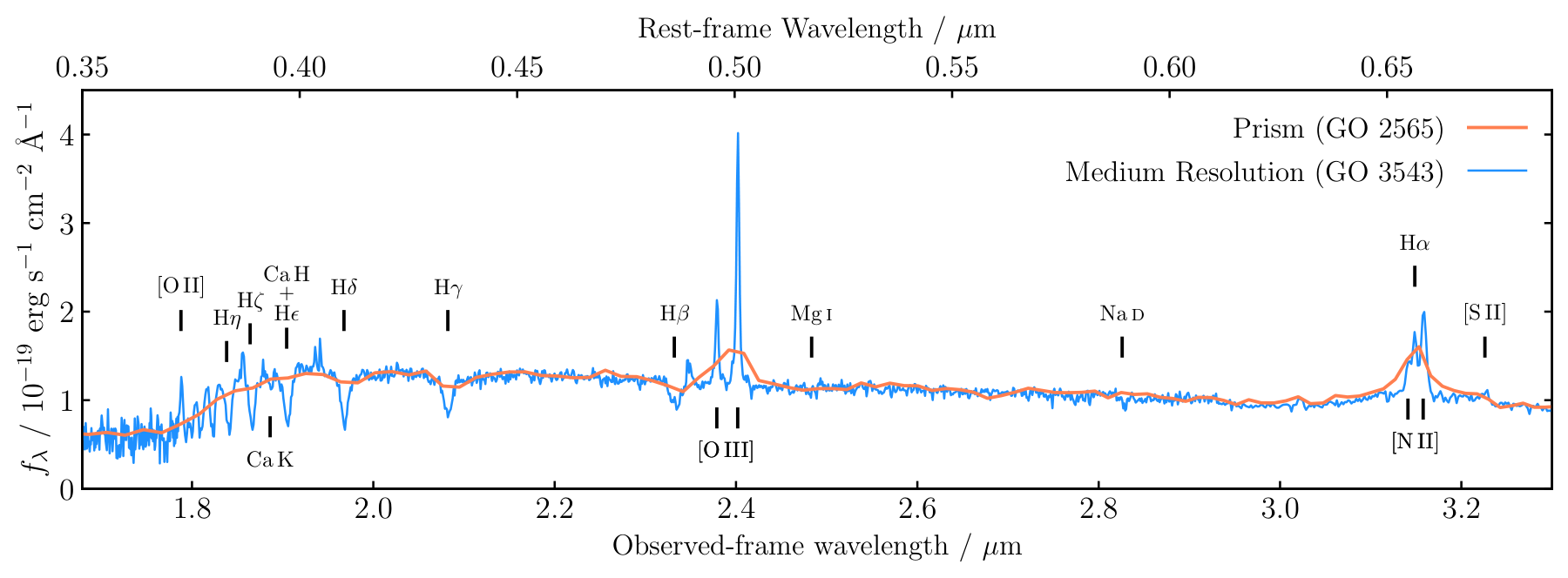
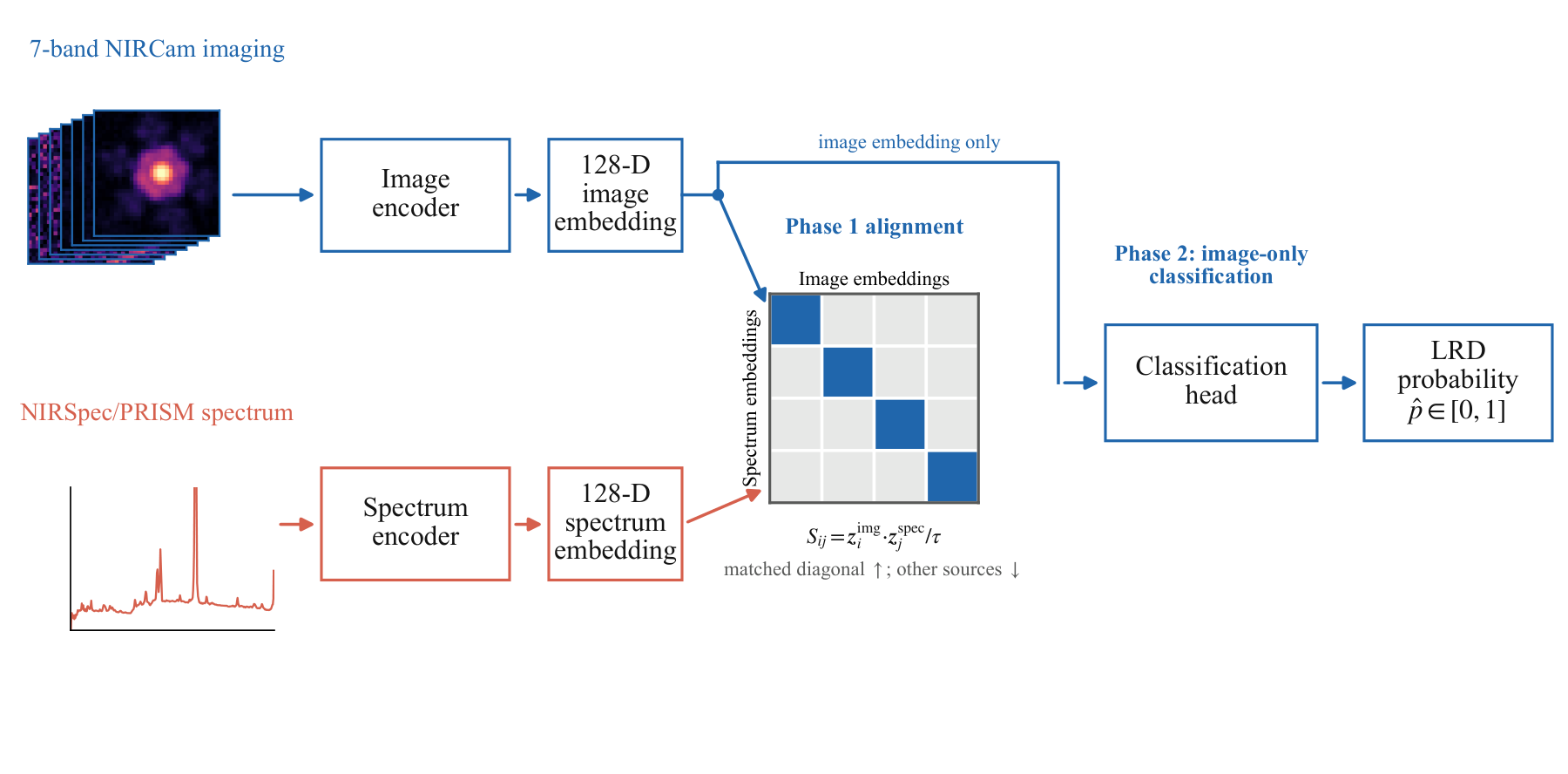
Figure 1 from On the importance of medium-resolution continuum spectroscopy for JWST's extragalactic legacy

2026-11-06 · 2611.07070v1 · Research note

On the importance of medium-resolution continuum spectroscopy for JWST's extragalactic legacy

Adam C. Carnall, Ho-Hin Leung, Struan D. Stevenson, et al.

This planning paper argues that deep JWST/NIRSpec medium-resolution continuum spectroscopy can turn high-redshift galaxy surveys from emission-line detections into measurements of stellar populations, neutral gas, and kinematics; its empirical EXCELS-based exposure scaling motivates a 1,000-hour survey concept.

2026-11-06 · 2611.07006v1 · Research note

Black Hole Seeds and Little Red Dots: Connecting Formation and Growth with a JWST Multi-Cycle Treasury Program

Fabio Pacucci, Raffaella Schneider, Harley Katz, et al.

This white paper proposes a coordinated, multi-cycle JWST program to determine whether Little Red Dots trace accreting black holes and to separate black-hole seeding signatures from later growth through uniform spectroscopy, imaging, and time-domain data.

Figure 1 from Spectroscopy-informed Deep Learning Searches for Photometric Little Red Dots in JWST Surveys

2026-11-05 · 2611.06026v1 · Research note

Spectroscopy-informed Deep Learning Searches for Photometric Little Red Dots in JWST Surveys

Chenxuan Zhang, Huanian Zhang, Qingwen Wu

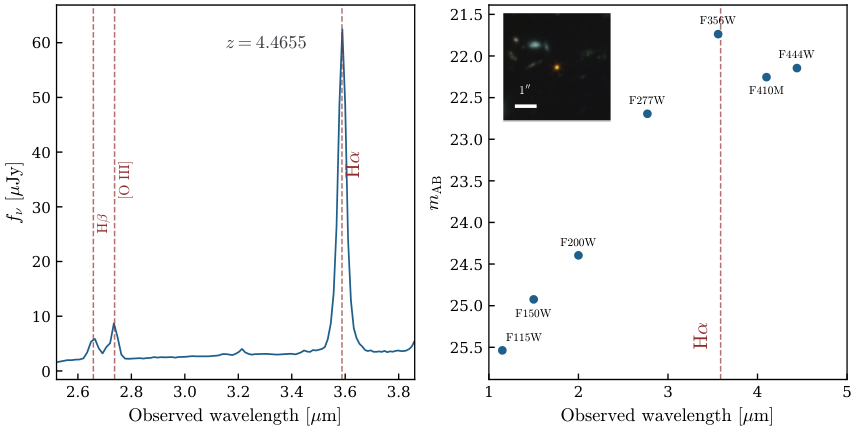
A two-stage, spectroscopy-informed NIRCam classifier finds LRD candidates beyond standard color selections. Held-out recall/precision are 0.92/0.79, while broad Hα in 10 of 13 grating-observed candidates supports—without confirming—the LRD interpretation of many new selections.

Figure 1 from The STARfall pathway: forging intermediate-mass black holes through stellar collisions in dense star clusters

2026-11-04 · 2611.03812v1 · Research note

The STARfall pathway: forging intermediate-mass black holes through stellar collisions in dense star clusters

Filippo Simonato, Manuel Arca Sedda, Taeho Ryu, et al.

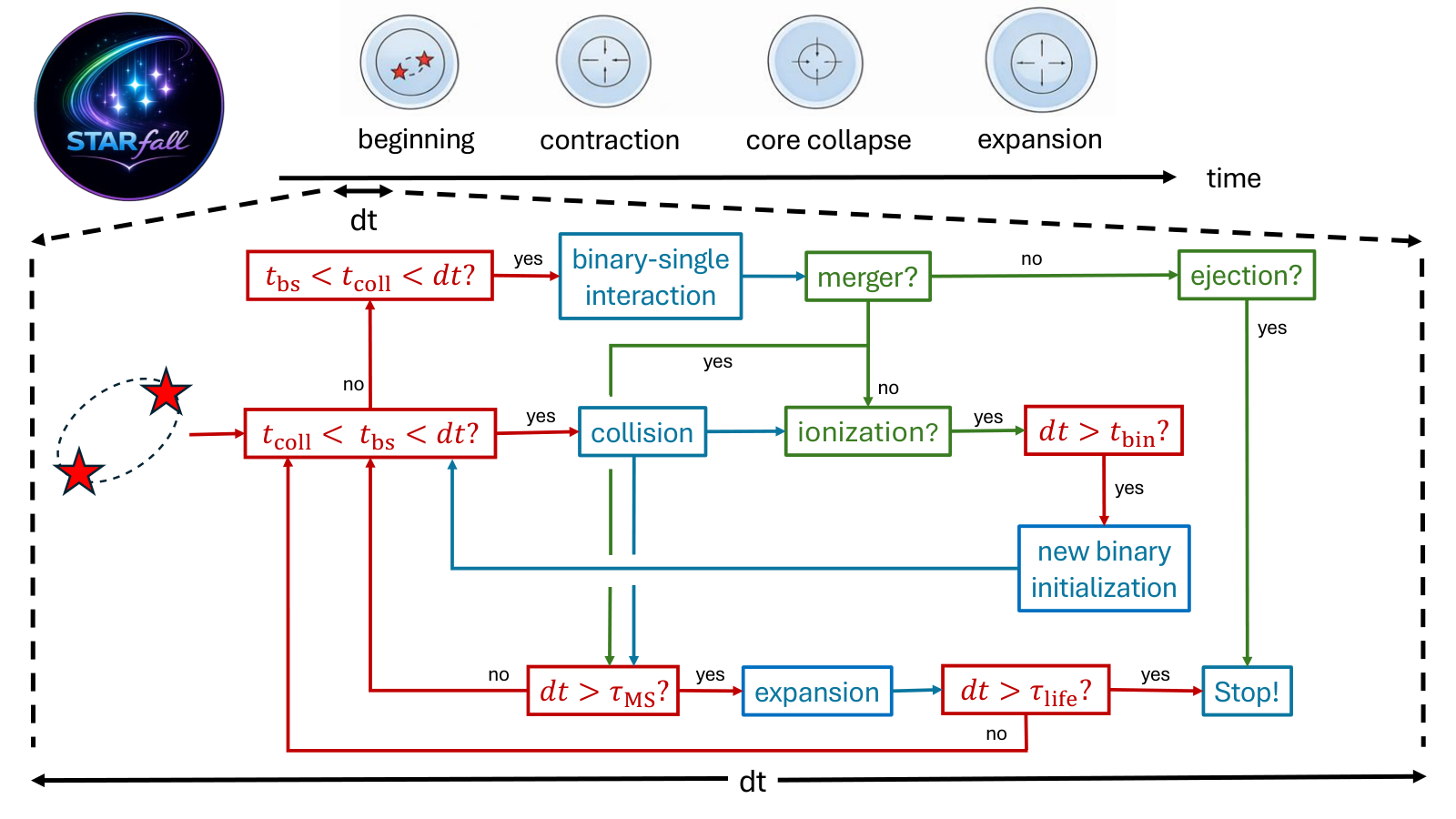
STARfall semi-analytically models collision-driven very massive stars in dense clusters, predicting 10^3–10^4 M⊙ IMBH seeds under favorable density and timescale conditions. Its Little Red Dot implication is conditional on unresolved systems being sufficiently compact stellar clusters.

Figure 1 from Ly$α$ in Compact Broad-Line Emitters, Including Little Red Dots, Is More Closely Linked to the Host Galaxy than to the Broad-Line Nucleus

2026-11-04 · 2611.03801v1 · Research note

Ly$α$ in Compact Broad-Line Emitters, Including Little Red Dots, Is More Closely Linked to the Host Galaxy than to the Broad-Line Nucleus

Yongda Zhu, Zheng Ma, Xiaojing Lin, et al.

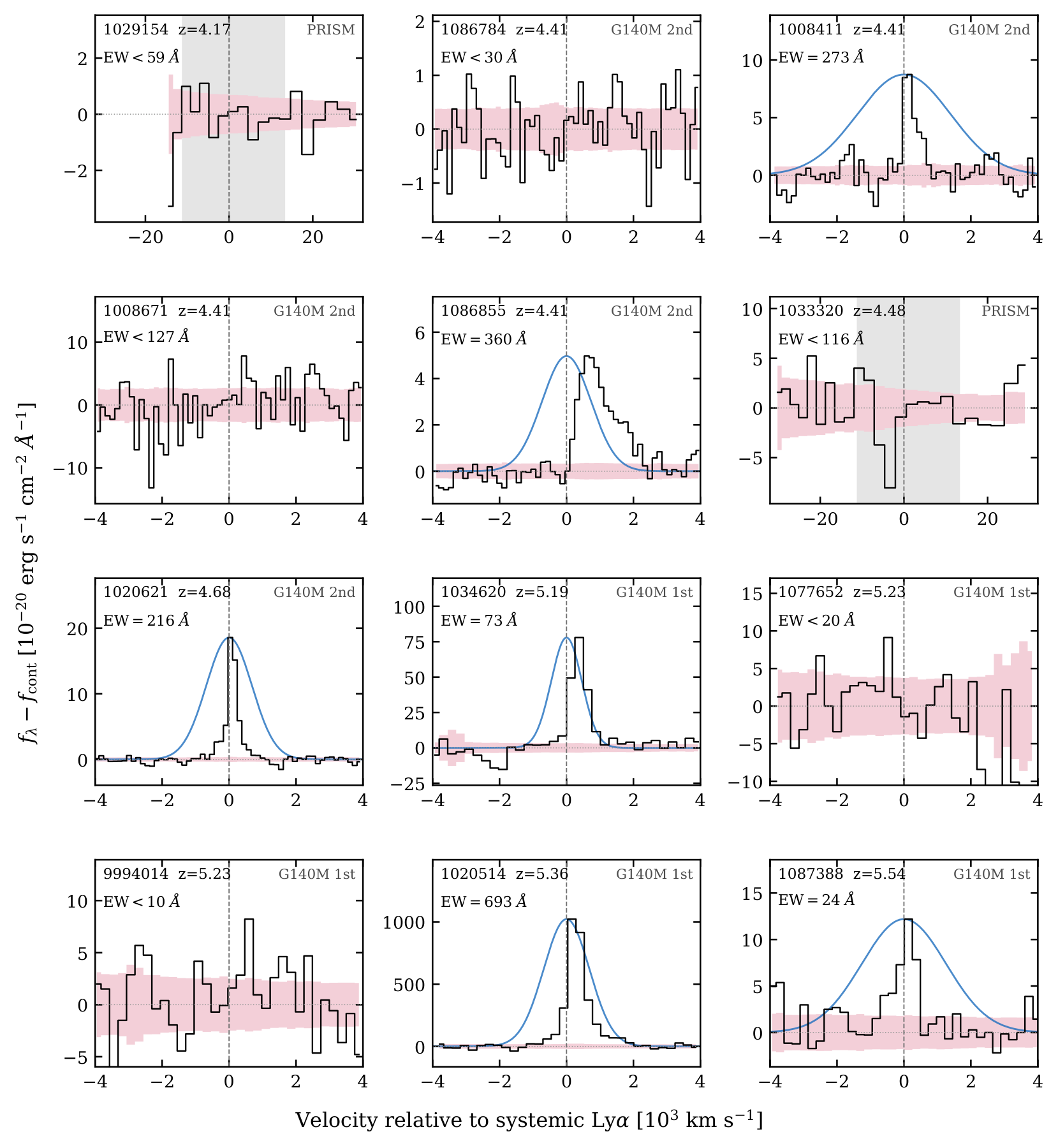
In 12 z=4.17–5.54 compact broad-line emitters, Lyα is detected in six and is systematically narrower than broad Hα. Host-SED predictions correlate more closely with observed Lyα than nuclear Hα/UV, although excess Lyα permits nuclear emission.

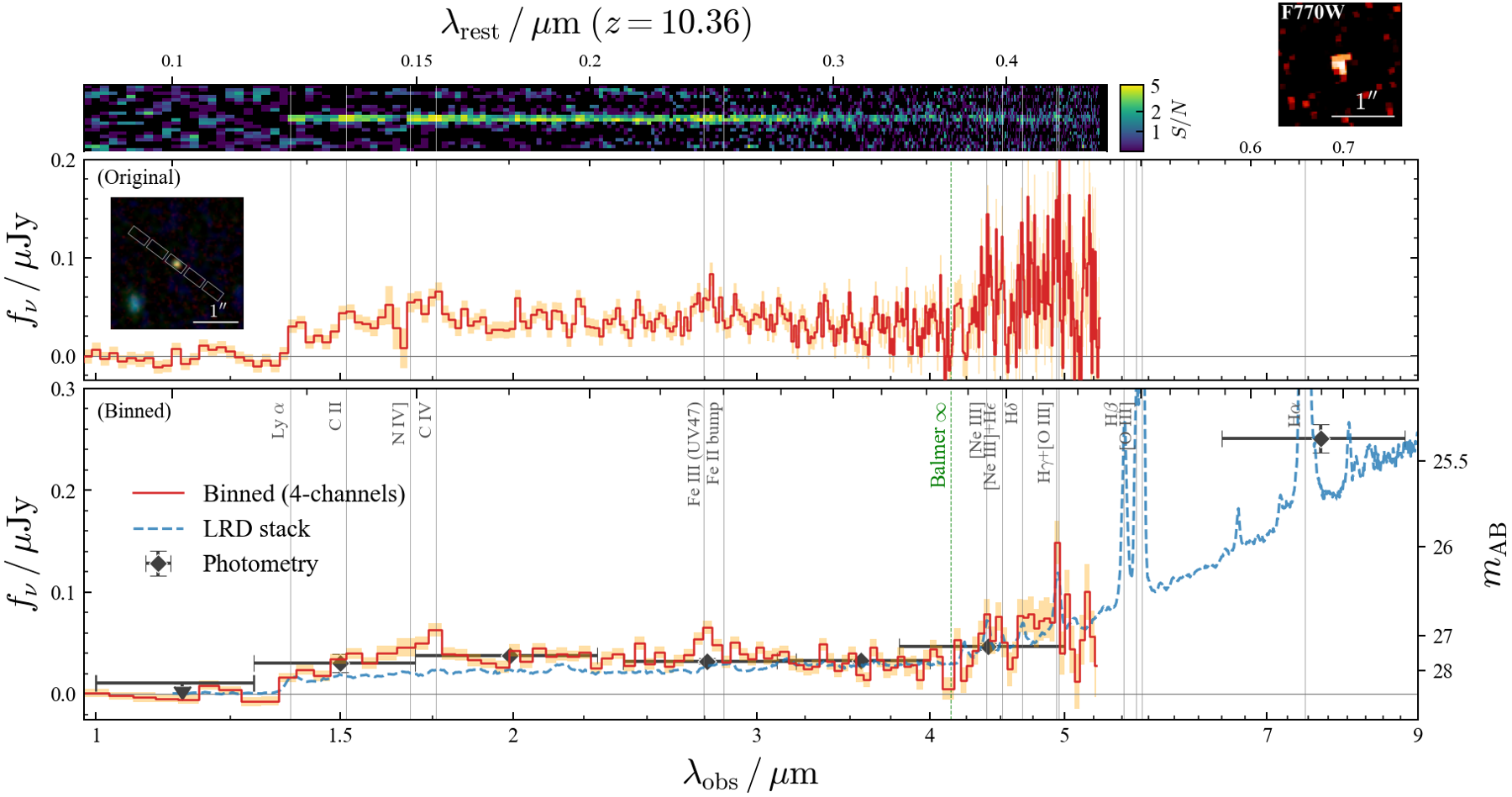
Figure 1 from EMBER: A Little Red Dot Candidate at $z_{\rm spec}=10.36$ in the Seed Black Hole Era

2026-11-03 · 2611.00195v1 · Research note

EMBER: A Little Red Dot Candidate at $z_{\rm spec}=10.36$ in the Seed Black Hole Era

Takumi S. Tanaka, Hollis B. Akins, John D. Silverman, et al.

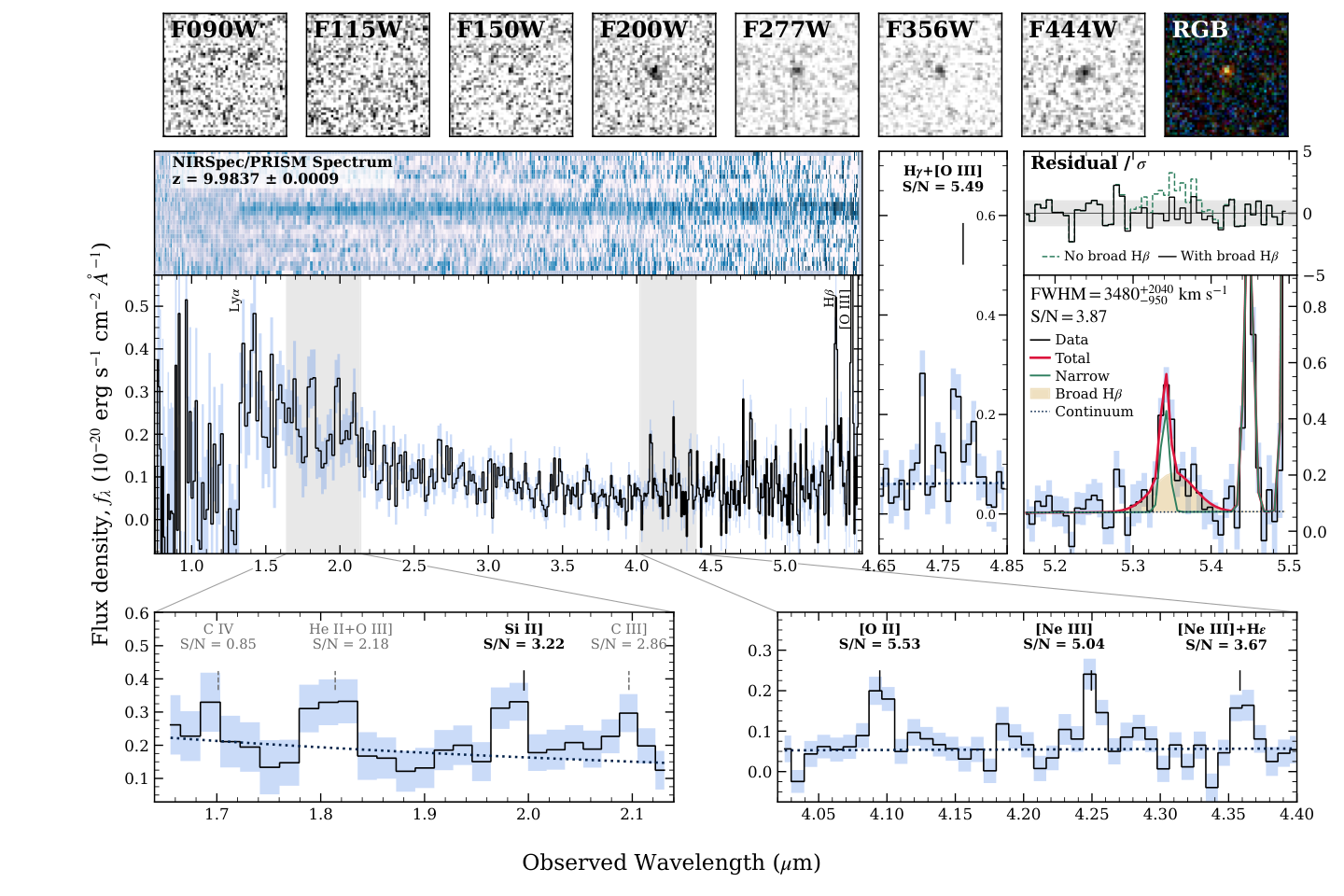
JWST/NIRSpec finds CW-LRD-z10 at zspec=10.361, with a Balmer-limit V-shaped continuum and tentative high-ionization/auroral lines. It is a strong z>10 LRD candidate, but present spectroscopy does not unambiguously establish either broad-line or AGN status.

2026-10-28 · 2610.37564v1 · Research note

Little Red Dots with Broad H$β$ Lines Reveal the Black Hole Mass Function at 7<z<9.5

Anthony J. Taylor, Steven L. Finkelstein, Hollis B. Akins, et al.

A systematic JWST/NIRSpec PRISM search finds 20 broad-Hβ emitters at 7<z<9.5, all photometrically/morphologically consistent with LRDs. Completeness-corrected mass-function evolution and inferred BH accretion density are conditional on broad Hβ being a virial black-hole-mass tracer.

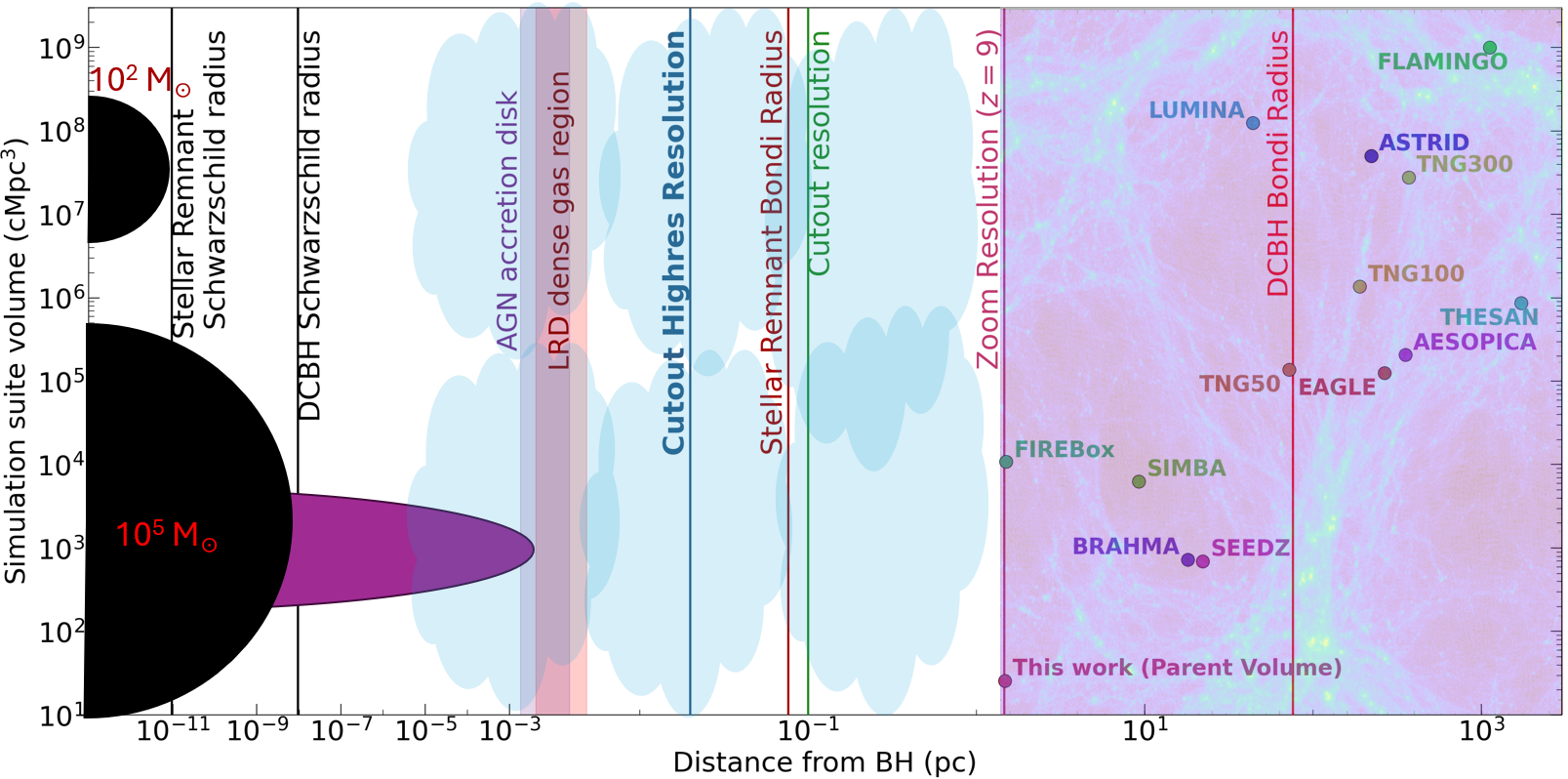
Figure 1 from Heavy Seeds and the Multi-scale Fueling of Early Supermassive Black Holes and Little Red Dots

2026-10-28 · 2610.36089v1 · Research note

Heavy Seeds and the Multi-scale Fueling of Early Supermassive Black Holes and Little Red Dots

Junehyoung Jeon, Volker Bromm, Boyuan Liu, et al.

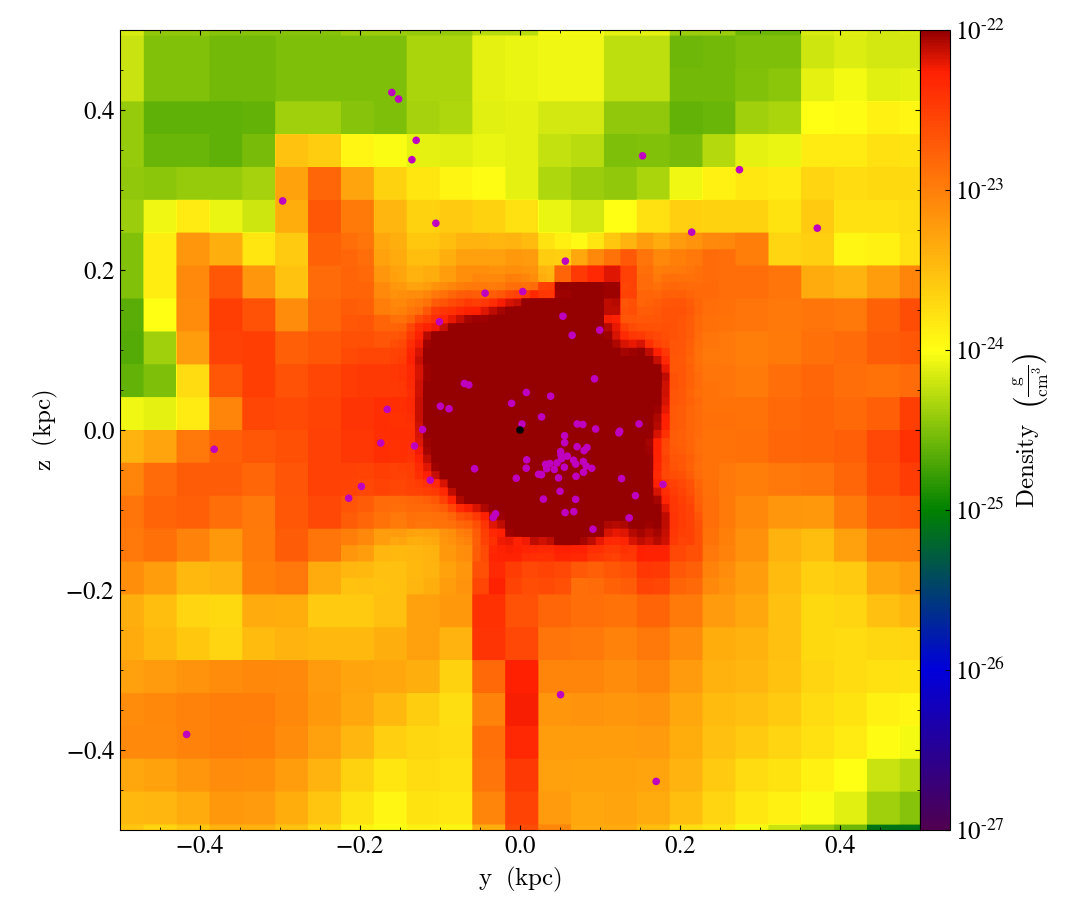
Nested sub-pc cutouts suggest that a direct-collapse heavy seed, unlike a stellar-remnant seed in these simulations, can assemble dense nearby gas, undergo bursty super-Eddington accretion, and yield a Balmer-break LRD-like spectrum. This is a model-dependent result, not a demographic measurement.

Figure 2 from Local Analogs of Little Red Dots: Clues to the X-ray Weakness

2026-10-26 · 2610.32430v1 · Research note

Local Analogs of Little Red Dots: Clues to the X-ray Weakness

Shi-Jiang Chen, Jun-Xian Wang, Zhen-Ya Zheng, et al.

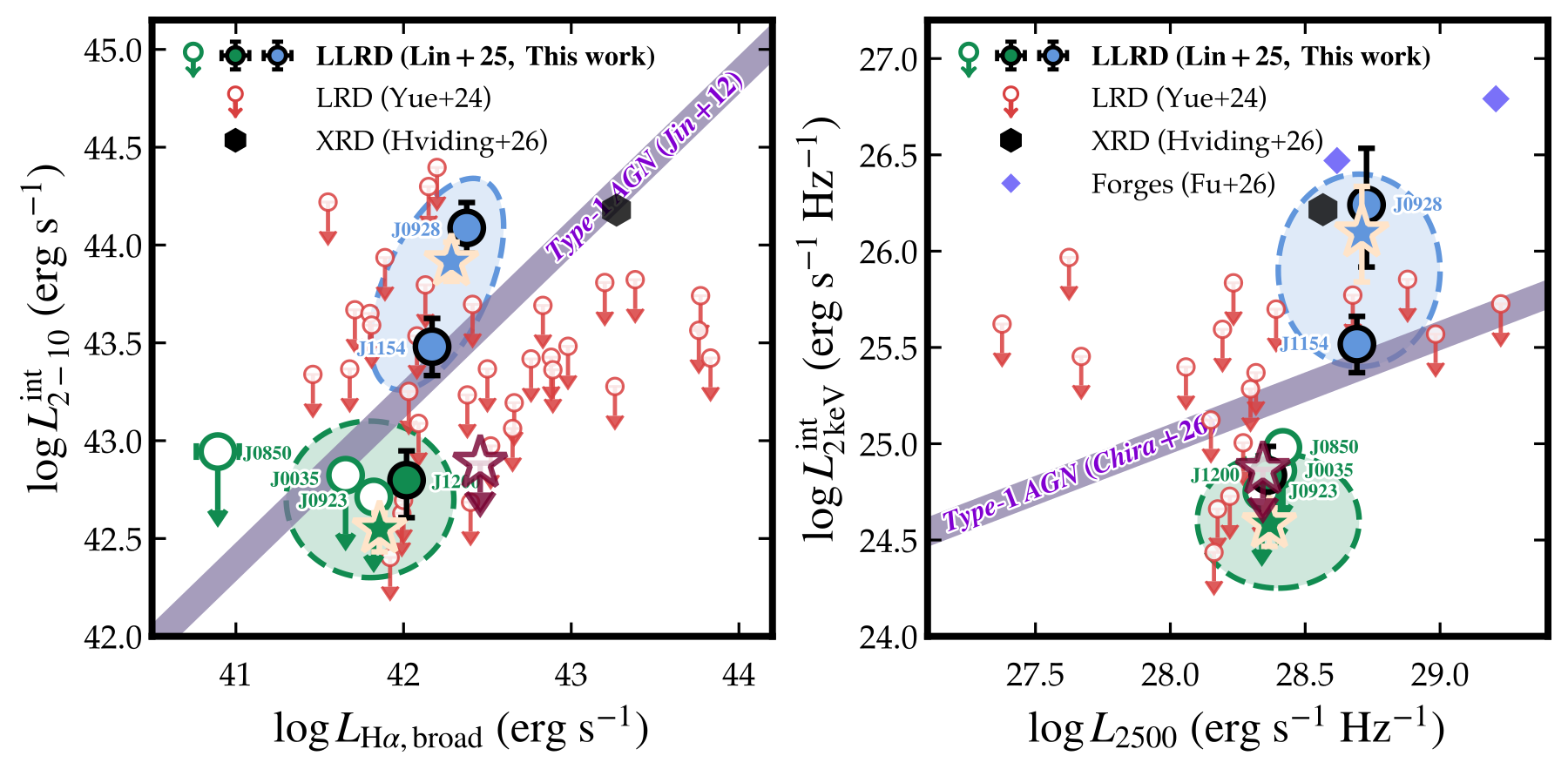
Einstein Probe observations of six z≈0.3 local LRD analogs find an X-weak subgroup whose stacked soft-X-ray constraints favor modest intrinsic coronal weakness plus Compton-thin absorption, rather than the specific unobscured super-Eddington or local Compton-thick geometries tested.

Figure 3 from A Little Red Dot emerging from a nitrogen-rich UV-luminous galaxy with Very Massive Stars

2026-10-22 · 2610.29887v1 · Research note

A Little Red Dot emerging from a nitrogen-rich UV-luminous galaxy with Very Massive Stars

Alberto Torralba, Jorryt Matthee, Rui Marques-Chaves, et al.

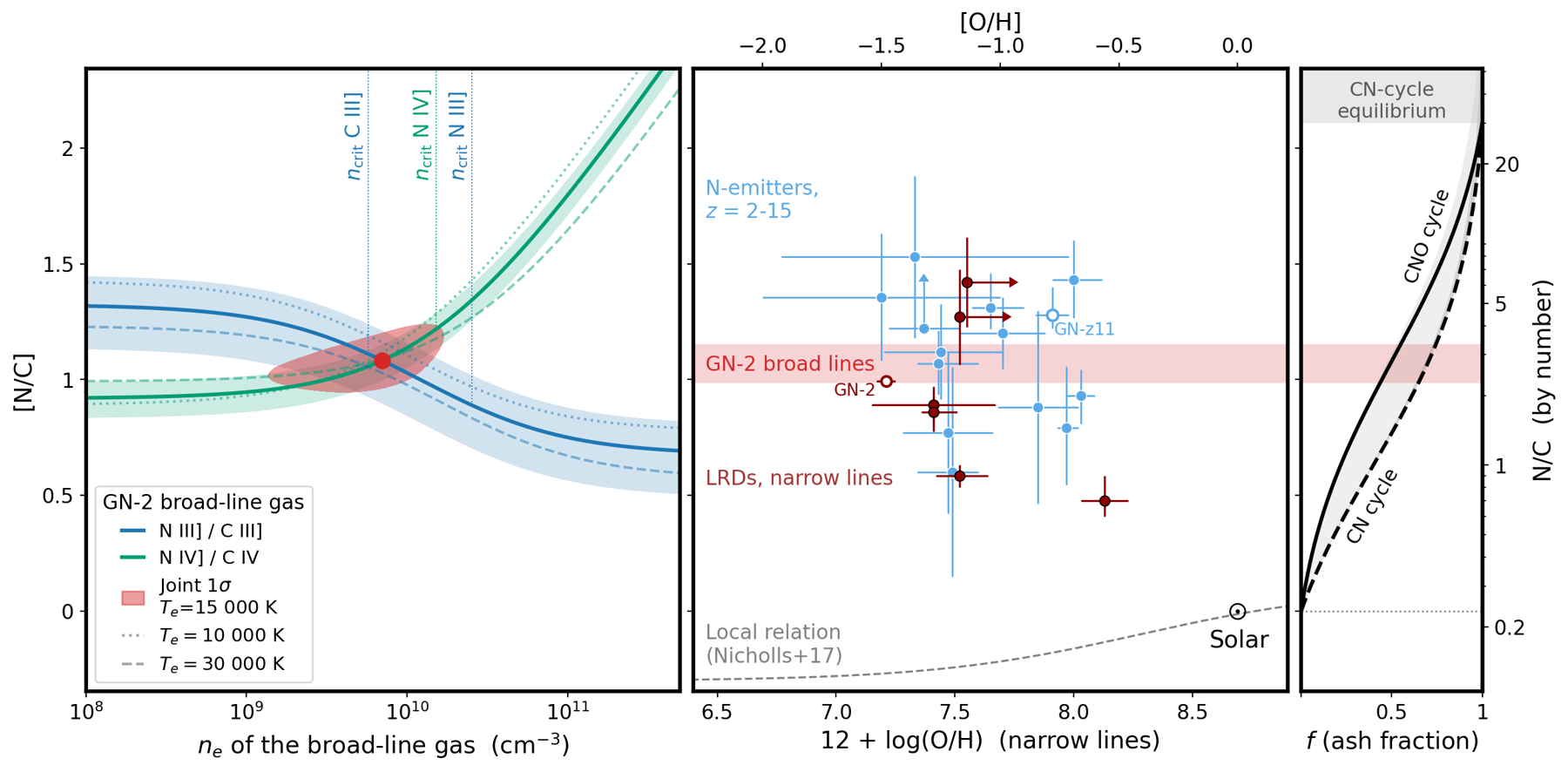
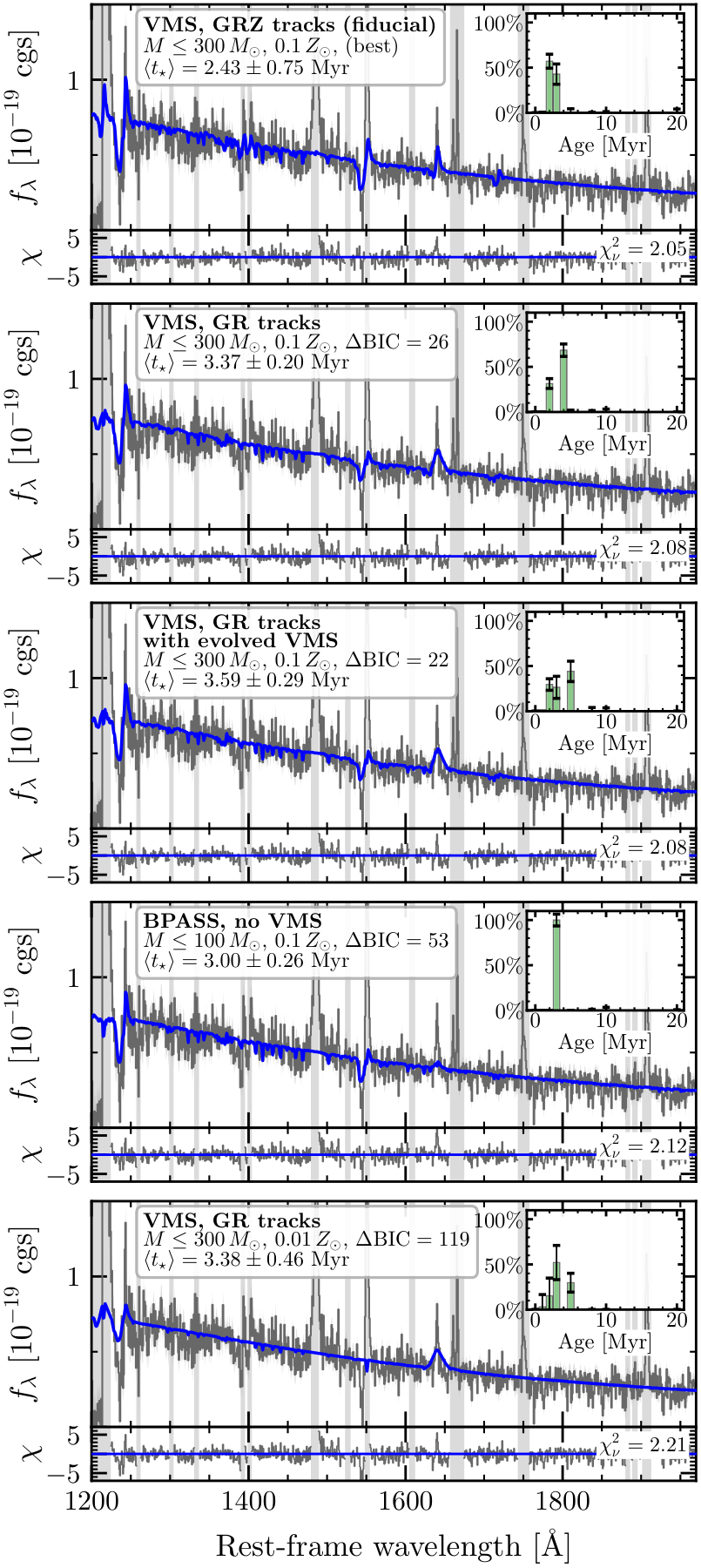
Medium-resolution JWST/NIRSpec spectroscopy of the single z=6.6 galaxy COLA1 links a very young, VMS-favored UV population, extreme nitrogen enrichment, and LRD-like optical Balmer structure; the proposed evolution into an LRD remains model-dependent.

2026-10-22 · 2610.28723v1 · Research note

Poisson Clustering and Seed Effect of PBHs: Implications for Microlensing, Gravitational Waves, Little Red Dots and Ultra-Faint Dwarf Galaxies

Bernard Carr, Sebastien Clesse, Juan Garcia-Bellido, et al.

This theoretical study argues that Poisson- and seed-driven primordial-black-hole clustering could affect microlensing, merger rates, ultra-faint dwarfs and little red dots, but its PBH-dark-matter interpretation remains sensitive to cluster evolution, Galactic-halo assumptions and non-Gaussian initial clustering.

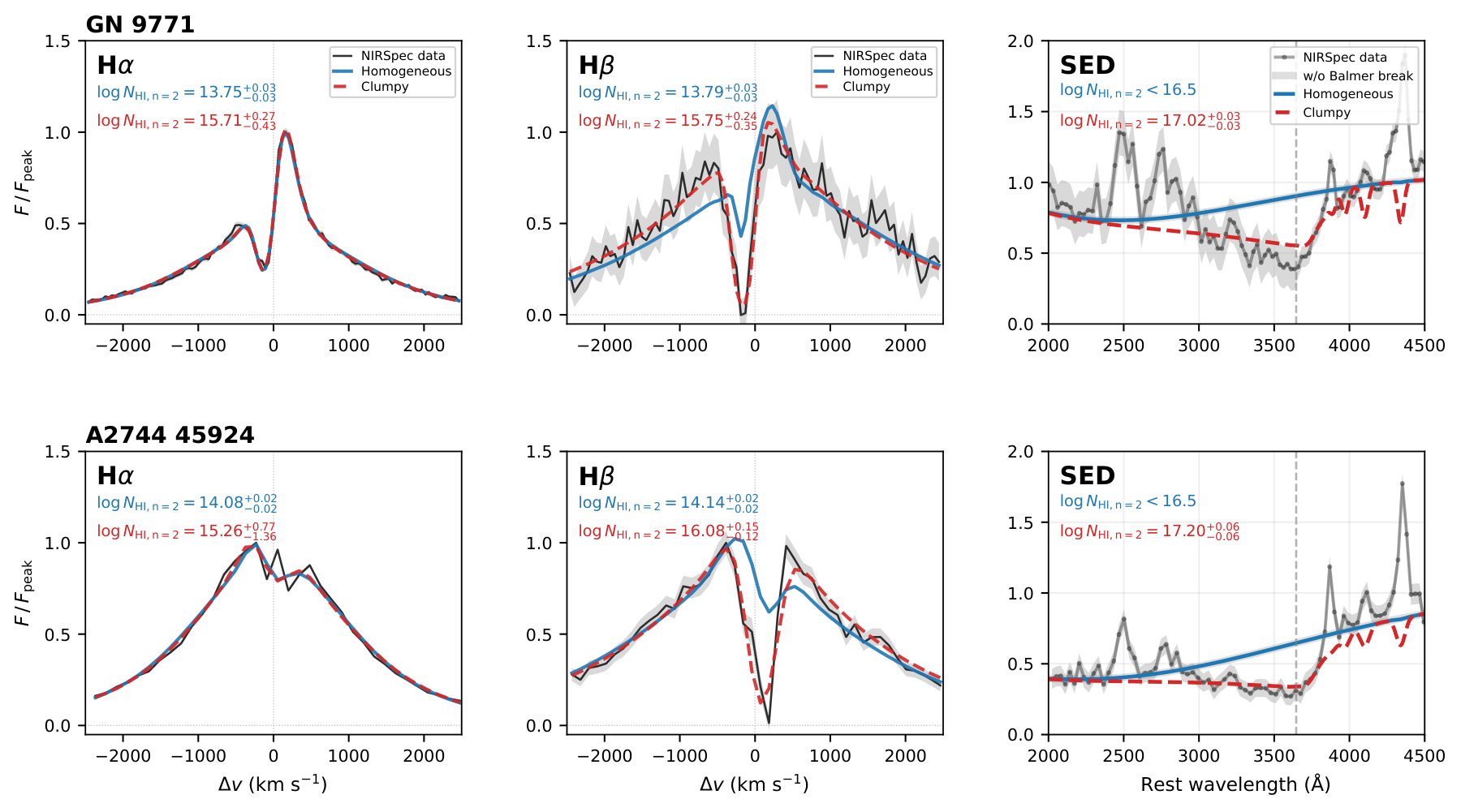
Figure 1 from The Balmer Absorber Strength Problem of Little Red Dots

2026-10-22 · 2610.28720v1 · Research note

The Balmer Absorber Strength Problem of Little Red Dots

Hanpu Liu, Eliot Quataert, Bingjie Wang, et al.

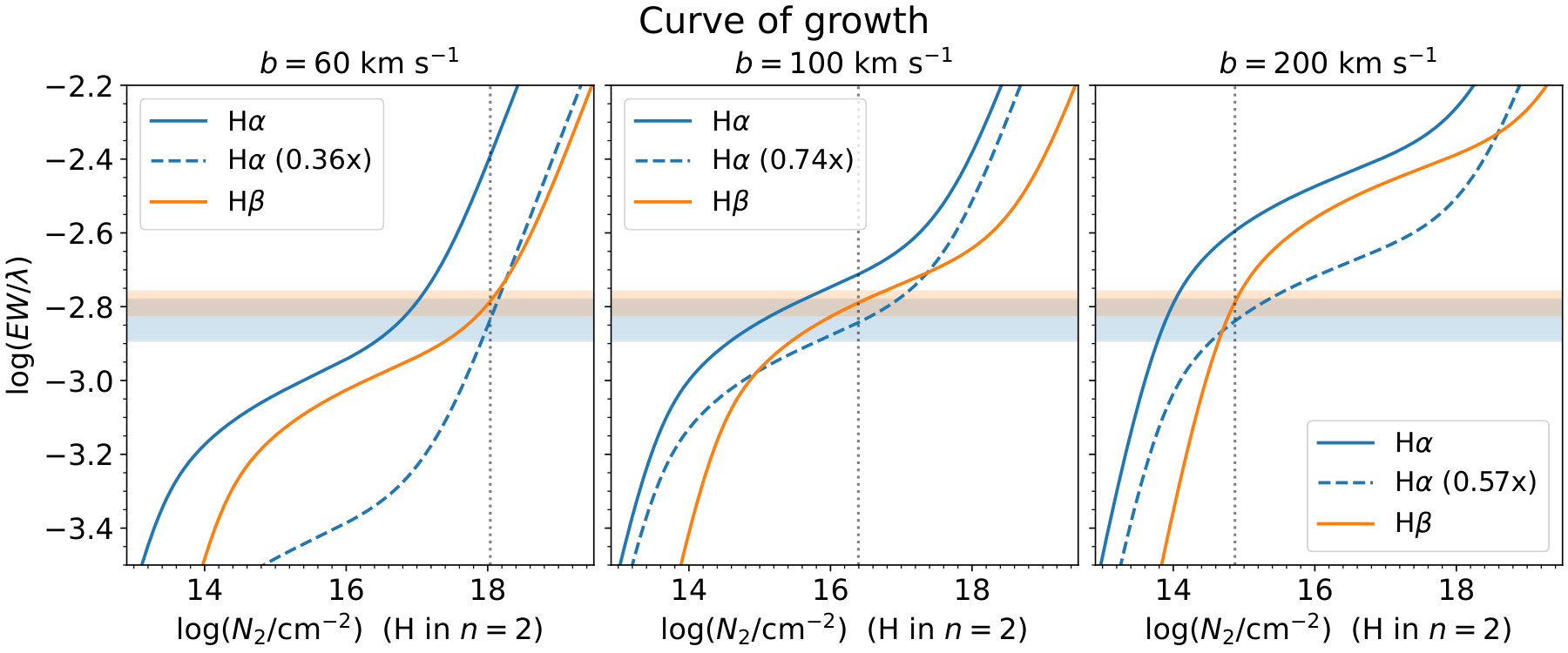
Photoionization calculations suggest that line emission from an optically thick Balmer absorber can preferentially fill Hα, explaining inverted Hα/Hβ absorption equivalent-width ratios in some LRDs. The result is a proof-of-concept whose inferred absorber properties remain radius- and structure-dependent.

2026-10-16 · 2610.20709v1 · Research note

How Little Red Dots Turn Blue: Evolution of Kelvin-Helmholtz Contracting Black Hole Envelopes and Observational Diagnostics

Zihao Wang, Kohei Inayoshi

A time-dependent black-hole-envelope model proposes that little red dots become little blue dots as declining inflow permits Kelvin–Helmholtz contraction. It predicts a distinctive UV–optical color excursion and a 5–50 Myr transition, testable with transitional-source demographics.

Figure 2 from A heterogeneous set of unusual quasars selected from astrometry and broad-band photometry

2026-10-15 · 2610.19838v1 · Research note

A heterogeneous set of unusual quasars selected from astrometry and broad-band photometry

C. Cheng, K. Valeckas, L. Christensen, et al.

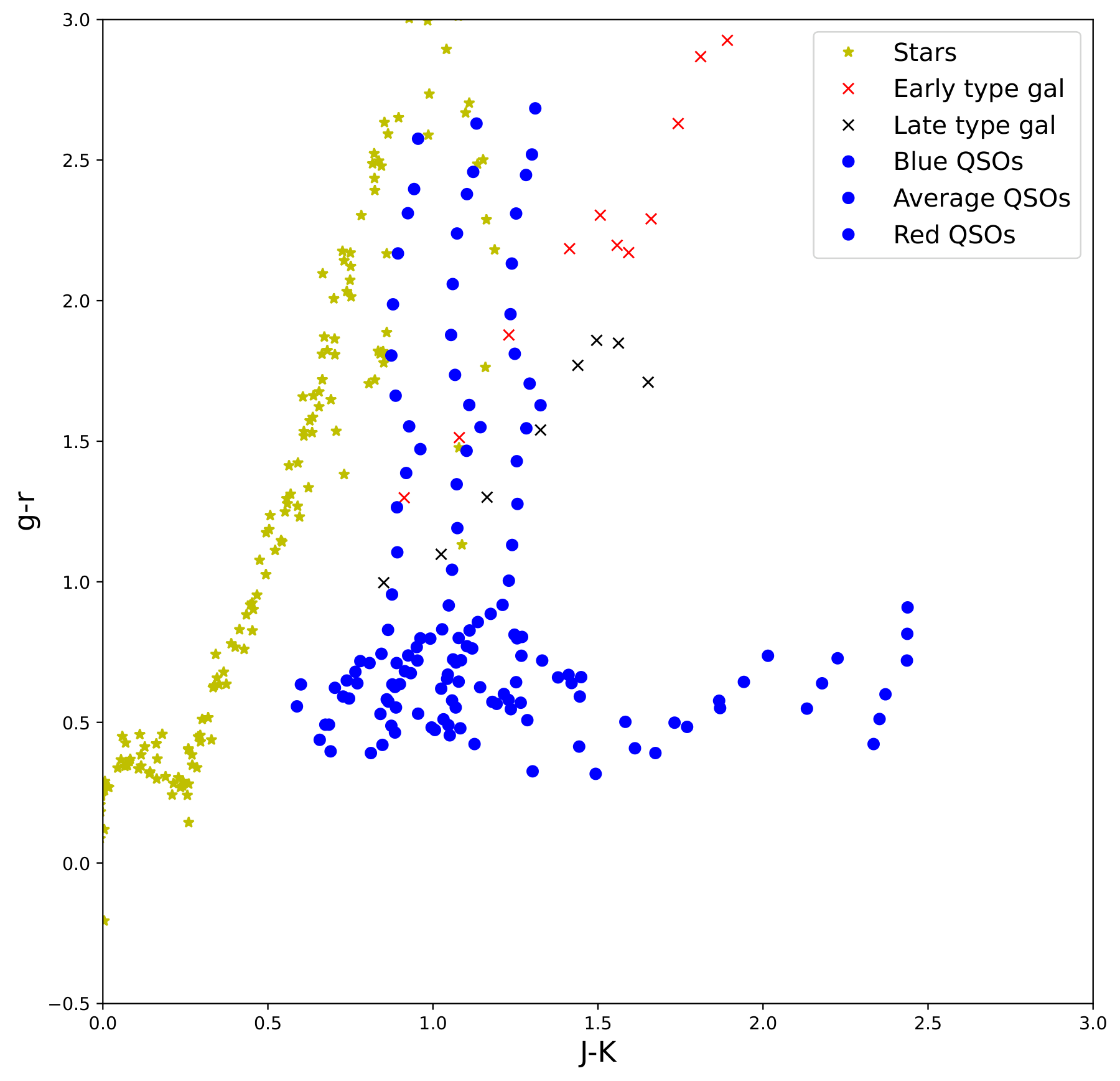
Gaia zero-motion selection plus broad-band colours and spectroscopy confirmed 21 quasars among 24 candidates, disproportionately finding BAL quasars in photometrically transitional regions. One low-redshift normal quasar is described as LRD-like, but this is not a high-redshift LRD sample.

2026-10-15 · 2610.18968v1 · Research note

The Dance of the Little Red Dots: Spectroscopy of Two Blue Companions at z = 3.9 and 5.5 Reveals Young, Metal-Poor Starbursts Merging with Their LRDs within a Few Hundred Myr

Fabio Pacucci, Pierluigi Rinaldi

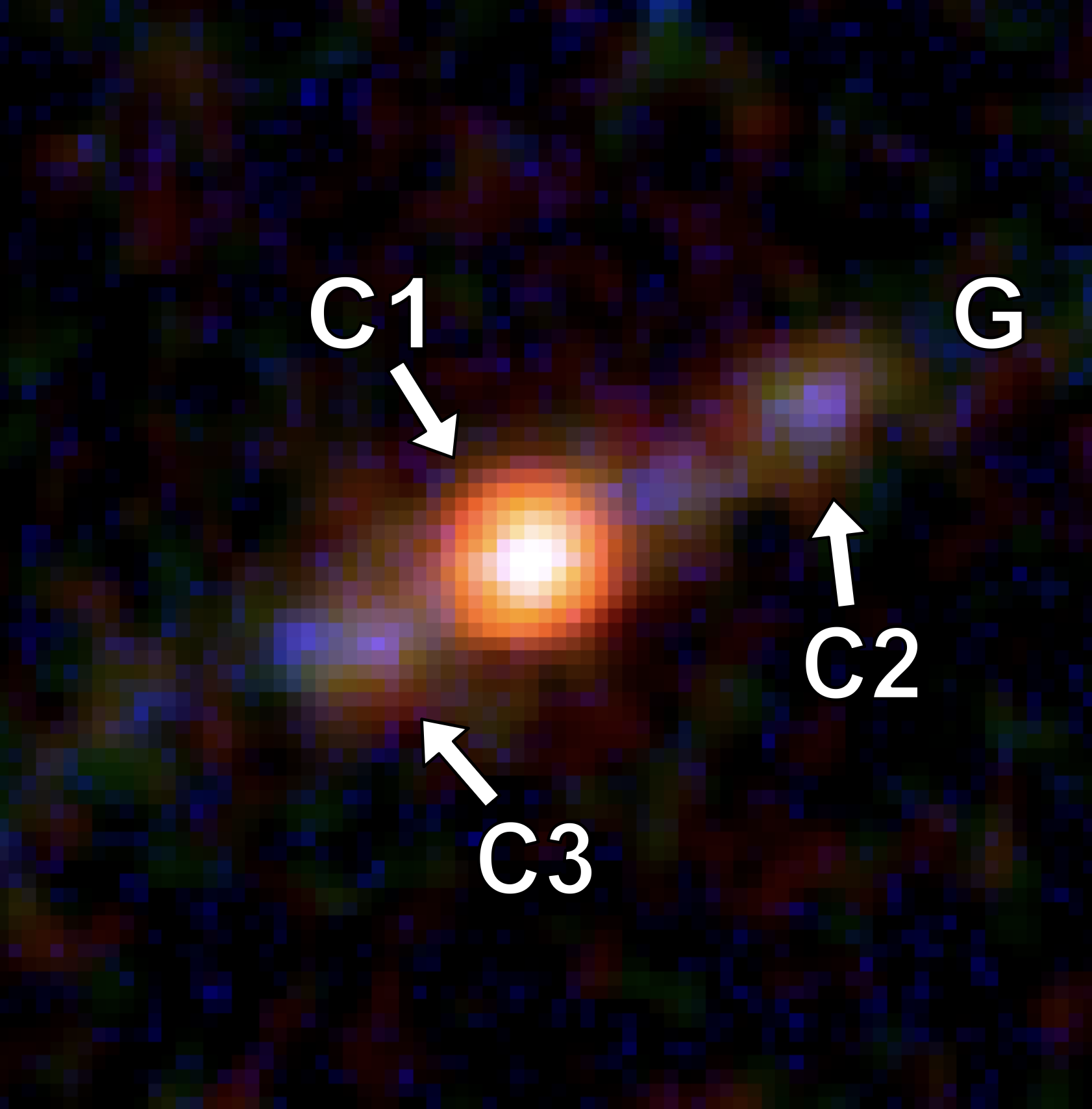
Spectroscopy of two LRD–blue-companion pairs confirms small line-of-sight velocity offsets and young, metal-poor companion starbursts. Orbital modeling favors a merger for Tango and conditionally for Waltz, while the proposed heavy-seed connection remains interpretive.

2026-10-13 · 2610.15255v1 · Research note

Anisotropic Radiation in Super-Eddington Active Galactic Nuclei: The Responsivity of Broad-Line Regions to Continuum Variability

Feng-Na Fang, Pu Du, Jian-Min Wang

Using 175 reverberation-mapping light curves from 128 AGNs, the authors infer that BLR-facing ionizing flux increasingly diverges from the observer-inferred isotropic flux at super-Eddington accretion rates, consistent with—but not uniquely proving—disk-radiation anisotropy.

2026-10-08 · 2610.08964v1 · Research note

Can LISA See Inside the Little Red Dots?

Samuel Gómez Gómez, Xisco Jimenez Forteza, Carlos Palenzuela, et al.

Modelled 10–30 solar-mass EMRIs could let LISA distinguish dense Little Red Dot interiors from vacuum, but detectability is confined largely to low-redshift, low-mass hosts and is dominated by uncertain inspiral rates and idealized gas dynamics.

2026-10-06 · 2610.03877v1 · Research note

Internal Radiative Feedback Triggers Global Collapse and Direct-Collapse Black Hole Formation in Metal-free Atomic-Cooling Haloes

Masaki Kiyuna, Sunmyon Chon, Kazuyuki Omukai, et al.

Cosmological radiation-hydrodynamic simulations suggest that Pop III stars can internally suppress H2 cooling after initial fragmentation, enabling warm-reservoir collapse and rapidly accreting supermassive-star candidates under modest external FUV fields rather than the conventionally required extreme irradiation.

Figure 1 from Connecting the Dots: Prospects for Detecting Multi-Source Inflation through Scale-Dependent and Stochastic Bias of Little Red Dots

2026-09-30 · 2609.36002v1 · Research note

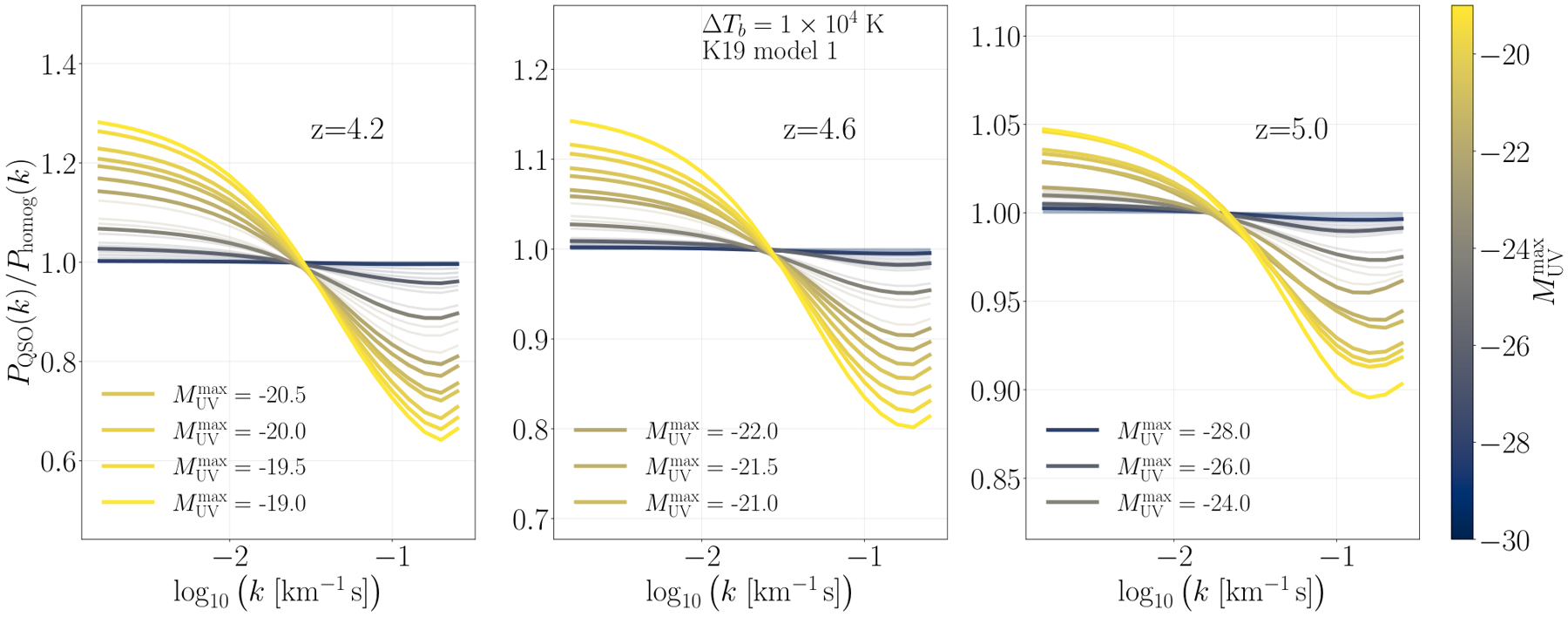
Connecting the Dots: Prospects for Detecting Multi-Source Inflation through Scale-Dependent and Stochastic Bias of Little Red Dots

Peter L. Taylor, Xinyi Chen, Christopher M. Hirata, et al.

This paper forecasts whether a purpose-built, wide space survey of LRD clustering at z=4–9 could jointly constrain local fNL and τNL and test the multi-source Suyama–Yamaguchi inequality; its conclusions remain conditional on idealised survey and covariance assumptions.

2026-09-29 · 2609.34903v1 · Research note

Exploring the observed properties of JWST Little Red Dots with cosmological simulations and dust radiative transfer

Saksham Chandna, Fabio Di Mascia, Simona Gallerani, et al.

Forward-modelled z=6–9 zoom simulations find that an obscured accreting black hole plus stellar UV emission and dust geometry can produce selected LRD-like colours and compactness, but reproduce only the moderate-Balmer-break subset of observed LRDs.

Figure 3 from The lifetimes and properties of Little Red Dots in the AMBRA simulation

2026-09-24 · 2609.26999v1 · Research note

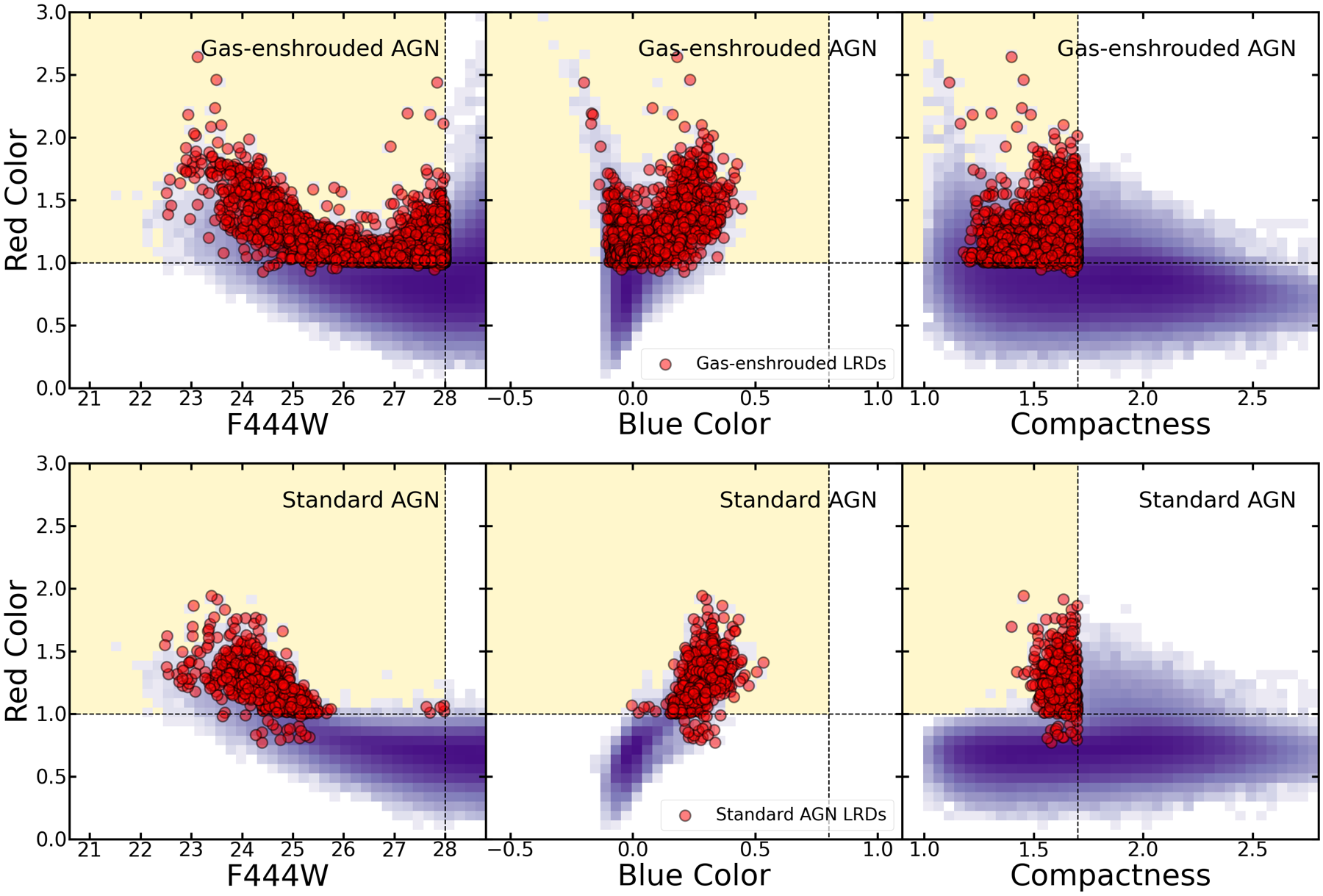
The lifetimes and properties of Little Red Dots in the AMBRA simulation

Patrick LaChance, Yihao Zhou, Aklant Kumar Bhowmick, et al.

Mock JWST selection in AMBRA suggests LRDs are transient appearances of existing black hole–galaxy systems: dim sources require a gas-enshrouded AGN model, while massive compact hosts yield longer-lived phases. Redshift counts remain model-sensitive.

2026-09-23 · 2609.26553v1 · Research note

Constraining Inflation with Little Red Dots

Dionysios Karagiannis, P. Daniel Meerburg

A 14,000-deg² spectroscopic LRD survey at 4<z<9 is forecast to constrain local, equilateral, and orthogonal primordial non-Gaussianity at σ(fNL)=0.32, 32, and 10, respectively, if modeled clustering, abundance, and covariance assumptions hold.

Figure 4 from EPOCHS-DR2 I: Expanded data release and properties of $6.5<z<16.5$ photometrically selected galaxies across NIRCam deep fields covering $\sim700\,\rm arcmin^2$ with the galfind software

2026-09-22 · 2609.24987v1 · Research note

EPOCHS-DR2 I: Expanded data release and properties of $6.5<z<16.5$ photometrically selected galaxies across NIRCam deep fields covering $\sim700\,\rm arcmin^2$ with the galfind software

Duncan Austin, Christopher J. Conselice, Thomas Harvey, et al.

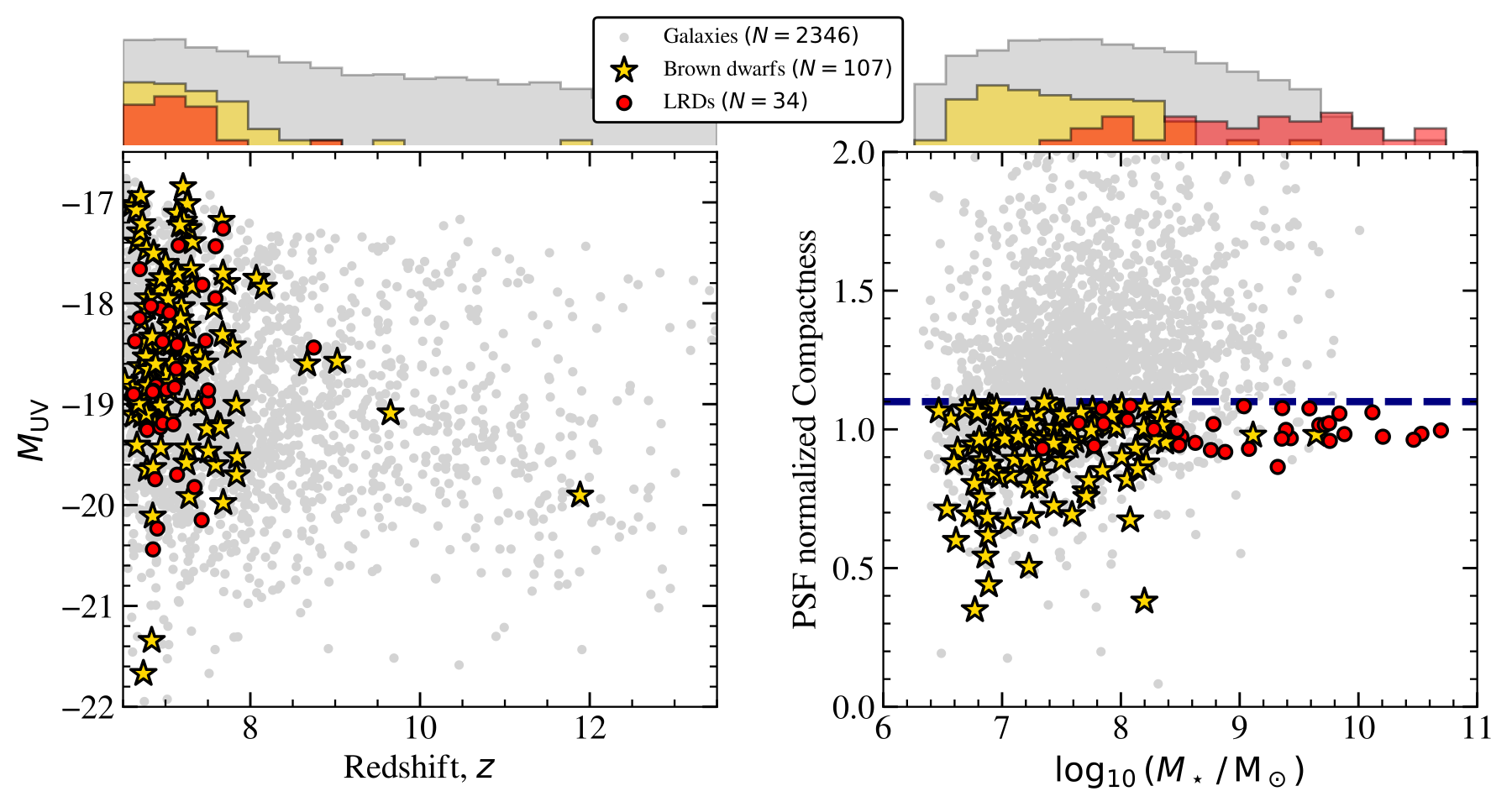
EPOCHS-DR2 releases a large JWST/NIRCam photometric census at 6.5<zphot<16.5, validated against NIRSpec but explicitly incomplete under its conservative selection. It identifies a small V-shaped-SED LRD subset and high-redshift candidates whose nature requires spectroscopy.

2026-09-22 · 2609.22623v1 · Research note

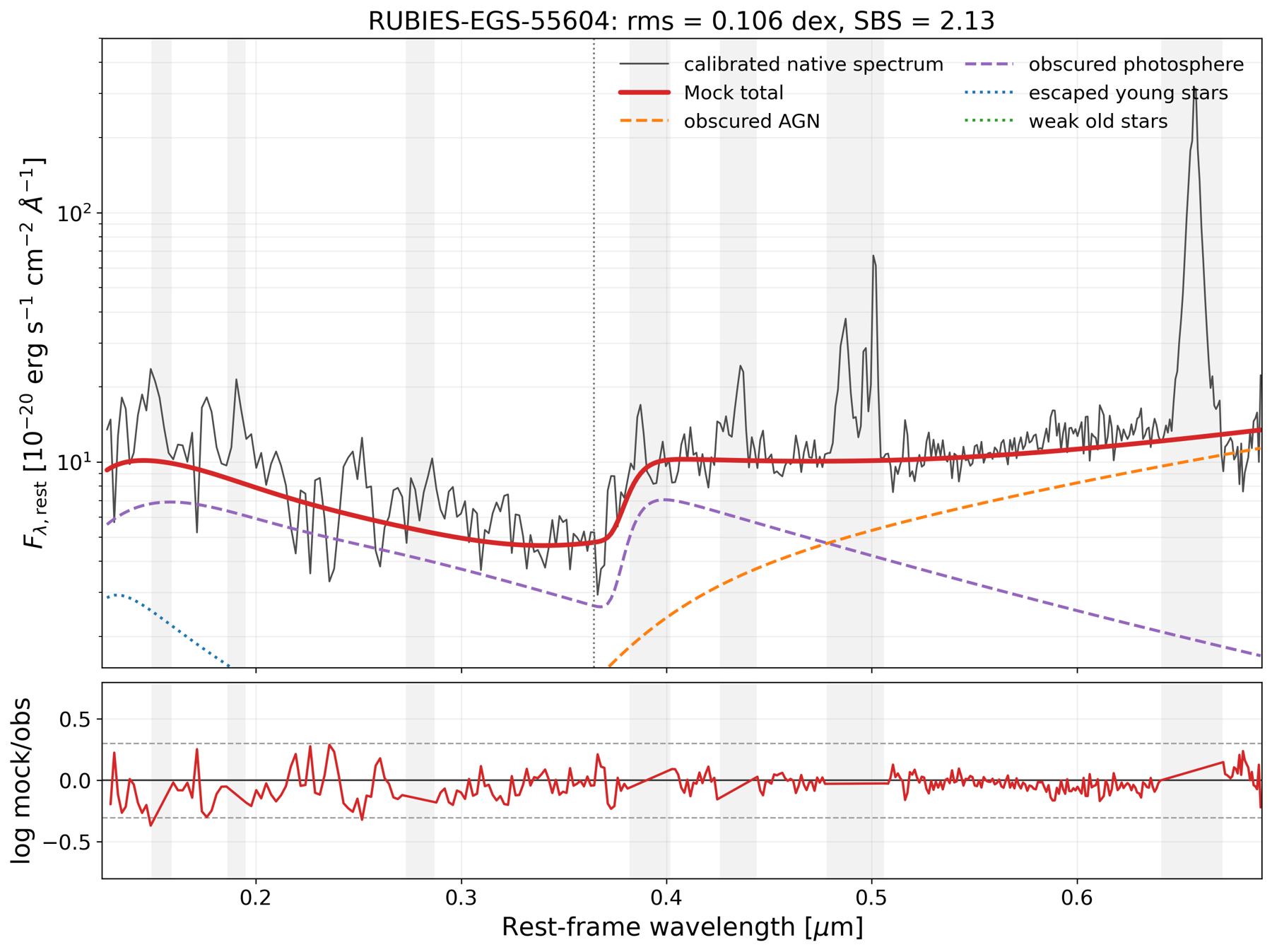
Balmer Absorption Series and Broad Metal Lines in Two Luminous Little Red Dots

Bingjie Wang, Jenny E. Greene, Hanpu Liu, et al.

Deep JWST/NIRSpec spectra of two luminous LRDs resolve Hα–Hδ absorption near systemic velocity, with higher-order troughs redder and unexpectedly persistent. Broad metal lines and diagnostic ratios favor dense gas, while a stratified failed wind remains an interpretation rather than a detection.

Figure 9 from Inflated Supermassive Stars as Little Red Dots and Progenitors of Supermassive Black Holes

2026-09-22 · 2609.22507v1 · Research note

Inflated Supermassive Stars as Little Red Dots and Progenitors of Supermassive Black Holes

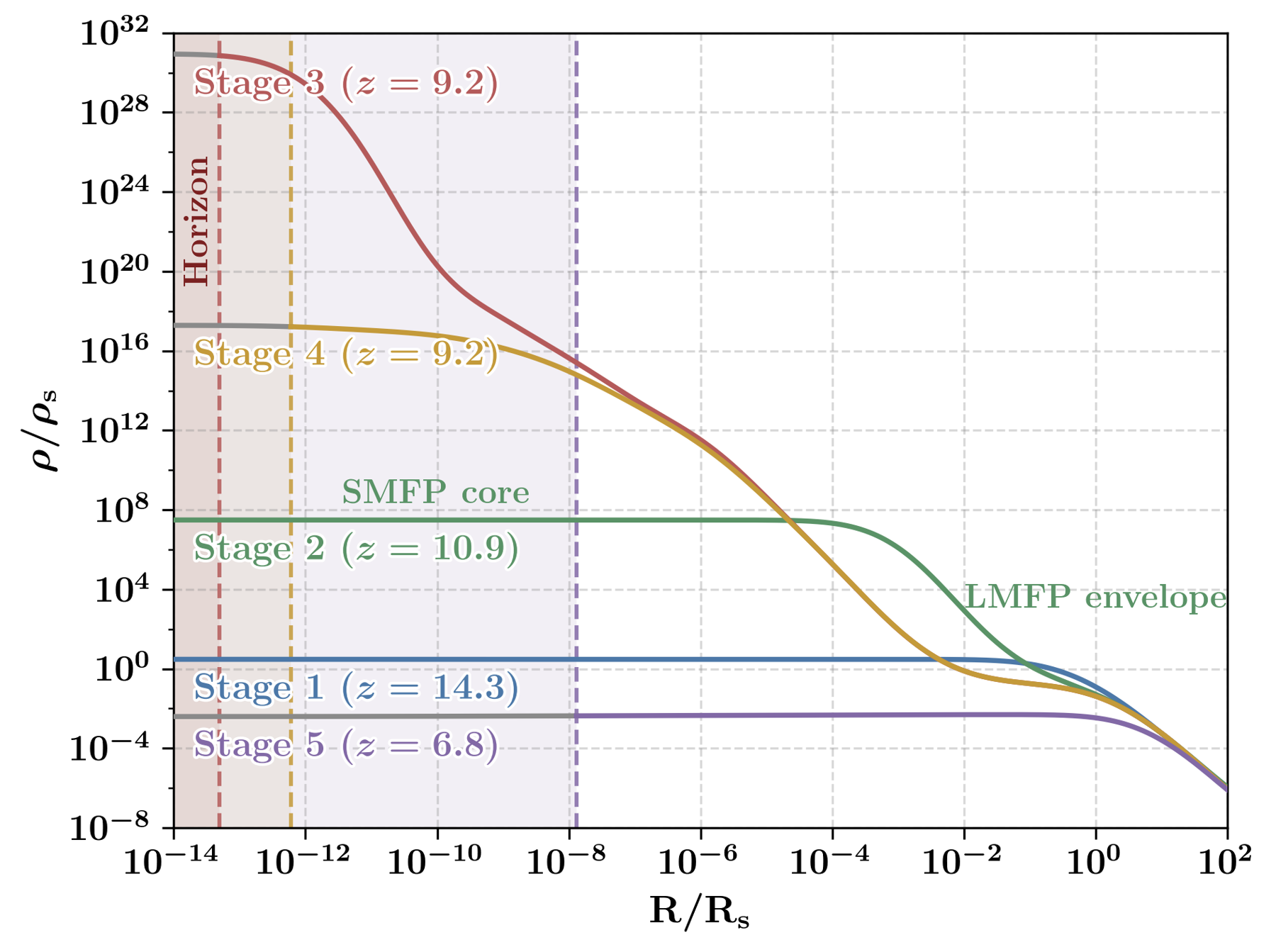
Wenbin Lu

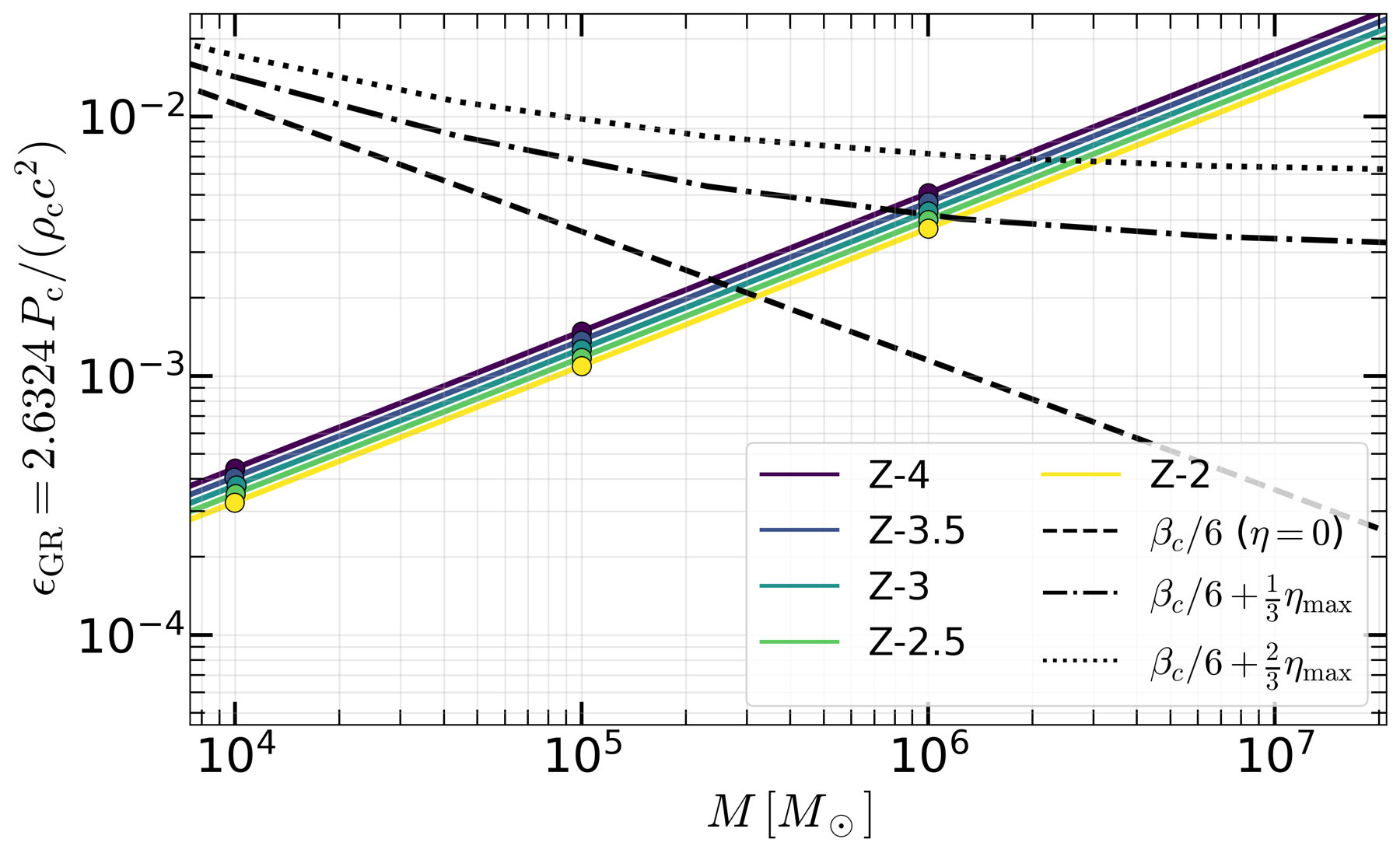
One-dimensional equilibrium models suggest that metal-enriched, hydrogen-burning supermassive stars can attain LRD-like cool photospheres through Fe-opacity-driven envelope inflation, while general-relativistic collapse could leave massive black-hole remnants. The proposed interpretation remains sensitive to atmospheric physics and formation assumptions.

Figure 2 from Little Red Dots as a Transient Phase of Self-Interacting Dark Matter Assisted Black Hole Growth

2026-09-18 · 2609.20021v1 · Research note

Little Red Dots as a Transient Phase of Self-Interacting Dark Matter Assisted Black Hole Growth

Yu Rong, Shuang-Nan Zhang, Jian-Min Wang, et al.

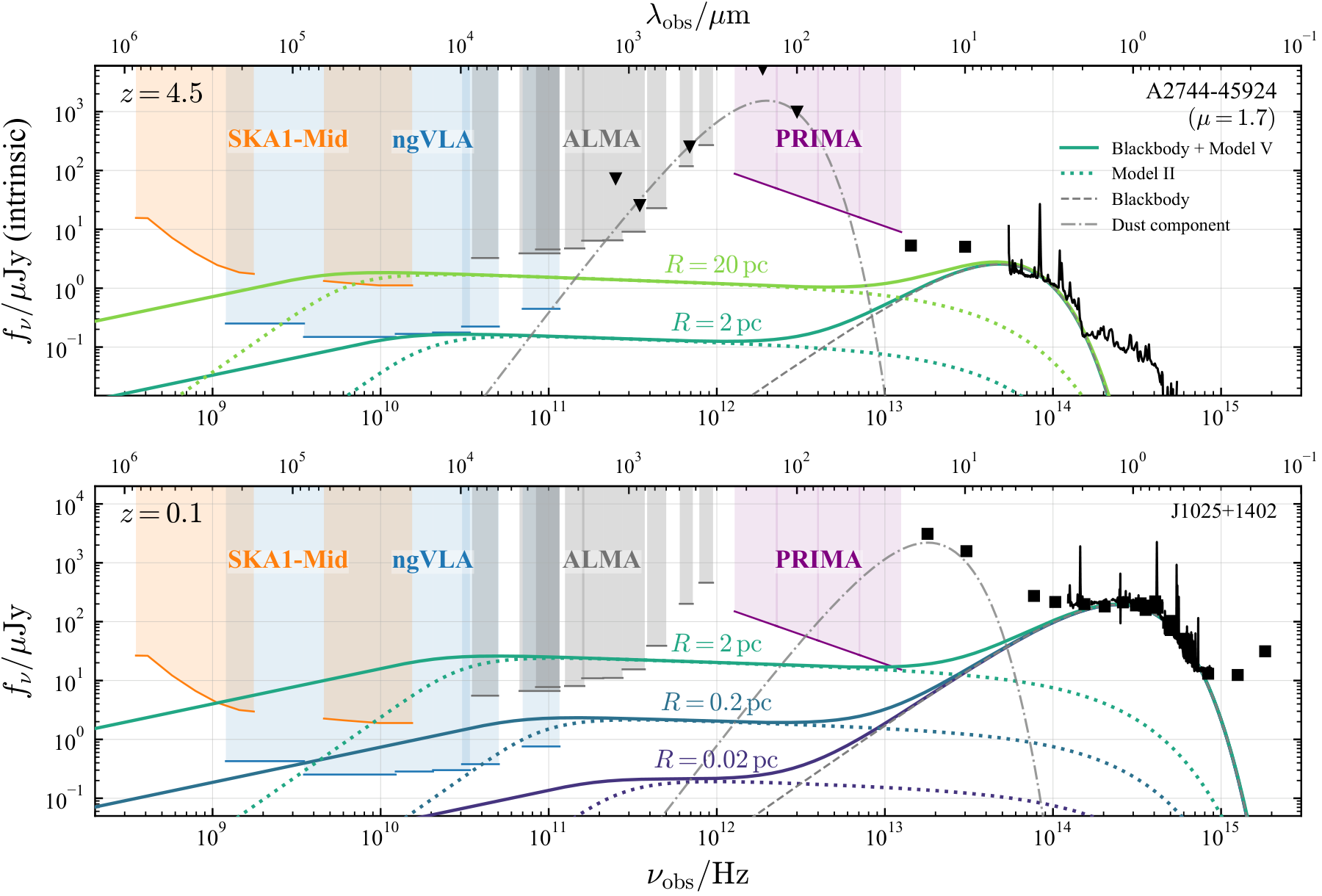
This theory paper proposes that gas inflow compresses self-interacting dark matter (SIDM) around a pre-existing black hole while an optically thick nuclear disk obscures and reprocesses its emission. It reproduces two representative LRD continua, but does not establish SIDM observationally.

Figure 2 from A Dark-matter Origin of Little Red Dots: Early Seeding and Super-Bondi Accretion

2026-09-16 · 2609.16122v1 · Research note

A Dark-matter Origin of Little Red Dots: Early Seeding and Super-Bondi Accretion

Hua-Peng Gu, Fangzhou Jiang, Xian Chen, et al.

Using relativistic SIDM-halo evolution, the authors argue that pre-reionization, concentrated halos can make stellar-mass seeds and grow them through dark-matter inflow to LRD-like SMBHs by z≈6; late-time fluid-model breakdown makes final masses upper limits.

Figure 3 from Host Galaxy UV Emission and Dust Reddening in Little Red Dots

2026-09-15 · 2609.13444v1 · Research note

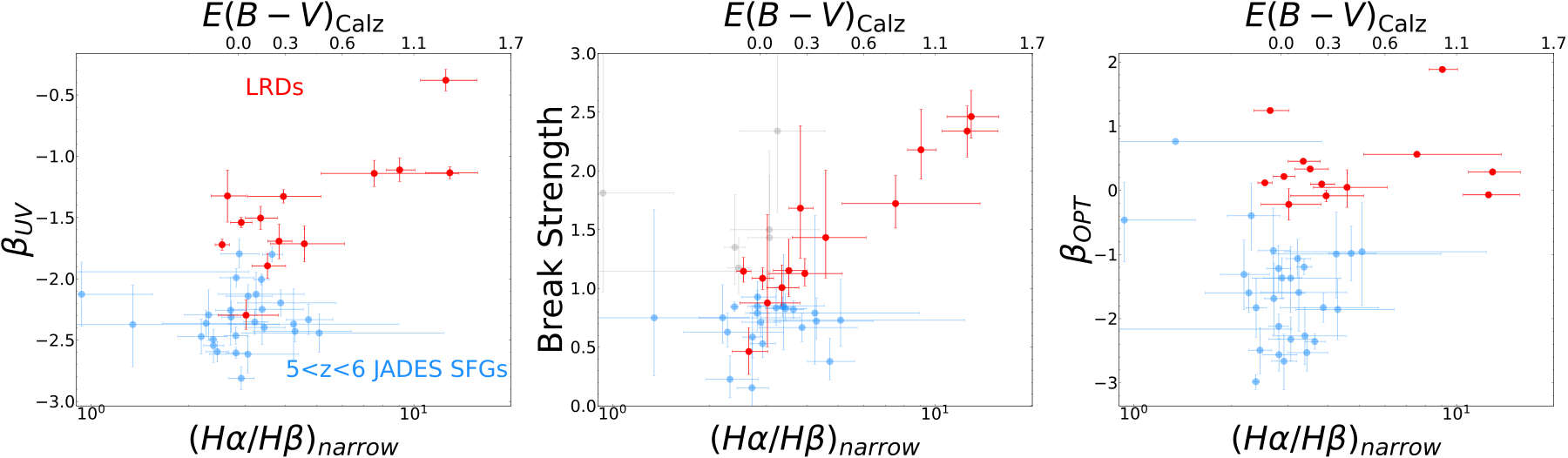
Host Galaxy UV Emission and Dust Reddening in Little Red Dots

Emmanuel Durodola, Ryan C. Hickox, Jonathan Cohn, et al.

Medium-resolution JWST spectra of 13 LRDs link narrow-line Balmer decrements to UV slope and Balmer-break strength, which the authors interpret as host-scale dust reddening of predominantly stellar UV emission; extreme-break, flat-UV LRDs form a distinct subgroup.

Figure 2 from Little Red Dots are Direct-Collapse Black Hole-Forming Galaxies

2026-09-14 · 2609.12049v1 · Research note

Little Red Dots are Direct-Collapse Black Hole-Forming Galaxies

Daniel J. Whalen, Muhammad A. Latif, Konstantinos Topalakis, et al.

Two-stage simulations and radiative-transfer spectral modeling suggest that LRDs could be direct-collapse black-hole hosts whose dense disks trap X-rays and generate Balmer absorption; fits spanning z=3.55–9.29 make this physically plausible, but not uniquely established.

Figure 3 from Learning JWST. I. A Foundation Model for New Population Discoveries and Morphology-Aware Photometric Redshift Measurements in the JADES Survey

2026-09-11 · 2609.11879v1 · Research note

Learning JWST. I. A Foundation Model for New Population Discoveries and Morphology-Aware Photometric Redshift Measurements in the JADES Survey

Jiani Ding, Minghao Yue, Yongda Zhu, et al.

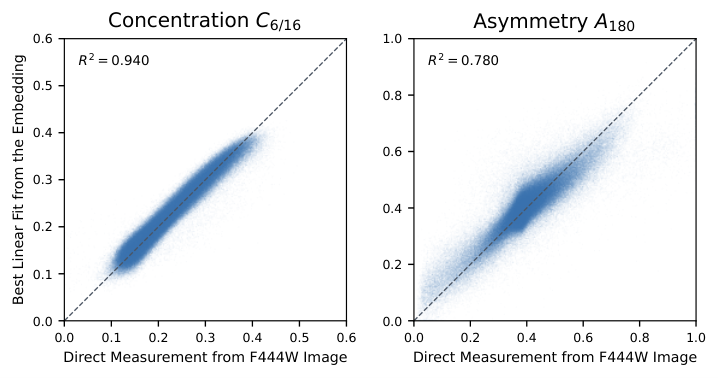
A self-supervised multimodal JADES model organizes high-redshift galaxies and Little Red Dots into embedding-space populations, retrieves LRD candidates from 19 broad-line seeds, and improves a controlled three-band photometric-redshift benchmark over template fitting.

2026-09-11 · 2609.11094v1 · Research note

SPURS: An Ultra-deep View Inside the Compact, Nitrogen-Enriched Nuclei of Little Red Dots

Mengtao Tang, Daniel P. Stark, Charlotte A. Mason, et al.

Ultra-deep JWST/SPURS rest-UV spectra of four UV-bright Little Red Dots find dense, nitrogen-enhanced, neutral-gas-embedded nuclei and diverse broad-line/wind signatures. The authors infer compact nuclear activity, while stellar and AGN contributions remain degenerate.

2026-09-11 · 2609.10803v1 · Research note

The THRILS Factor: Investigating the properties of Little Red Dots (LRDs) at 3<z<6 with JWST/NIRSpec

Ananya Ganapathy, Rebecca L. Larson, Erini Lambrides, et al.

Deep JWST/NIRSpec spectra of nine z=3–6 LRDs favor electron-scattering-like broad-line profiles in five cases, implying substantial ionized columns but ∼50% covering fractions; this challenges unity-covering cocoon models while supporting an AGN-related origin.

Figure 4 from Extending the Little Red Dot population at intermediate redshift with VIPERS

2026-09-10 · 2609.10319v1 · Research note

Extending the Little Red Dot population at intermediate redshift with VIPERS

Krzysztof Lisiecki, Krzysztof Hryniewicz, Francesco Pistis, et al.

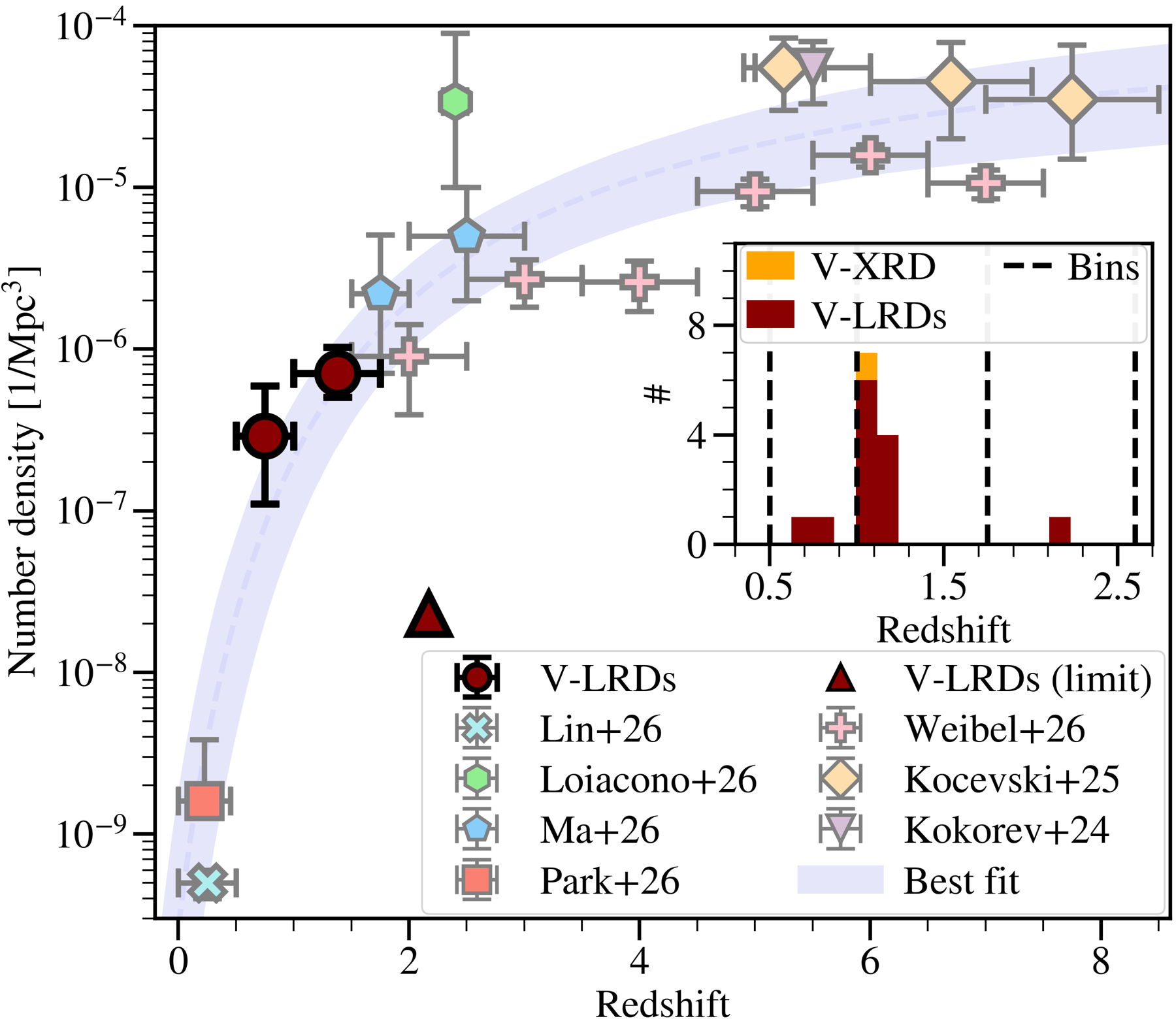
VIPERS yields 14 compact, LRD-like sources at 0.5<z<1.75 selected through V-shaped photometric slopes and broad lines. Their inferred abundance declines sharply below z~1, while one unresolved X-ray source is consistent with a low-inclination, radiatively efficient disk.

Figure 2 from Overmassive No More: The Case for Little Red Dots Hosting Black Hole Seeds as Massive as Single Supermassive Stars

2026-09-10 · 2609.09274v1 · Research note

Overmassive No More: The Case for Little Red Dots Hosting Black Hole Seeds as Massive as Single Supermassive Stars

Wendy Q. Sun, Rohan P. Naidu, Hanpu Liu, et al.

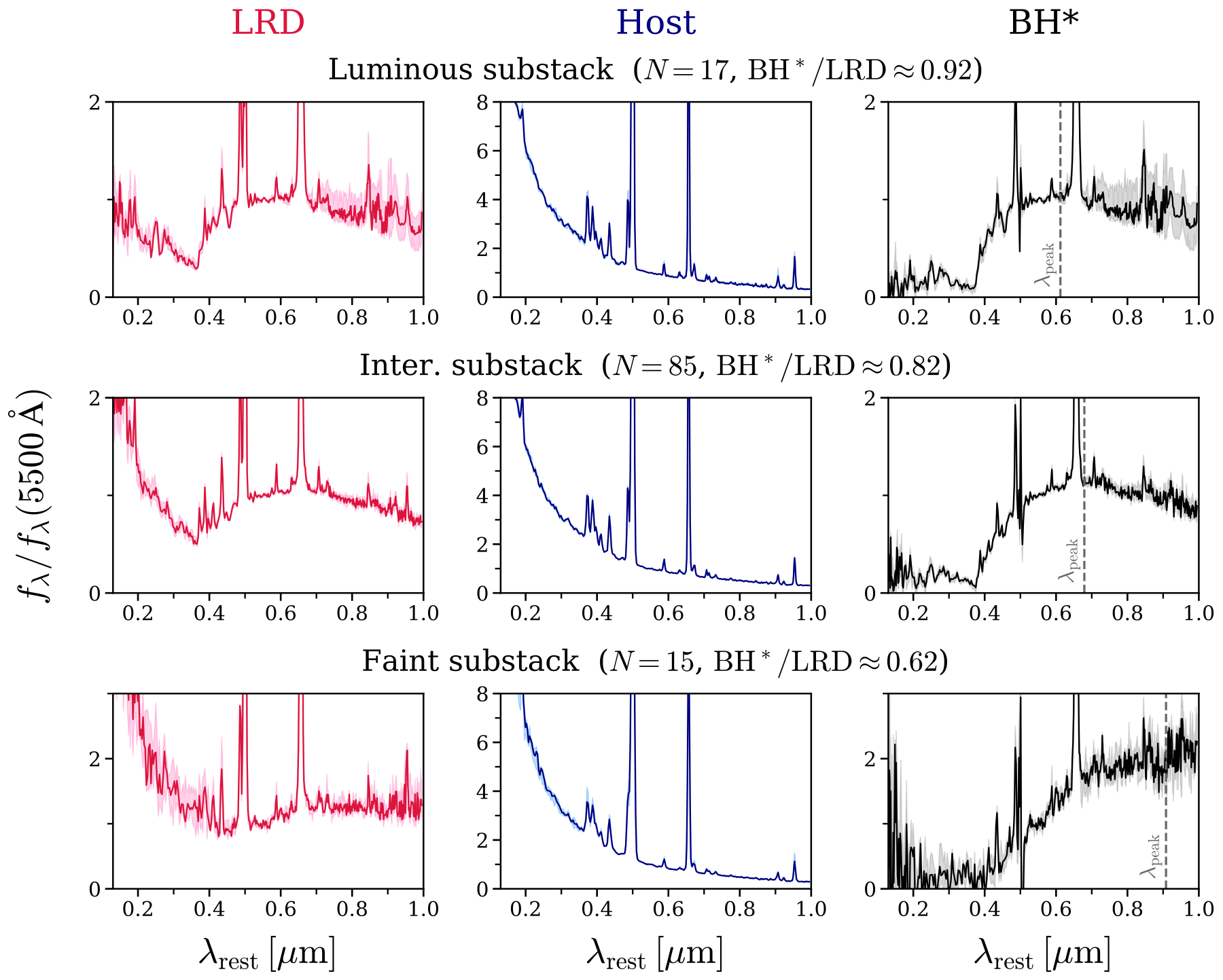
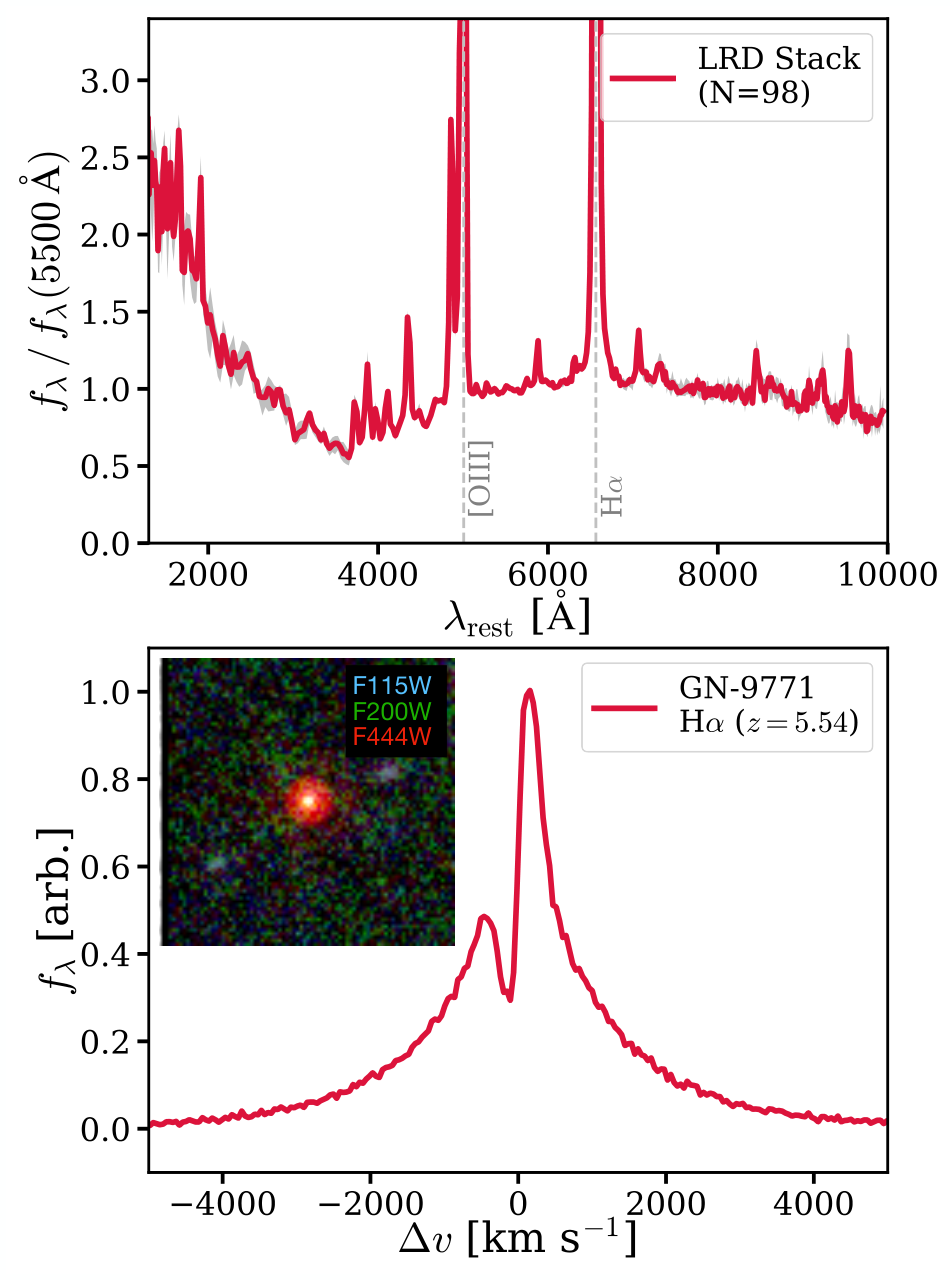
Using stacked, host-subtracted spectra of 117 little red dots, the authors infer cool, luminous pseudo-photospheres and non-virial central-engine masses of about 10^4–10^5 solar masses. They argue this removes the apparent overmassiveness and permits, but does not establish, a supermassive-star seed origin.

2026-09-10 · 2609.09271v1 · Research note

The Ashes of Supermassive Stars: Globular Cluster-like Aluminum Enhancement in Little Red Dots

V. Kokorev, J. Chisholm, R. P. Naidu, et al.

Deep JWST spectroscopy of four z~7 LRDs finds Al-rich, Mg-poor, ~1% solar gas. The authors interpret its globular-cluster-like abundance pattern as hot hydrogen burning by ≥10^4-solar-mass supermassive stars, while saturation and small-sample uncertainties remain.

2026-09-10 · 2609.09265v1 · Research note

A Spectral Framework for Testing the Quasi-Star Hypothesis in Little Red Dots I: Weighing LRDs by Their Super-Eddington Luminosity Ratios---No Signs of Overmassive Black Holes

Olivia Curtis, Nikko J. Cleri, Jakob M. Helton, et al.

Photospheric fits to 4 absorption-feature LRDs and 82 archival objects yield predominantly super-Eddington ratios. Coupled quasi-star envelope models place black-hole mass caps below local BH–host expectations, but the inference remains model- and host-prior-dependent.

Figure 1 from Small-Scale Clustering of Primordial Black Holes: The Little Red Dot Mass Function and the High-Redshift Galaxy Tension

2026-09-09 · 2609.09078v1 · Research note

Small-Scale Clustering of Primordial Black Holes: The Little Red Dot Mass Function and the High-Redshift Galaxy Tension

Borui Zhang, Wei-Xiang Feng, Haipeng An

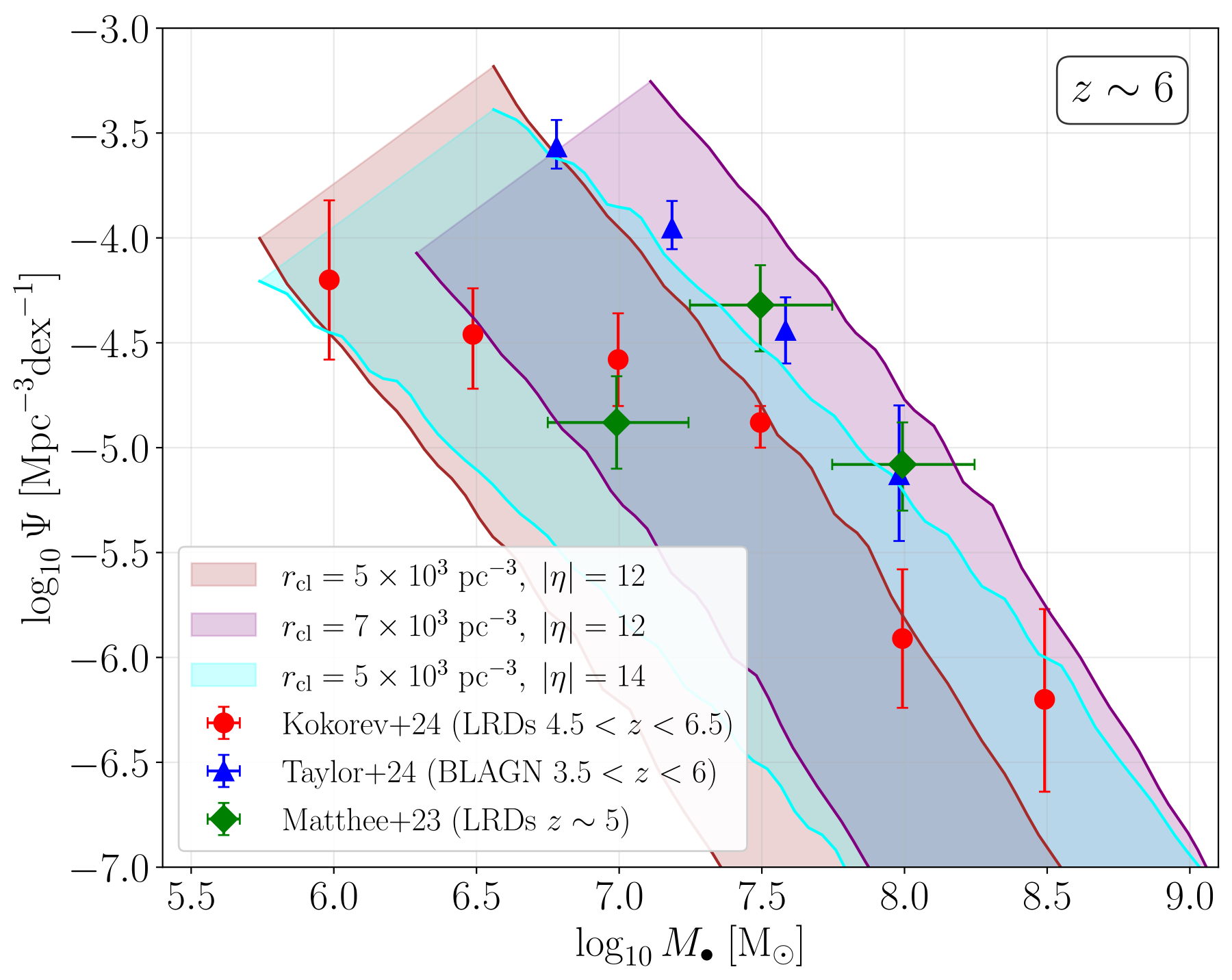
This analytic PBH-cluster framework claims that runaway mergers can reproduce the LRD SMBH mass function with a 1–10% accretion duty cycle while linking overmassive, compact hosts to seed-driven halo evolution; key gas dynamics remain unmodeled.

2026-09-09 · 2609.08145v1 · Research note

The Roman eXtreme Deep Field (RXDF)

Haojing Yan, Anton M. Koekemoer, Yue Shen, et al.

RXDF is an approved Roman seven-band, multi-epoch imaging program designed to combine AB≈30 depth with a 678.75 arcmin² full-depth footprint. For LRD science it is prospective: it extends the luminosity–redshift discovery space, but supplies neither an LRD selection nor predicted counts.

Figure 3 from Between Little Red Dots and Star-Forming Galaxies: A Sequence in the Optical Continuum Slope

2026-09-08 · 2609.07025v1 · Research note

Between Little Red Dots and Star-Forming Galaxies: A Sequence in the Optical Continuum Slope

Kristiphong Boonmee, Akio K. Inoue, Masafusa Onoue, et al.

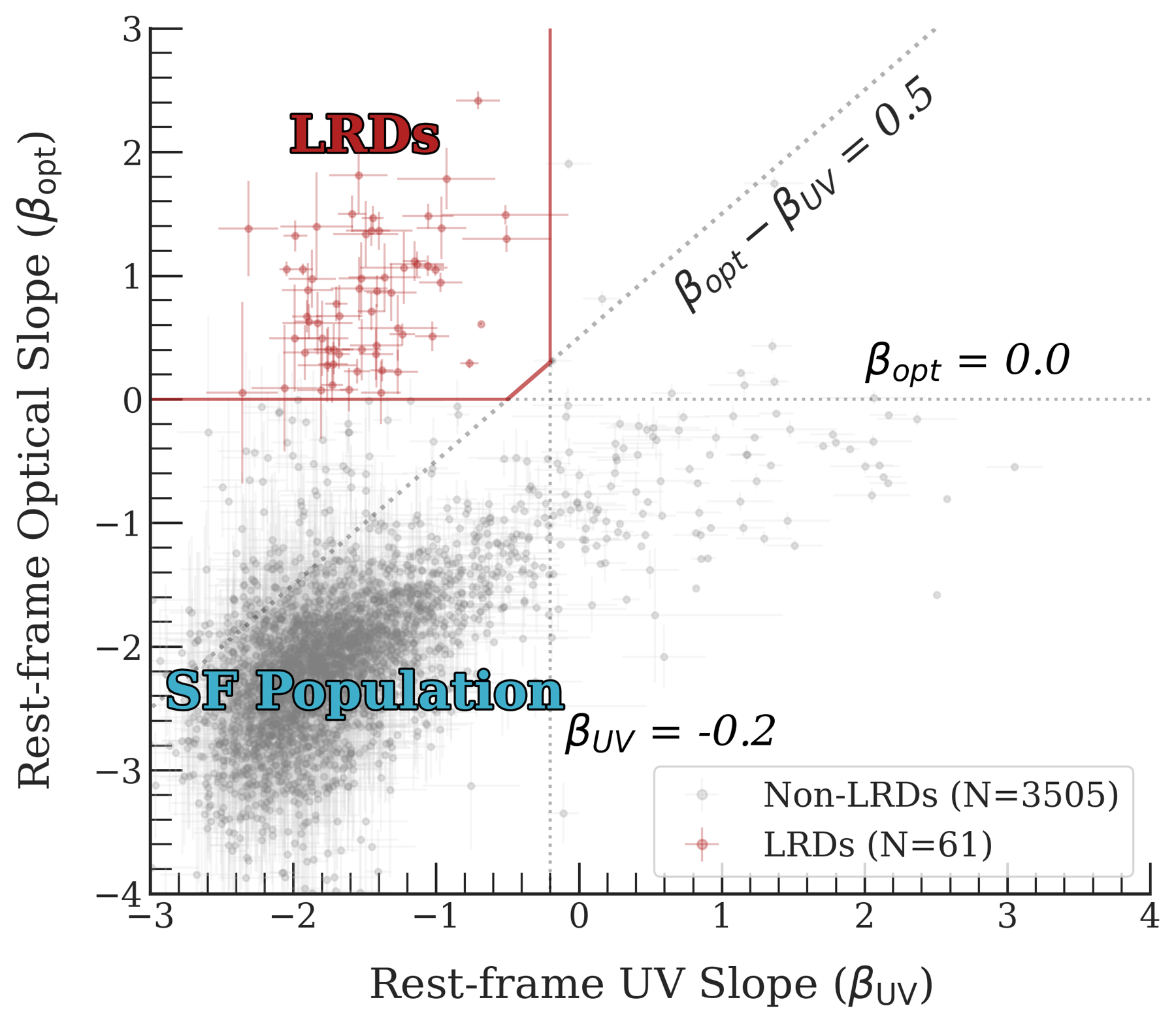
In 3,566 JWST/NIRSpec galaxies at z=3.0–8.1, UV–optical continuum slopes reveal a continuously populated path from star-forming galaxies to LRDs. The authors interpret it as changing host/BH* continuum contributions, while stressing model-dependent mass-ratio limits.

2026-09-02 · 2609.00437v1 · Research note

Formation of Heavy Seed Black Holes and Little Red Dots-like Compact Clusters in Metal-enriched Star-forming Regions

Sunmyon Chon, Shingo Hirano, Ke-Jung Chen, et al.

A radiation-hydrodynamic zoom-in simulation links locally intense LW fields, weakly enriched compact clusters, supermassive stars, and heavy seeds. Five of eight simulated >10^6 M⊙ clusters have intrinsic V-shaped, LRD-like continua, but the proposed observational connection remains model-dependent.

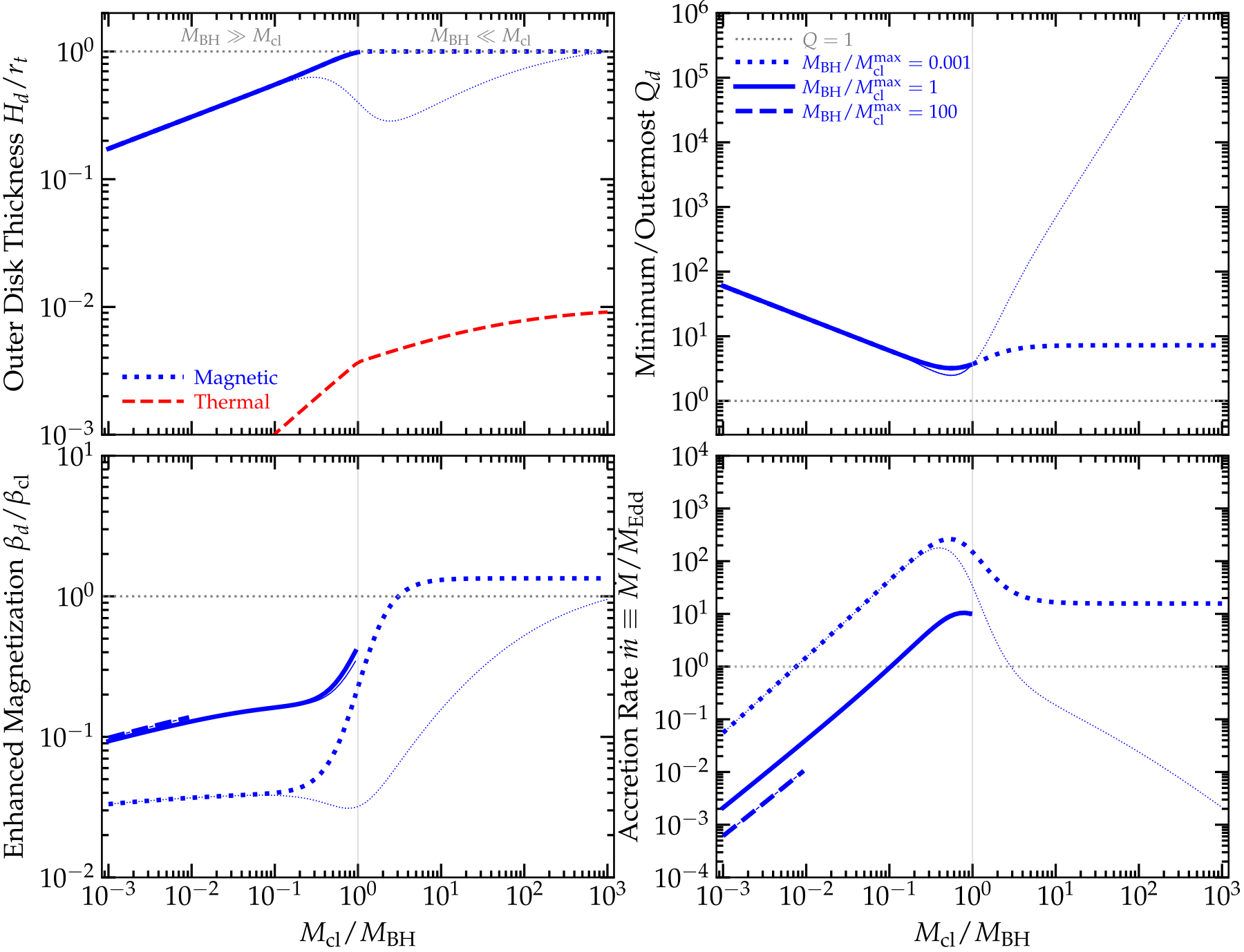
Figure 5 from Early Supermassive Black Holes and Little Red Dots Require Free-Fall Growth

2026-09-02 · 2609.00115v1 · Research note

Early Supermassive Black Holes and Little Red Dots Require Free-Fall Growth

Junehyoung Jeon, Volker Bromm, Michael Boylan-Kolchin, et al.

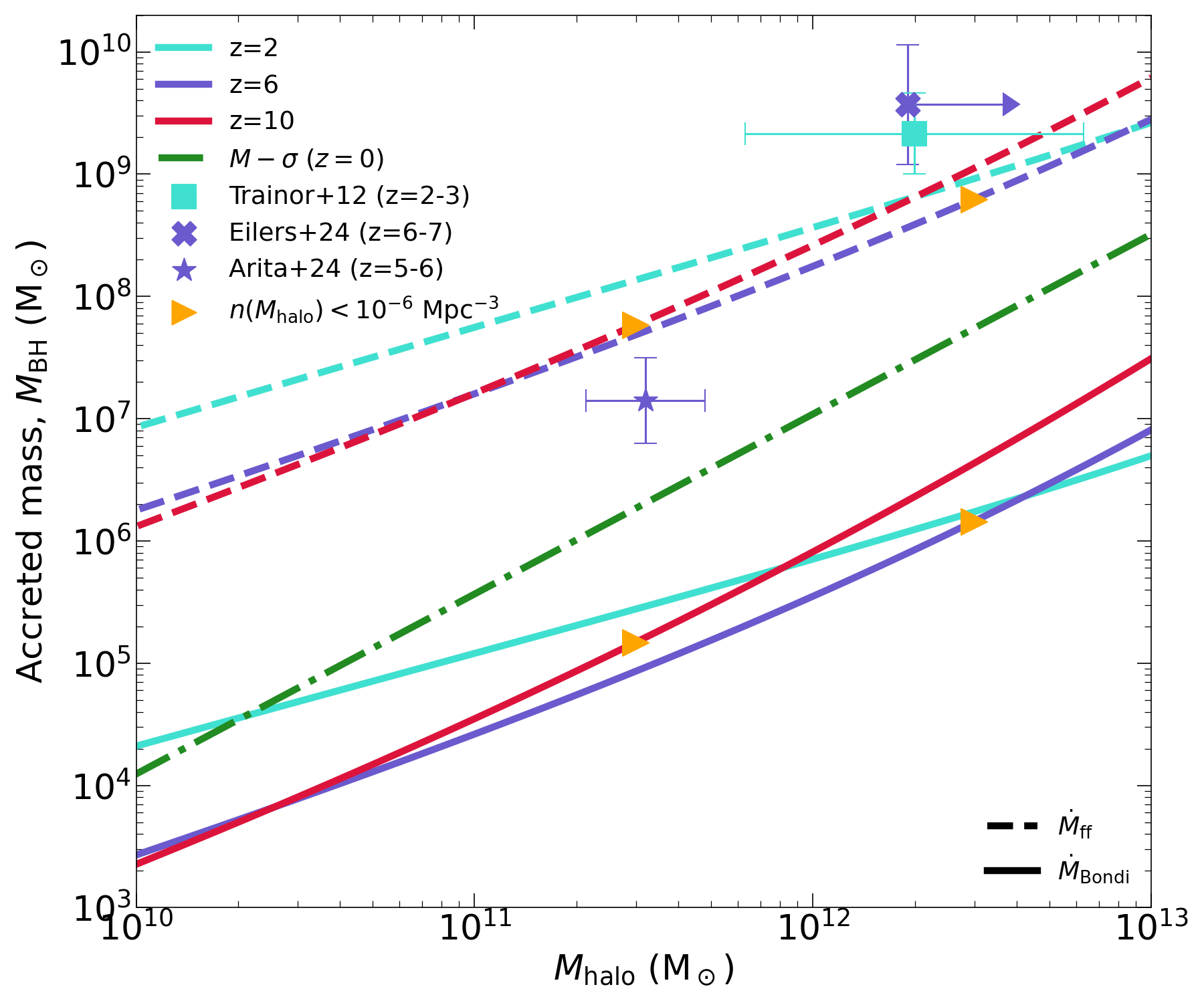
An analytic halo-inflow model argues that observed early AGN and, conditionally, little red dots (LRDs) require near-free-fall cold gas supply rather than Bondi–Hoyle inflow; it treats this as an upper-limit fuel budget, not a direct measurement of black-hole accretion.