654 indexed papers · 430 research notes

Research archive

Reset

2026-11-10 · 2611.12861v1

Little Red Dots from Primordial Black Holes: Non-Gaussianity and Accretion Evade $μ$-Distortion Constraints

Shyam Balaji, Bryce Cyr, Sarah R. Geller, et al.

This paper asks whether primordial black holes can provide the massive seeds needed for the JWST little red dot population without violating COBE/FIRAS limits on CMB μ-distortions. Using MCMC fits for broad lognormal and cut-power-law primordial power-spectrum enhancements, including local non-Gaussianity, nonlinear density mapping, and post-formation accretion, the authors find viable LRD-seeding models with |fNL| of order unity and peak power A of order 10^-3 under standard Eddington-limited growth. Both positive and negative fNL branches can reproduce the inferred LRD abundance, but the negative branch is accretion-history dependent and disappears for low black-hole duty cycles (fduty ≲ 0.1). The result reopens a primordial-seed route to early SMBHs and makes future μ-distortion experiments a direct test of that scenario.
2026-11-05 · 2611.06334v1

Supermassive black holes and nuclear star clusters in galaxies: constraining formation and co-evolution with SHARP and MICADO

E. Dalla Bonta', E. Portaluri, C. Arcidiacono, et al.

This SHARP and MICADO science case sets out a unified, parsec-scale program to measure supermassive-black-hole masses, nuclear-star-cluster kinematics and populations, nuclear structure, and gas-inflow signatures in nearby galaxy nuclei. The central aim is to distinguish in-situ cluster growth, star-cluster infall, and black-hole-driven cusp formation, while mapping the transition from low-mass nuclei where clusters can regulate gas supply and black-hole growth to massive core galaxies shaped by mergers and black-hole binaries. Its key practical result is to define the black-hole-mass and distance regimes in which ELT/SHARP can resolve the sphere of influence and nuclear-cluster scales beyond JWST/NIRSpec capabilities. Nearby systems are explicitly presented as a local physics laboratory rather than direct evolutionary analogues of compact active nuclei at high redshift.

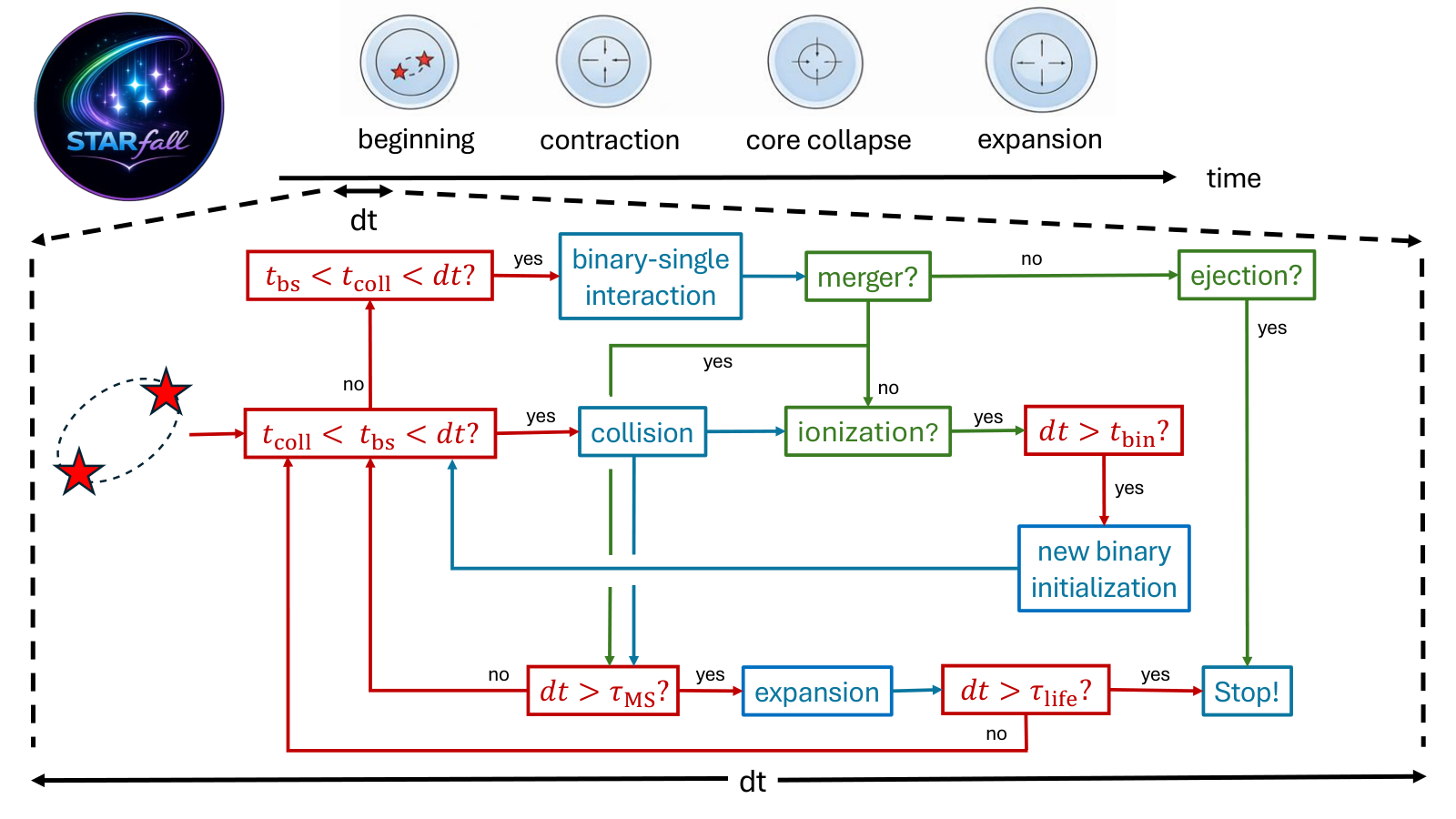
Figure 1 from The STARfall pathway: forging intermediate-mass black holes through stellar collisions in dense star clusters

2026-11-04 · 2611.03812v1 · Research note

The STARfall pathway: forging intermediate-mass black holes through stellar collisions in dense star clusters

Filippo Simonato, Manuel Arca Sedda, Taeho Ryu, et al.

STARfall semi-analytically models collision-driven very massive stars in dense clusters, predicting 10^3–10^4 M⊙ IMBH seeds under favorable density and timescale conditions. Its Little Red Dot implication is conditional on unresolved systems being sufficiently compact stellar clusters.

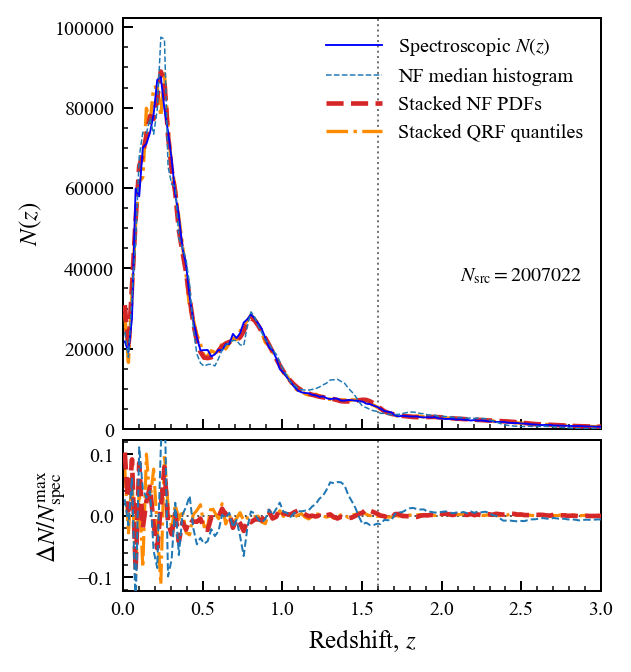
Figure 3 from Beyond Point Photo-$z$ Estimates: Normalizing Flows for Tomographic $N(z)$ Reconstruction with DESI DR1

2026-11-03 · 2611.00121v1 · Research note

Beyond Point Photo-$z$ Estimates: Normalizing Flows for Tomographic $N(z)$ Reconstruction with DESI DR1

Zhuo Chen, Antoine Rocher, Kwan Chuen Chan, et al.

On a spatially independent DESI DR1 test set, conditional normalizing-flow redshift PDFs generally reconstruct tomographic N(z) better than quantile random forests, especially at high redshift; calibration improves several low-z mean-redshift biases but leaves population-transfer and residual-calibration limitations.

2026-11-03 · 2610.33154v1 · Research note

A Composite Rest-Frame UV Spectrum of Galaxies at $5.7 < z < 6.9$: Ionization, Outflows, and Implications for Intergalactic Metal Enrichment

David DePalma, Robert A. Simcoe, Anna-Christina Eilers, et al.

A 104-galaxy JWST composite at mean z=6.50 finds ≈180–200 km s⁻¹ blueshifted interstellar absorption. A simple wind-propagation model places most material only 3–9 proper kpc away, challenging bright [O III]-selected galaxies as the dominant source of widespread intergalactic metals.

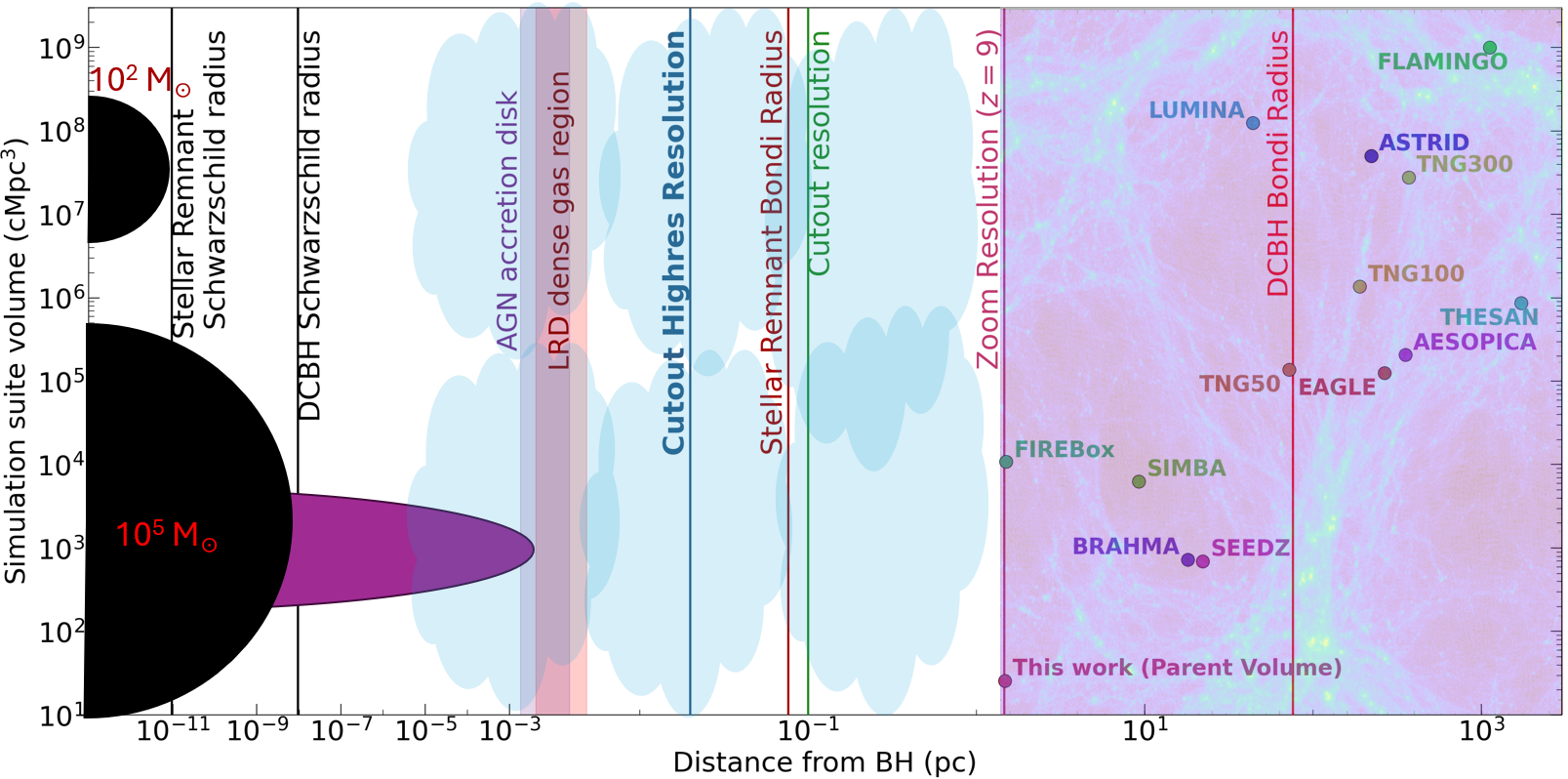
Figure 1 from Heavy Seeds and the Multi-scale Fueling of Early Supermassive Black Holes and Little Red Dots

2026-10-28 · 2610.36089v1 · Research note

Heavy Seeds and the Multi-scale Fueling of Early Supermassive Black Holes and Little Red Dots

Junehyoung Jeon, Volker Bromm, Boyuan Liu, et al.

Nested sub-pc cutouts suggest that a direct-collapse heavy seed, unlike a stellar-remnant seed in these simulations, can assemble dense nearby gas, undergo bursty super-Eddington accretion, and yield a Balmer-break LRD-like spectrum. This is a model-dependent result, not a demographic measurement.

Figure 1 from $El\ Ascua$: An ultra-luminous, radio-loud, Compton-thick AGN at $z\sim 3.8$ hiding in plain sight revealed by MINERVA multi-band MIRI observations

2026-10-27 · 2610.33155v1 · Research note

$El\ Ascua$: An ultra-luminous, radio-loud, Compton-thick AGN at $z\sim 3.8$ hiding in plain sight revealed by MINERVA multi-band MIRI observations

Aidan P. Cloonan, Edgar P. Vidal, Alexandra Pope, et al.

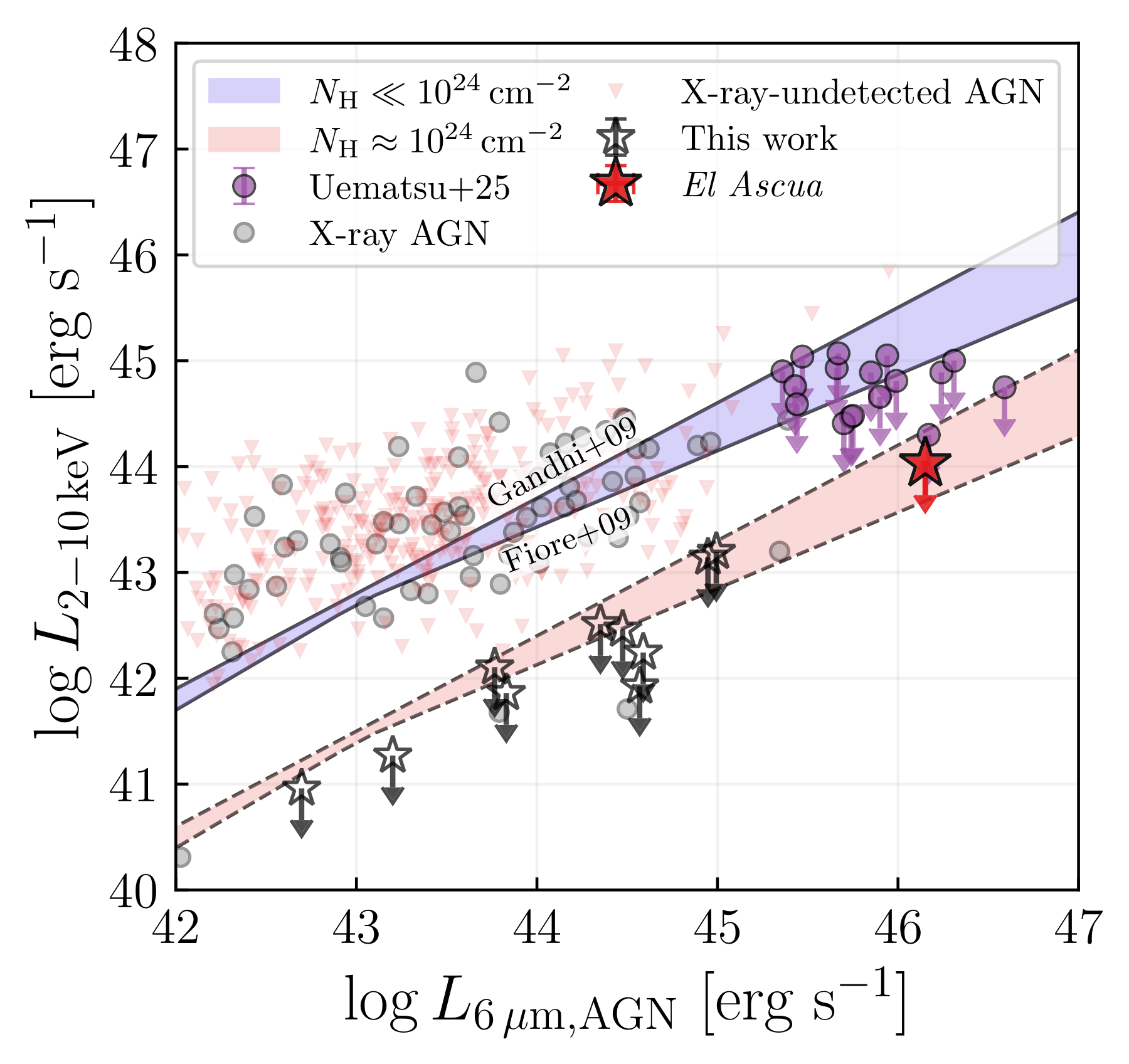
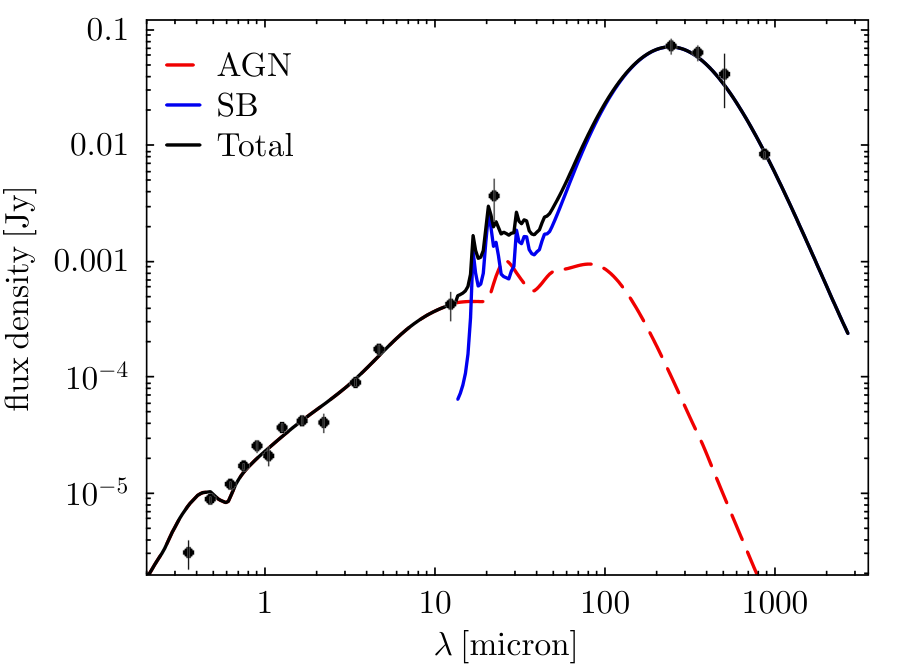
MINERVA/MIRI identifies el Ascua at z~3.8 as a mid-IR-dominant, X-ray-undetected Compton-thick AGN candidate. UV-to-radio SED fitting indicates rapid black-hole growth and a probable AGN radio excess, but obscuration and radio-loudness remain indirect inferences.

Figure 2 from Local Analogs of Little Red Dots: Clues to the X-ray Weakness

2026-10-26 · 2610.32430v1 · Research note

Local Analogs of Little Red Dots: Clues to the X-ray Weakness

Shi-Jiang Chen, Jun-Xian Wang, Zhen-Ya Zheng, et al.

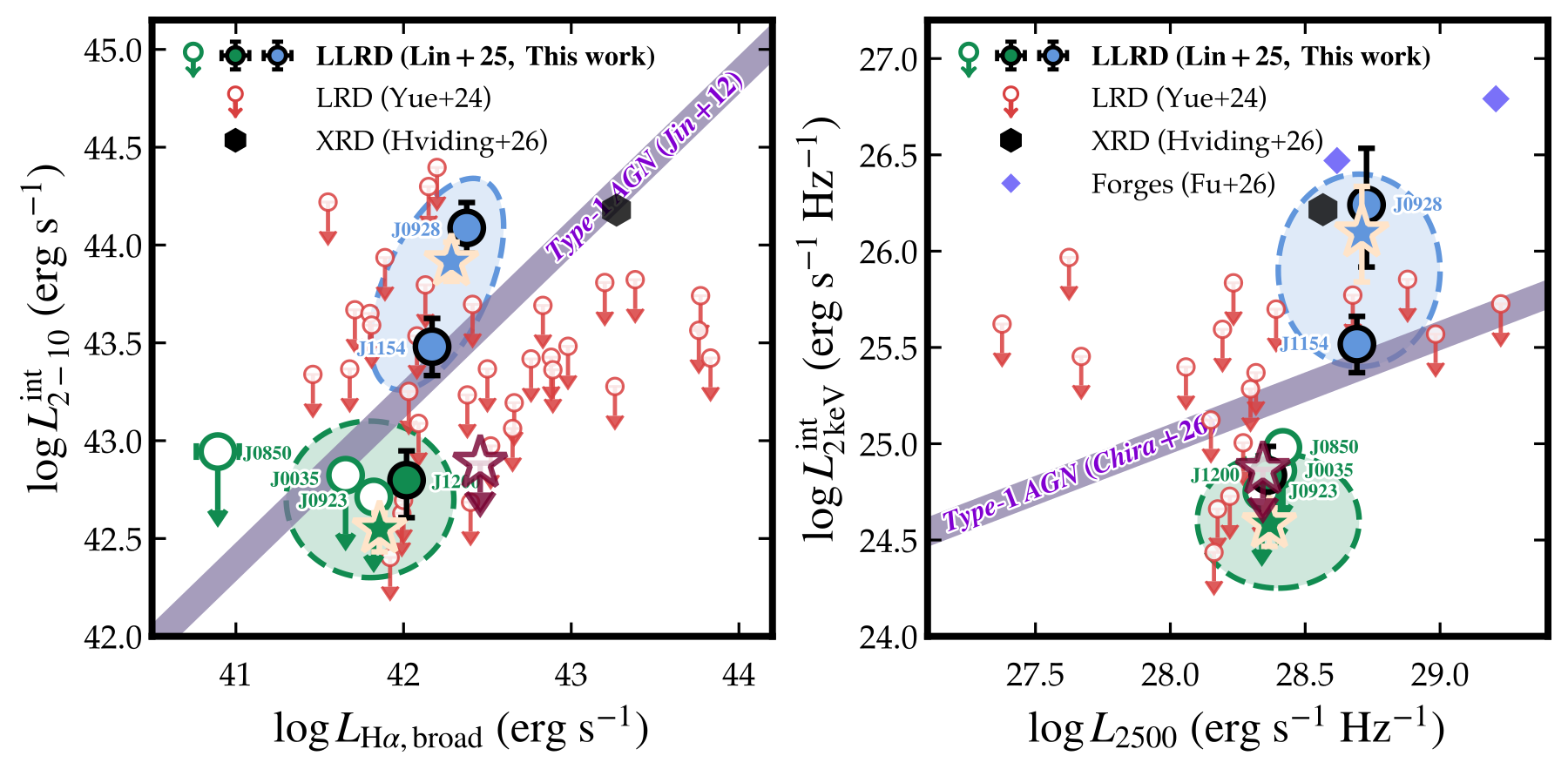
Einstein Probe observations of six z≈0.3 local LRD analogs find an X-weak subgroup whose stacked soft-X-ray constraints favor modest intrinsic coronal weakness plus Compton-thin absorption, rather than the specific unobscured super-Eddington or local Compton-thick geometries tested.

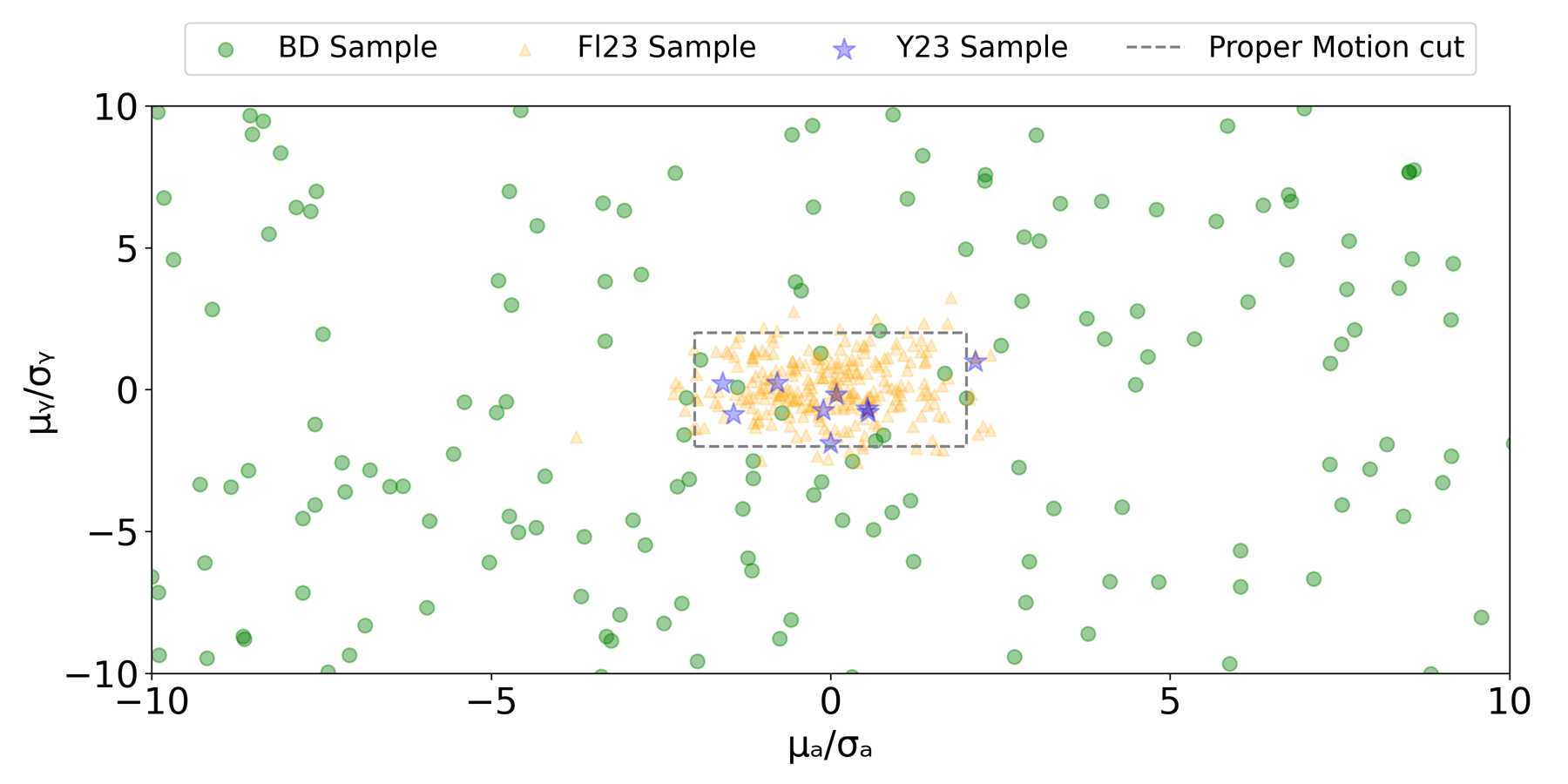
Figure 2 from A heterogeneous set of unusual quasars selected from astrometry and broad-band photometry

2026-10-15 · 2610.19838v1 · Research note

A heterogeneous set of unusual quasars selected from astrometry and broad-band photometry

C. Cheng, K. Valeckas, L. Christensen, et al.

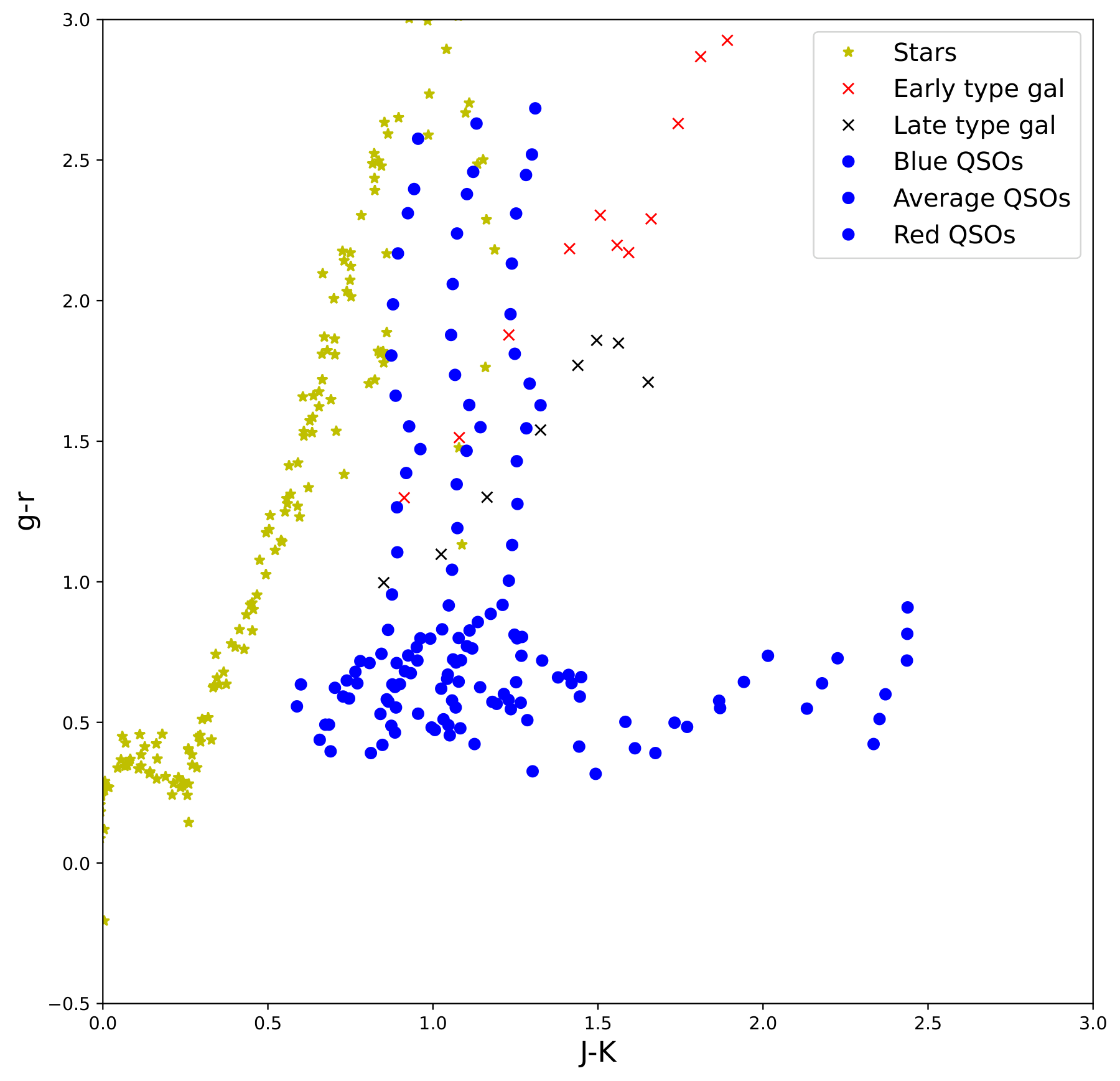
Gaia zero-motion selection plus broad-band colours and spectroscopy confirmed 21 quasars among 24 candidates, disproportionately finding BAL quasars in photometrically transitional regions. One low-redshift normal quasar is described as LRD-like, but this is not a high-redshift LRD sample.

Figure 3 from Deep X-ray View of a Distant Protocluster Anchored by a Quasar at $z=6.63$: No Evidence for Enhanced X-ray AGN Activity

2026-10-15 · 2610.19317v1 · Research note

Deep X-ray View of a Distant Protocluster Anchored by a Quasar at $z=6.63$: No Evidence for Enhanced X-ray AGN Activity

Shouyi Wang, Feige Wang, Jinyi Yang, et al.

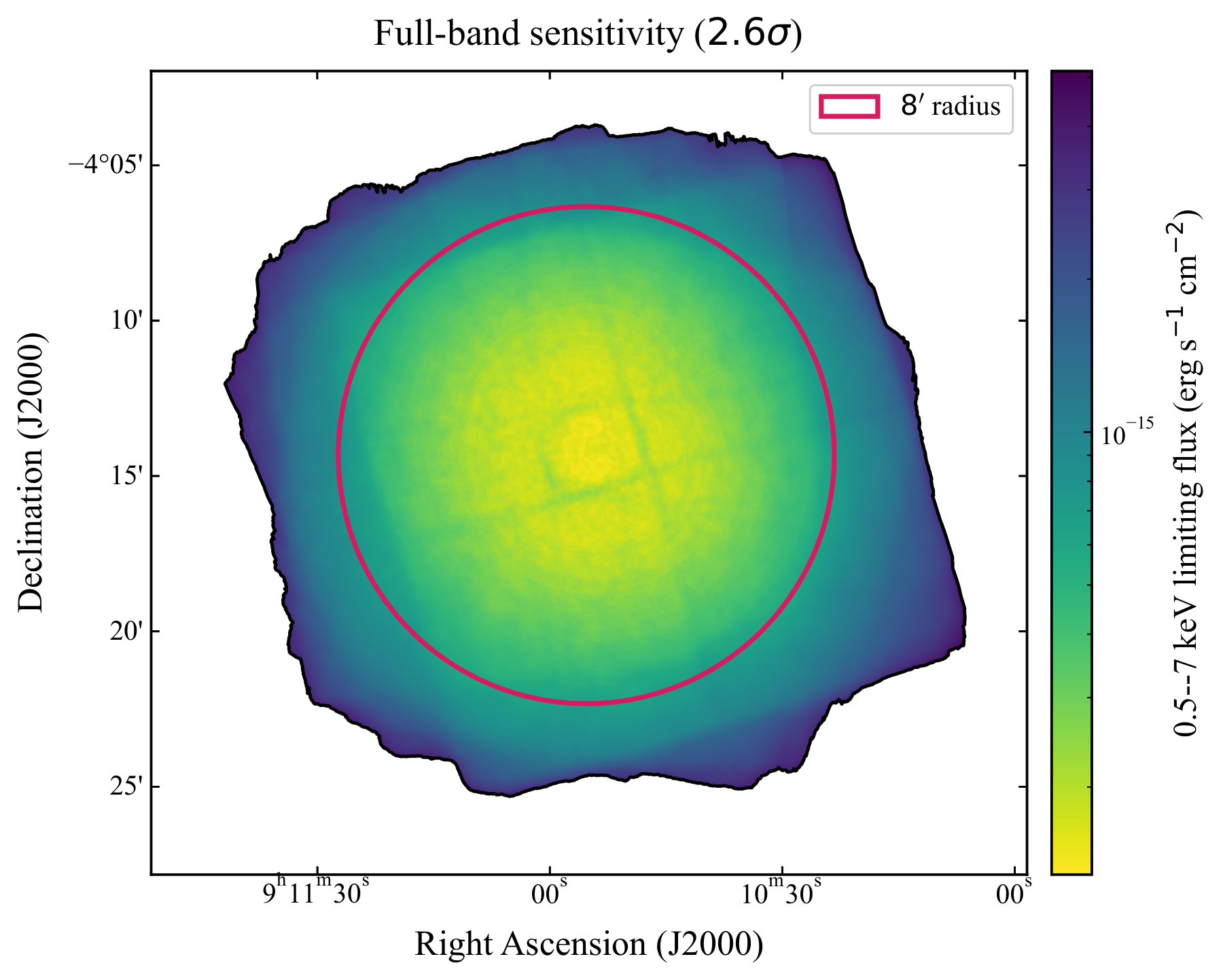
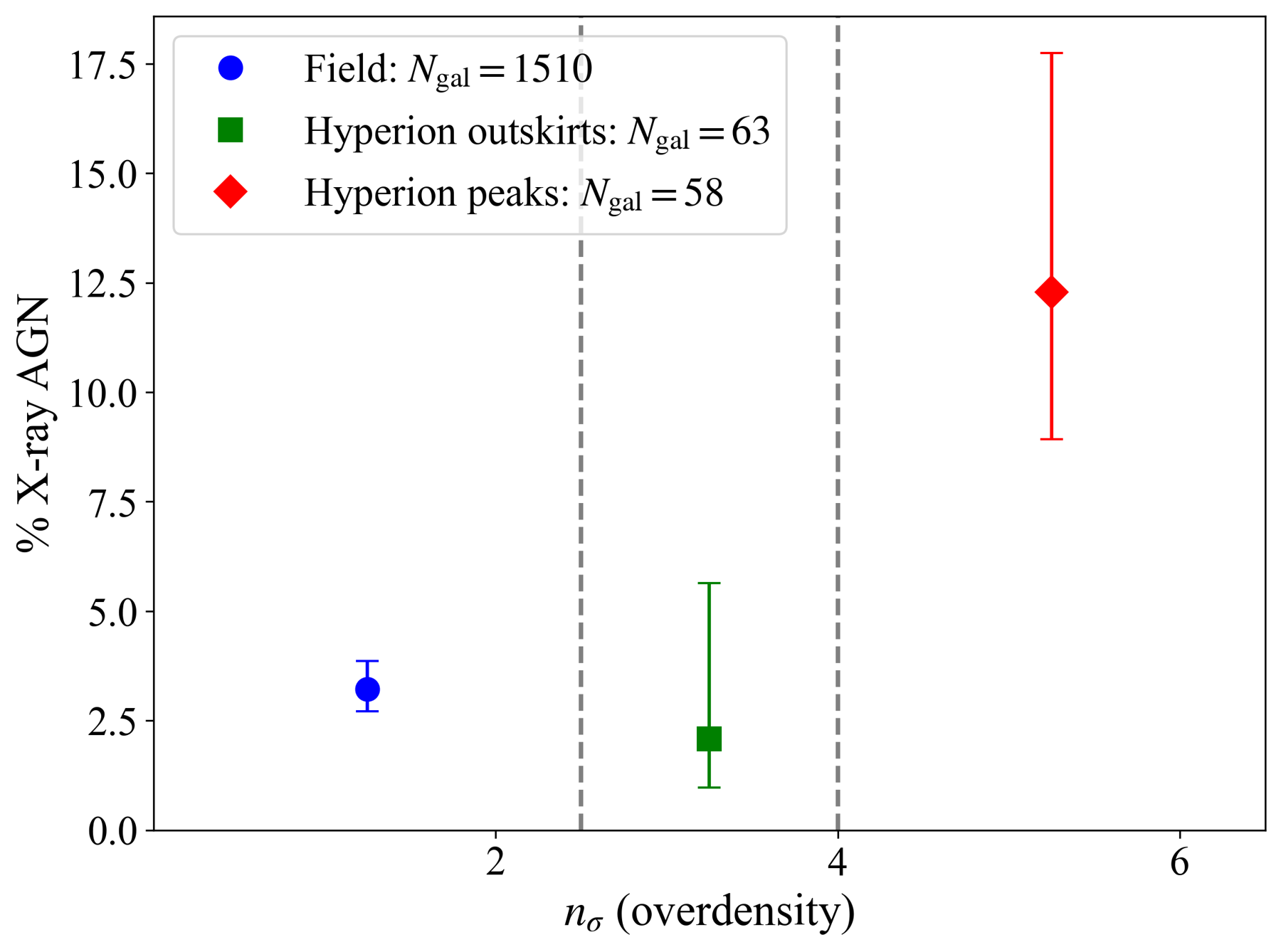
In 865 ks of Chandra imaging, no X-ray AGN is detected among 21 confirmed non-quasar members of the z=6.63 J0910−0414 protocluster. The resulting limits do not establish environmental enhancement, but still allow substantial excess activity.

Figure 2 from Widespread steep X-ray spectra of luminous $z\simeq5.85-7.6$ quasars and their implications for future X-ray surveys

2026-10-08 · 2610.10522v1 · Research note

Widespread steep X-ray spectra of luminous $z\simeq5.85-7.6$ quasars and their implications for future X-ray surveys

A. Tortosa, L. Zappacosta, E. Piconcelli, et al.

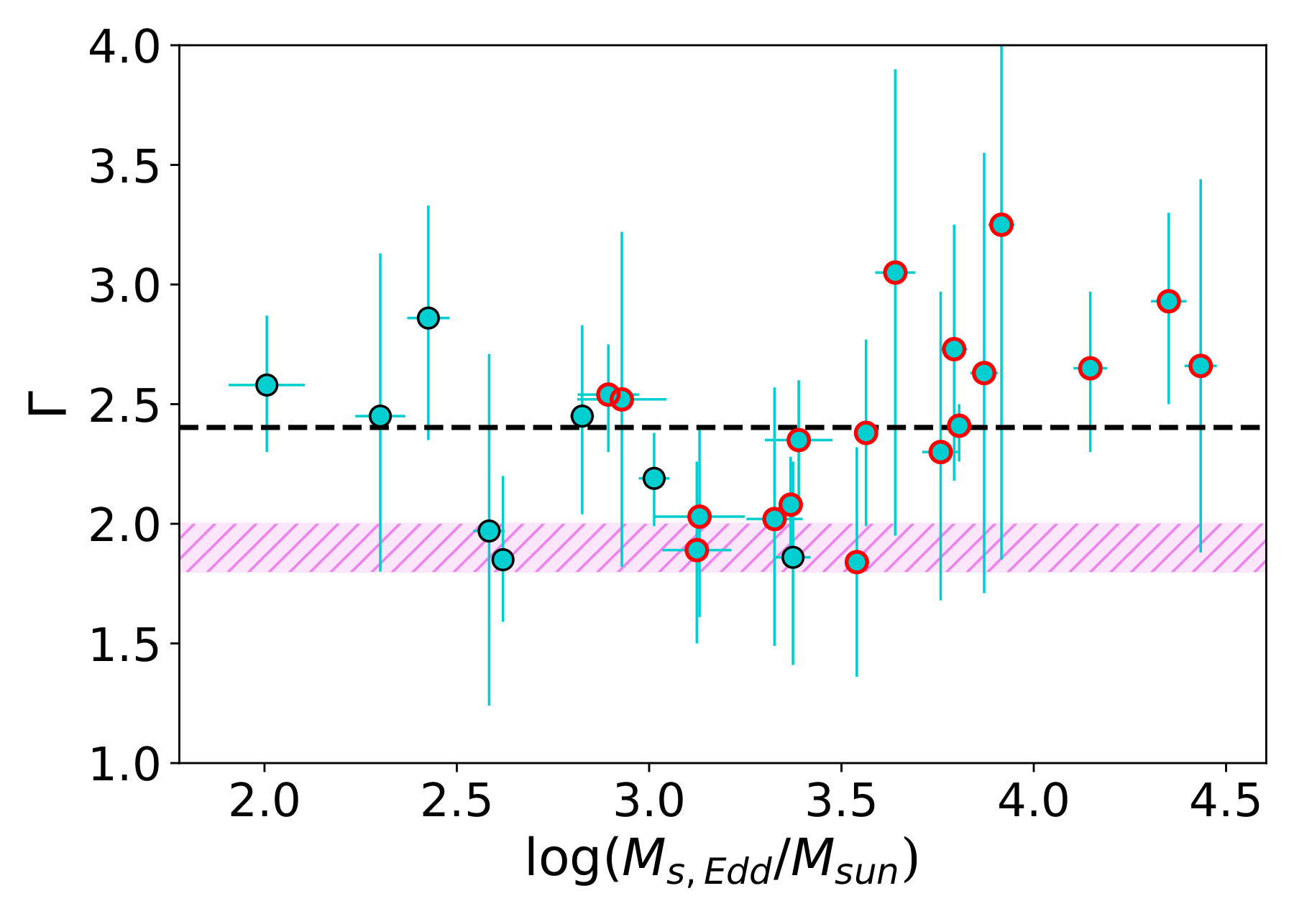
Across 28 luminous quasars at z=5.85–7.56, X-ray continua are systematically steep, yet show no significant dependence on black-hole growth indicators. The inferred spectral shapes could modestly to severely reduce high-redshift survey count rates.

Figure 1 from MUSE-ALMA Haloes XVI: a census of the condensed baryons in z~0.5 HI absorption-selected galaxies

2026-10-08 · 2610.10117v1 · Research note

MUSE-ALMA Haloes XVI: a census of the condensed baryons in z~0.5 HI absorption-selected galaxies

T. O'Beirne, C. Péroux, M. Zwaan, et al.

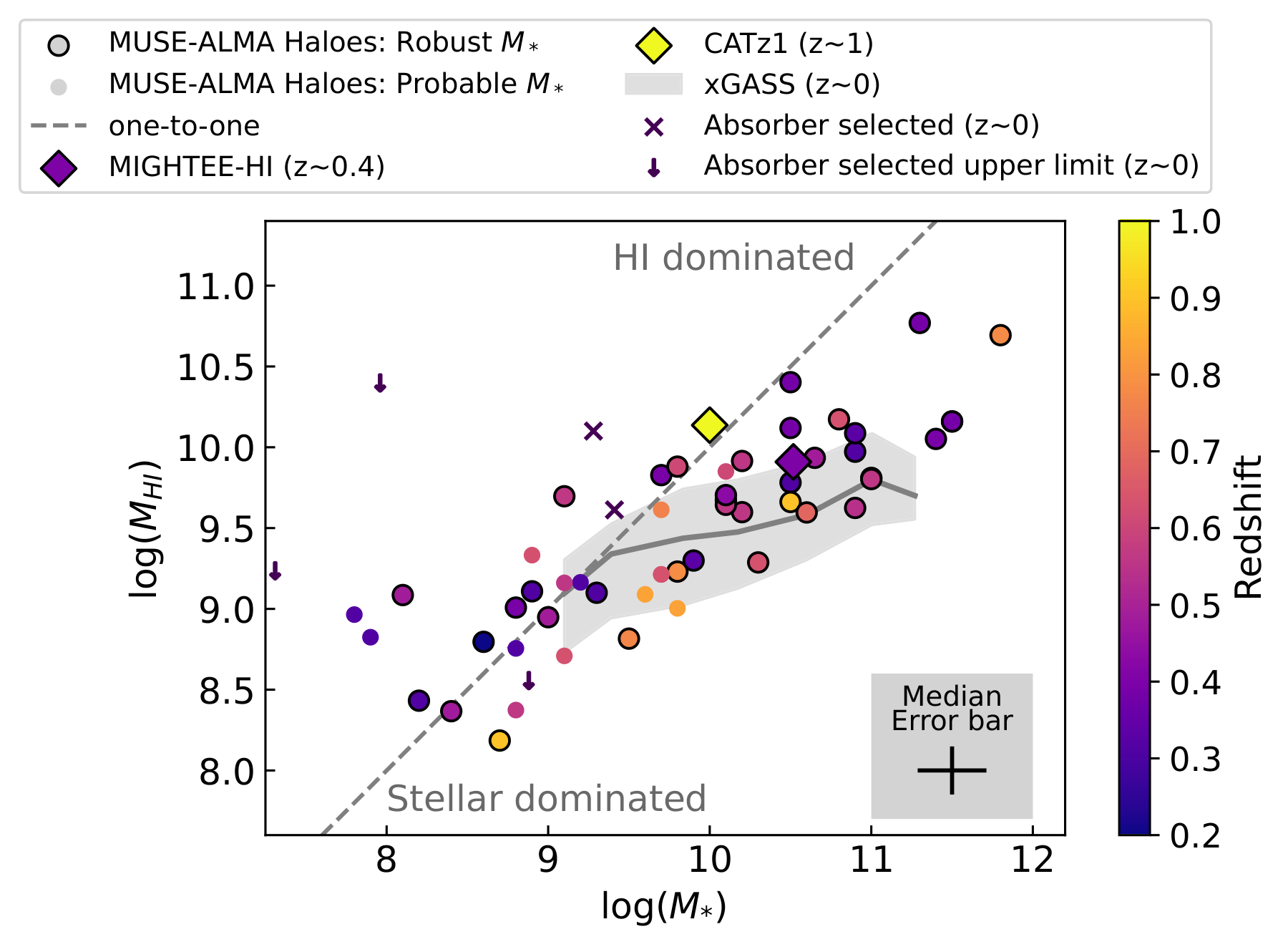
Across 79 H I absorber-selected galaxies at 0.2<z<1.2, the authors combine multiwavelength data to inventory stars and cold gas, finding broadly consistent indirect H I estimators at small impact parameter but environmentally driven scatter and mass-dependent gas fractions.

Figure 1 from The differences in the Narrow Line Region of nearby QSOs 1 and QSOs 2: II - Signatures of kinetic feedback

2026-10-06 · 2610.03925v1 · Research note

The differences in the Narrow Line Region of nearby QSOs 1 and QSOs 2: II - Signatures of kinetic feedback

Gabriel R. Hauschild-Roier, Thaisa Storchi-Bergmann, Rogério Riffel, et al.

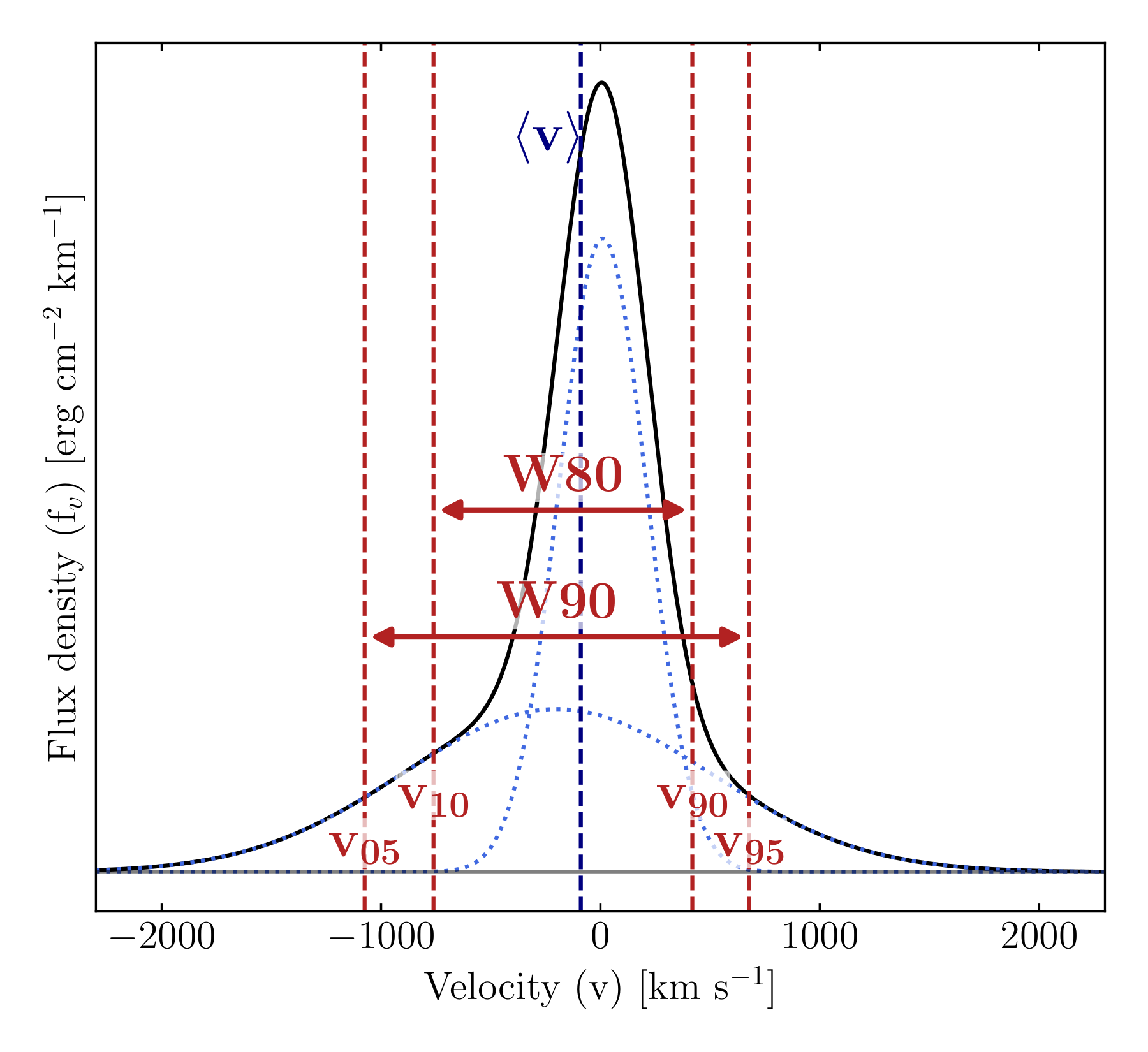
In SDSS fibre spectra of 1,541 type-1 and 688 type-2 QSOs at z=0.4–0.5, broad NLR components are more blueshifted in type 1s, consistent with orientation-dependent visibility of faster ionised outflowing gas, but energetics remain model-sensitive.

2026-10-06 · 2610.03877v1 · Research note

Internal Radiative Feedback Triggers Global Collapse and Direct-Collapse Black Hole Formation in Metal-free Atomic-Cooling Haloes

Masaki Kiyuna, Sunmyon Chon, Kazuyuki Omukai, et al.

Cosmological radiation-hydrodynamic simulations suggest that Pop III stars can internally suppress H2 cooling after initial fragmentation, enabling warm-reservoir collapse and rapidly accreting supermassive-star candidates under modest external FUV fields rather than the conventionally required extreme irradiation.

Figure 2 from Caught in the act: diffuse stellar and Ly$α$ emission around a halo-less quasar in the assembling cluster CARLA J0800+4029 at z=2

2026-09-30 · 2609.37445v1 · Research note

Caught in the act: diffuse stellar and Ly$α$ emission around a halo-less quasar in the assembling cluster CARLA J0800+4029 at z=2

Sofia G. Gallego, Simona Mei, Emanuele Daddi, et al.

KCWI and HST reveal that CARLA J0800+4029’s dominant Lyα reservoir is tidal and offset from its radio-loud quasar, while a matched-area quasar-halo limit is 3.4 times lower, consistent with spatially redistributed baryons during cluster assembly.

2026-09-24 · 2609.26931v1 · Research note

Radio Quasars in the Cosmic Dawn: A Spectroscopic Sample from the DESI Survey

Anniek J. Gloudemans, Jinyi Yang, David M. Alexander, et al.

DESI spectroscopy plus 144-MHz LOFAR imaging identifies 83 radio-detected quasars at 4.7<z<6.7, including 26 radio-loud objects. Their UV spectra are broadly similar to non-detections; tentative weak-line excesses and BAL trends remain statistically inconclusive.

2026-09-18 · 2609.19459v1 · Research note

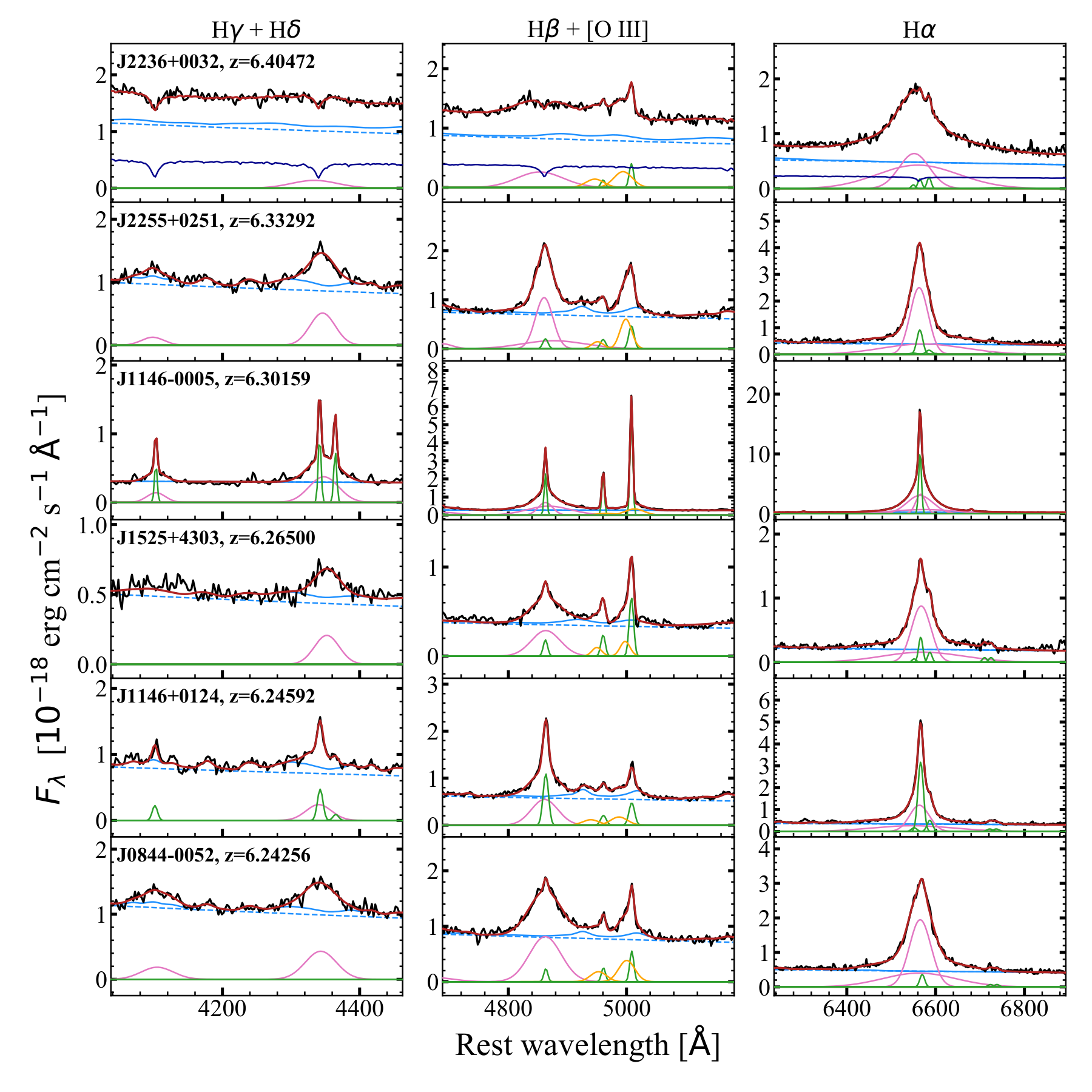
Extreme Enrichment at Cosmic Dawn: Three FeII-Strong Quasars at z > 6 from the JWST Aether survey

Anniek J. Gloudemans, Emanuele Paolo Farina, Roberto Decarli, et al.

JWST/NIRSpec IFU spectra identify three z>6 quasars with extreme optical Fe II relative to Hβ, supporting rapid early enrichment while leaving accretion rates and nearby line-emitting structures materially uncertain.

Figure 1 from An ALMA Band 7 survey of SDSS/Herschel quasars in Stripe 82: II. The nature of FIR-bright quasars

2026-09-16 · 2609.16951v1 · Research note

An ALMA Band 7 survey of SDSS/Herschel quasars in Stripe 82: II. The nature of FIR-bright quasars

Evanthia Hatziminaoglou, Hugo Messias, Duncan Farrah, et al.

For 142 optically unobscured, FIR-bright Stripe 82 quasars at z=1–4, ALMA deblending lowers inferred host SFRs yet leaves extreme starbursts. The authors find weak instantaneous starburst–accretion coupling and UV-line differences consistent with a transitional interpretation.

Figure 1 from Nitrogen-Loud Quasars from the Dark Energy Spectroscopic Instrument. I. Sample Selection and Basic Properties

2026-09-11 · 2609.11104v1 · Research note

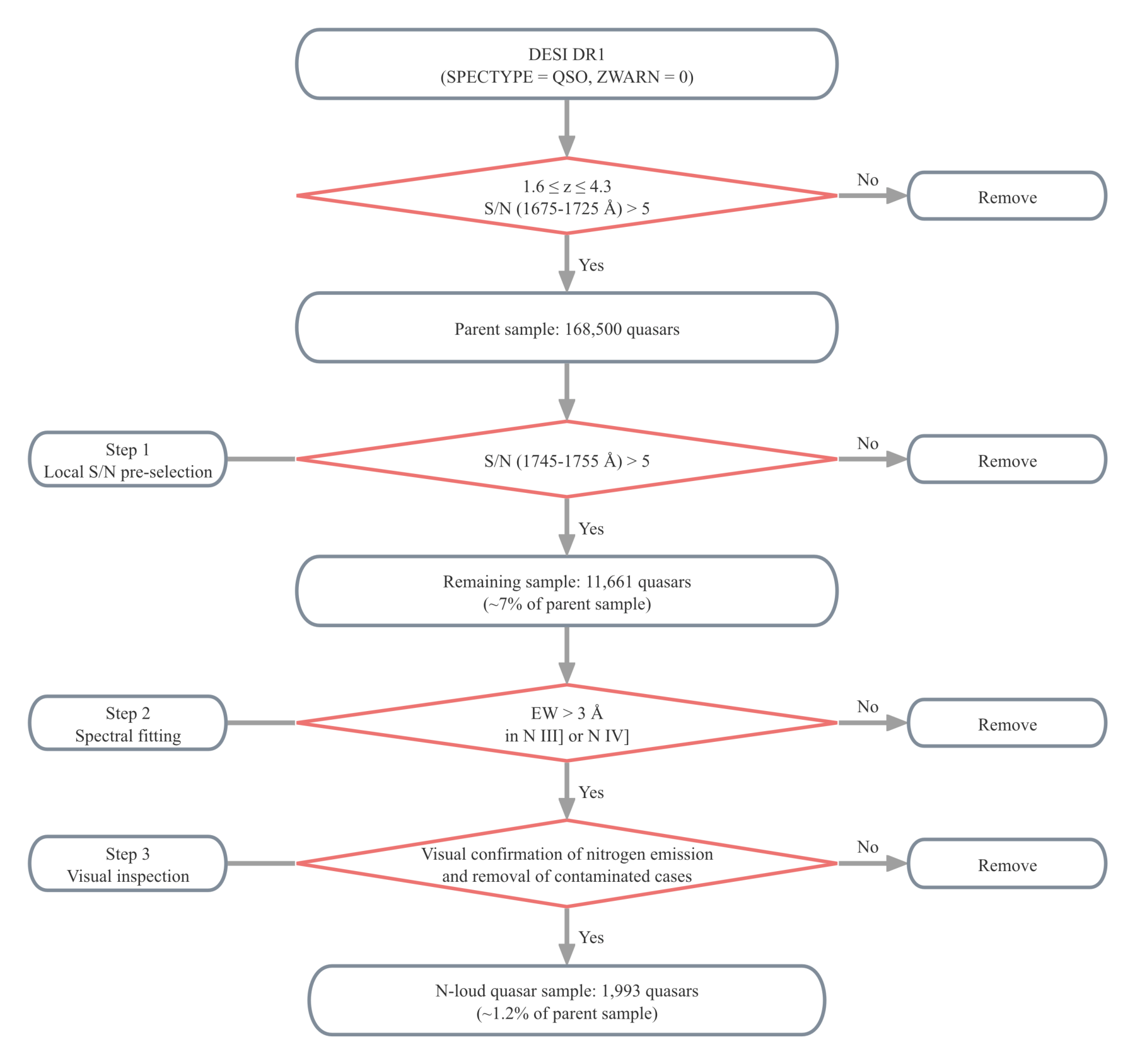
Nitrogen-Loud Quasars from the Dark Energy Spectroscopic Instrument. I. Sample Selection and Basic Properties

Shuo Zhai, Wei-Jian Guo, Yong-Jie Chen, et al.

DESI DR1 yields 1,993 nitrogen-loud quasars at 1.6<z<4.3 (1.2% of the parent sample). Matched-control comparisons associate nitrogen-loud spectra with narrower broad lines, lower virial masses, and higher inferred Eddington ratios.

Figure 3 from SHELLQs. Black Hole Mass and Eddington Ratio Distributions of Intermediate-Luminosity Quasars at 6<z<7

2026-09-10 · 2609.09266v1 · Research note

SHELLQs. Black Hole Mass and Eddington Ratio Distributions of Intermediate-Luminosity Quasars at 6<z<7

Masafusa Onoue, John D. Silverman, Yoshiki Matsuoka, et al.

Near-IR spectroscopy of intermediate-luminosity SHELLQs quasars finds lower median virial black-hole masses and higher Eddington ratios than luminosity-matched z≈1.3 quasars, with 11–22% inferred near/super-Eddington depending on the single-epoch mass calibration.

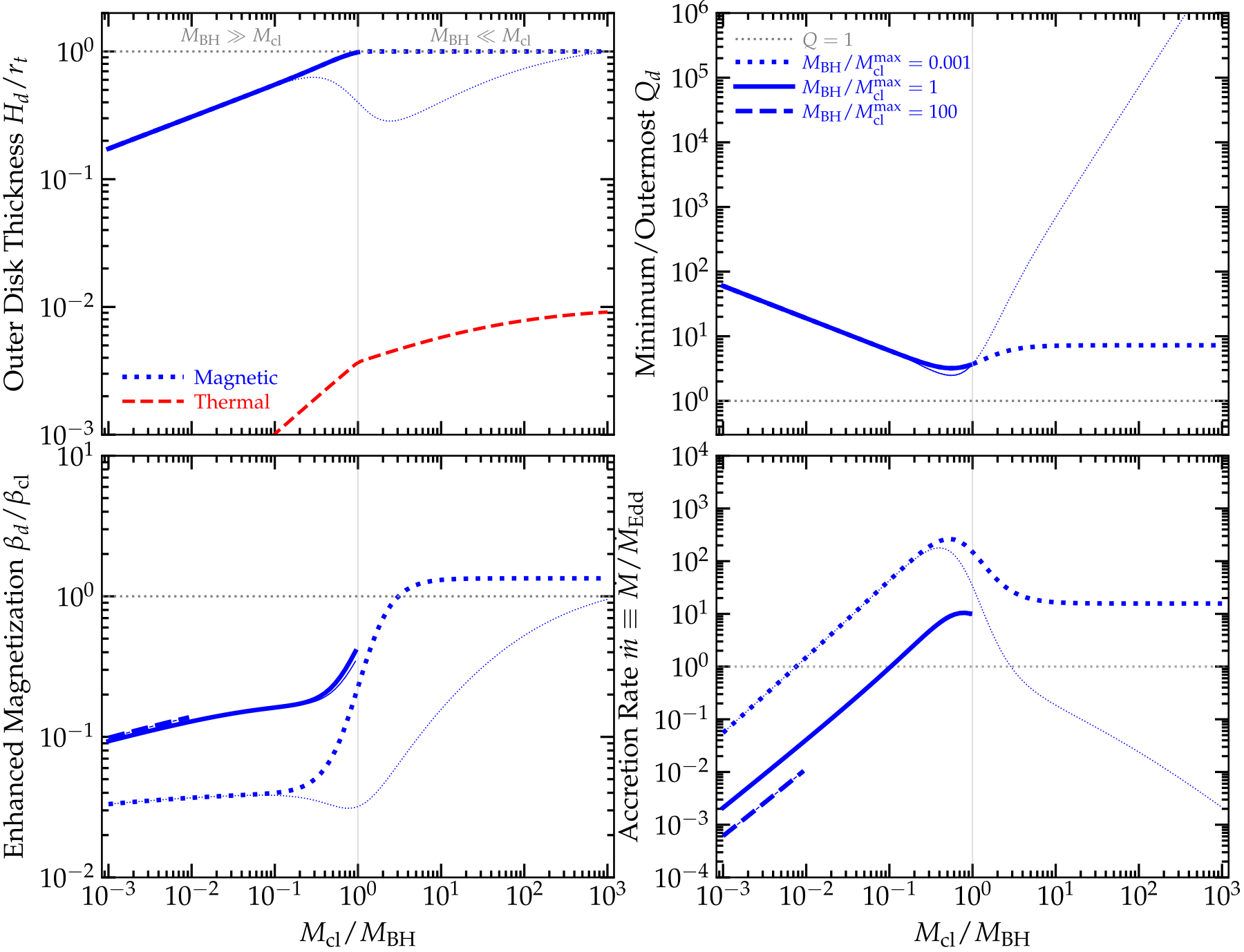
Figure 5 from Early Supermassive Black Holes and Little Red Dots Require Free-Fall Growth

2026-09-02 · 2609.00115v1 · Research note

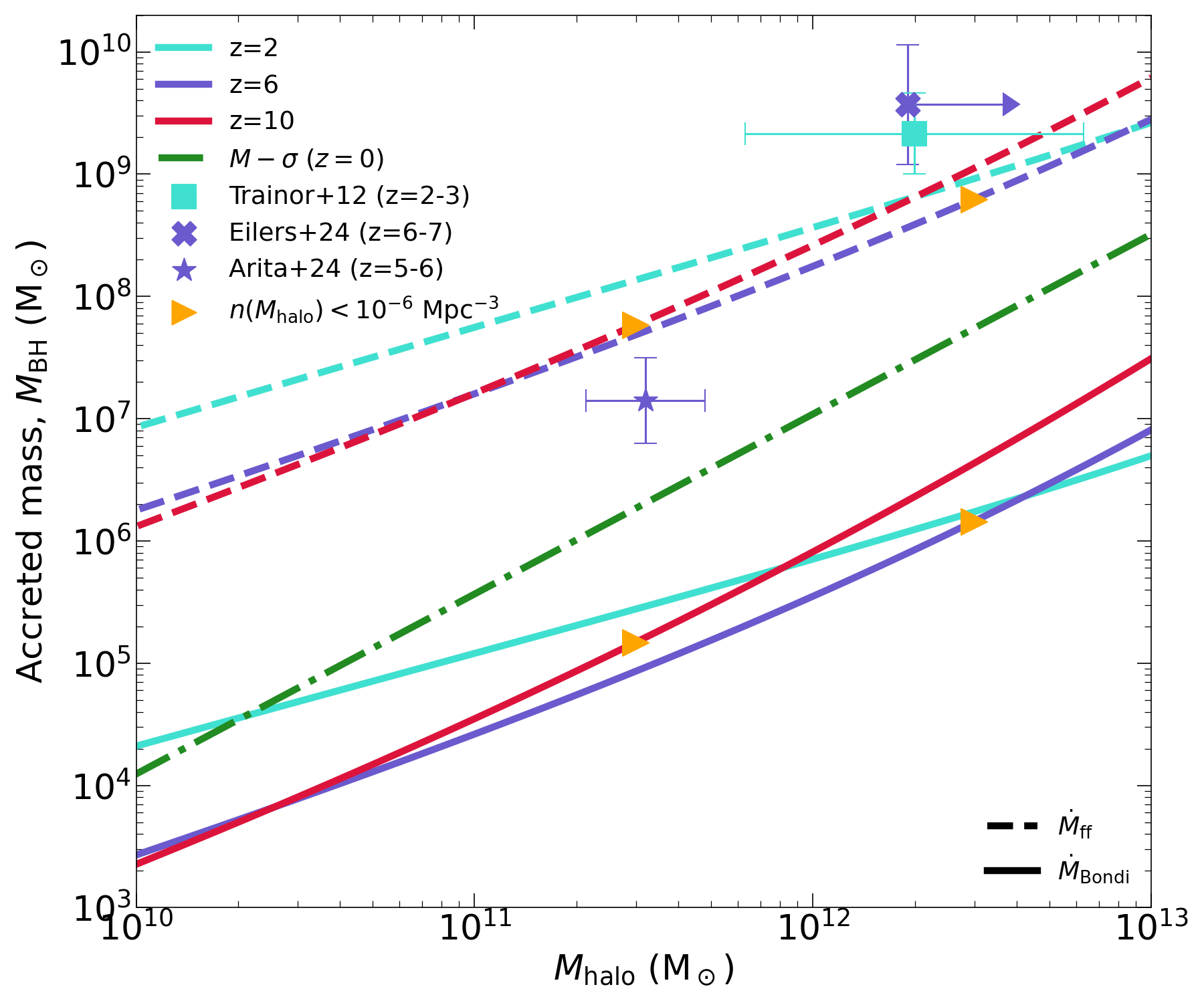
Early Supermassive Black Holes and Little Red Dots Require Free-Fall Growth

Junehyoung Jeon, Volker Bromm, Michael Boylan-Kolchin, et al.

An analytic halo-inflow model argues that observed early AGN and, conditionally, little red dots (LRDs) require near-free-fall cold gas supply rather than Bondi–Hoyle inflow; it treats this as an upper-limit fuel budget, not a direct measurement of black-hole accretion.

2026-08-27 · 2608.25044v1 · Research note

To be lensed or not to be lensed: on the nature of the alleged high-z lensed quasars J0109-5424 and P170+20

Aurora Mata-Sanchez, Emanuele P. Farina, Anniek J. Gloudemans, et al.

Multi-wavelength follow-up overturns J0109−5424’s proposed high-redshift lens interpretation: Paschen lines place it at z=2.07 as a FeLoBAL quasar. For P170+20, compact imaging and a quasar+M-dwarf spectral fit disfavor, but do not exclude, lensing.

2026-08-20 · 2608.18691v1

The Total and Polarized Radio Emission from the Innermost Jets of a High-Redshift Quasar and a Candidate at Parsec-Scale Resolution

Bence Husvéth, Krisztina É. Gabányi, Tao An, et al.

Husvéth et al. present 22-GHz EVN total-intensity and polarimetric VLBI imaging of the secure z=4.31 quasar J1510+5702 and the redshift-uncertain compact source J1606+3124, sampling rest-frame frequencies above 118 GHz if both published high-redshift values apply. J1510+5702 contains a very compact, polarized core with Tb = (1.08 ± 0.15) × 10^12 K and about 3.5% fractional polarization, implying an equipartition Doppler factor of roughly 22 and directly probing its strongly beamed inner jet. J1606+3124 shows only low-level polarization and, conditional on z=4.56, a lower Tb of (7.4 ± 0.8) × 10^10 K that permits mild boosting but leaves a young compact-source interpretation viable; the key caveat is that its published spectroscopic redshift is uncertain, with a photometric estimate near z=0.9. Together, the measurements demonstrate that 22-GHz cm-VLBI can recover rest-frame millimeter polarization from bright z>4 jet systems.

2026-08-12 · 2608.10280v1

Tabular foundation models for the estimation of probabilistic quasar photometric redshifts in S-PLUS

Raquel R. Valença, Lilianne Nakazono, Rafael Izbicki, et al.

This paper tests whether frozen tabular foundation models can deliver full probabilistic quasar photo-z posteriors for the 12-band S-PLUS DR6 survey, where colour-redshift degeneracies and spectroscopic-to-photometric covariate shift make single-value estimates inadequate. Across training sets spanning 500 to 121,626 quasars and comparisons with eight specialised baselines, TabPFN 2.5 is best or statistically tied for best on nearly every density and point-estimation metric, with especially strong gains for small training samples, bright or faint sources, and high-redshift quasars. Its posteriors remain close to nominally calibrated after importance-weighted evaluation intended to emulate the photometric target catalogue, making it a strong default for catalogue-scale quasar redshift inference; the practical limitation is the accelerator-memory cost of inference on large support and target sets. SHAP results further identify WISE W1/W2 as the most informative individual inputs, with UV and optical bands providing useful refinements.

2026-08-12 · 2608.10070v1 · Research note

A cosmic collision in the making: JWST/NIRISS reveals a merging and maturing protocluster core at z~3 around a red quasar

C. Bertemes, D. Wylezalek, G. Noirot, et al.

JWST/NIRISS spectroscopy identifies an exceptionally dense z≈3 protocluster around quasar J1652, with 18 robust members, two quiescent galaxies, and position–velocity substructure consistent with—though not proving—a merger of two haloes.

2026-08-06 · 2608.04078v1

The most extreme high-z radio quasars in the eRASS:1 X-ray survey

L. Ighina, L. Palmieri, L. N. Martínez-Ramírez, et al.

Ighina et al. construct an eRASS:1-selected sample of extreme radio quasars by cross-matching eROSITA X-ray sources with RACS radio detections and DELVE optical/NIR dropout candidates, then spectroscopically following up 46 of 68 candidates. They confirm 39 quasars at z>3.5, including 14 new z>4 radio quasars, increasing the population above the same flux limits and area by about 65%. Their X-ray-to-optical and radio-loudness diagnostics identify a predominantly blazar-like subset, whose cumulative z>4 counts agree reasonably well with a fractional IC/CMB X-ray-enhancement model. The resulting uniformly selected sample provides a stronger basis for testing early jetted-SMBH growth and relativistic-jet evolution, although the redshift distribution remains affected by incomplete spectroscopy and blazar-classification choices.

Figure 9 from An Exploratory Analysis of New Large Gaia-informed Quasar Samples in SDSS-V

2026-07-31 · 2607.27329v1 · Research note

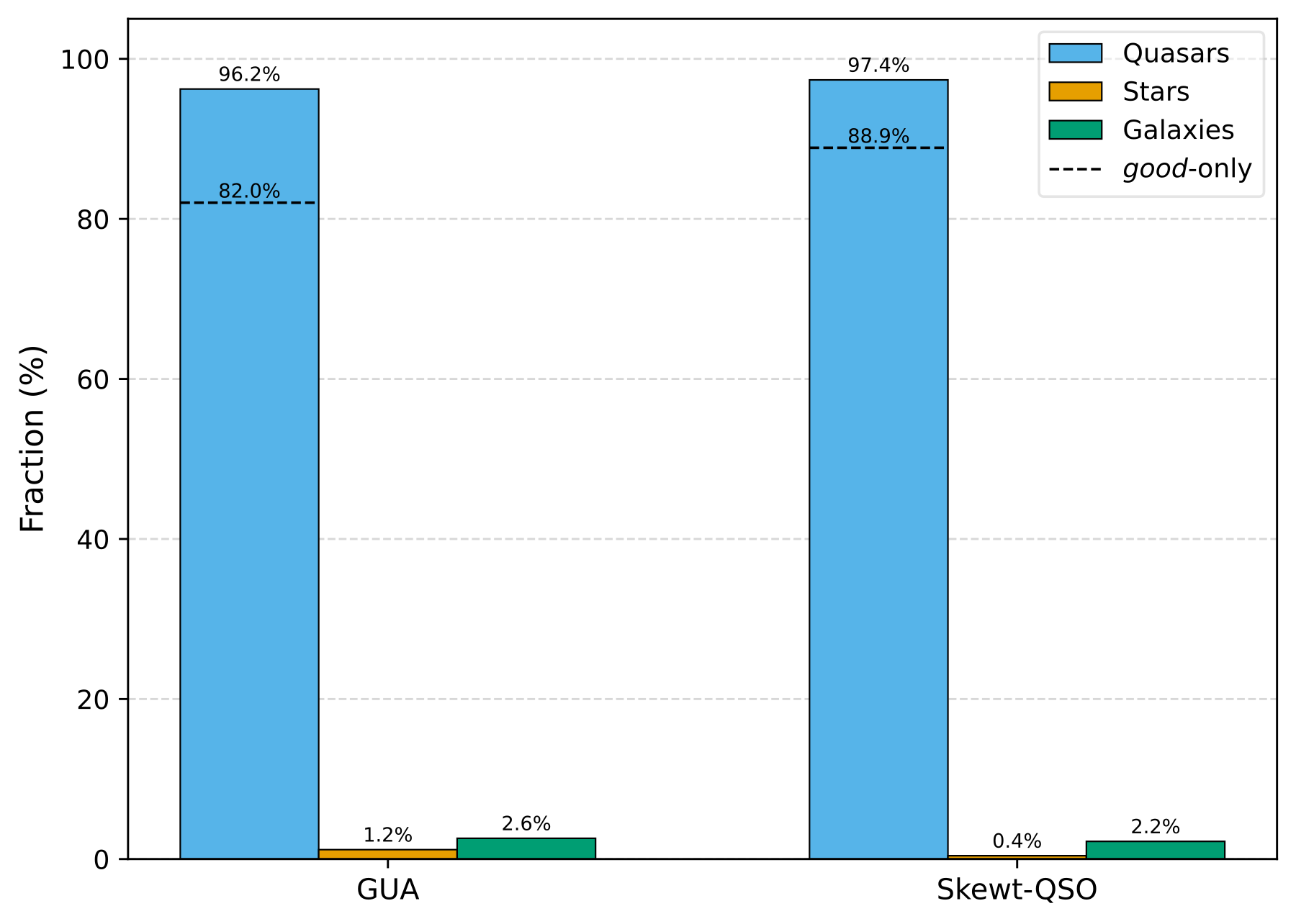
An Exploratory Analysis of New Large Gaia-informed Quasar Samples in SDSS-V

Shir Aviram, Benny Trakhtenbrot, Tom Dwelly, et al.

SDSS-V’s Gaia/WISE-informed GUA and Skewt_QSO targeting yields a large, mostly southern extension of spectroscopic quasars with broad physical-property coverage; after controlling redshift–luminosity selection differences, its black-hole and Eddington-ratio distributions agree with SDSS DR16Q.

Figure 1 from Vigorous turbulence driven by quasar-mode feedback in a cluster core

2026-07-29 · 2607.24911v1 · Research note

Vigorous turbulence driven by quasar-mode feedback in a cluster core

Satoshi Yamada, Shutaro Ueda, Hirofumi Noda, et al.

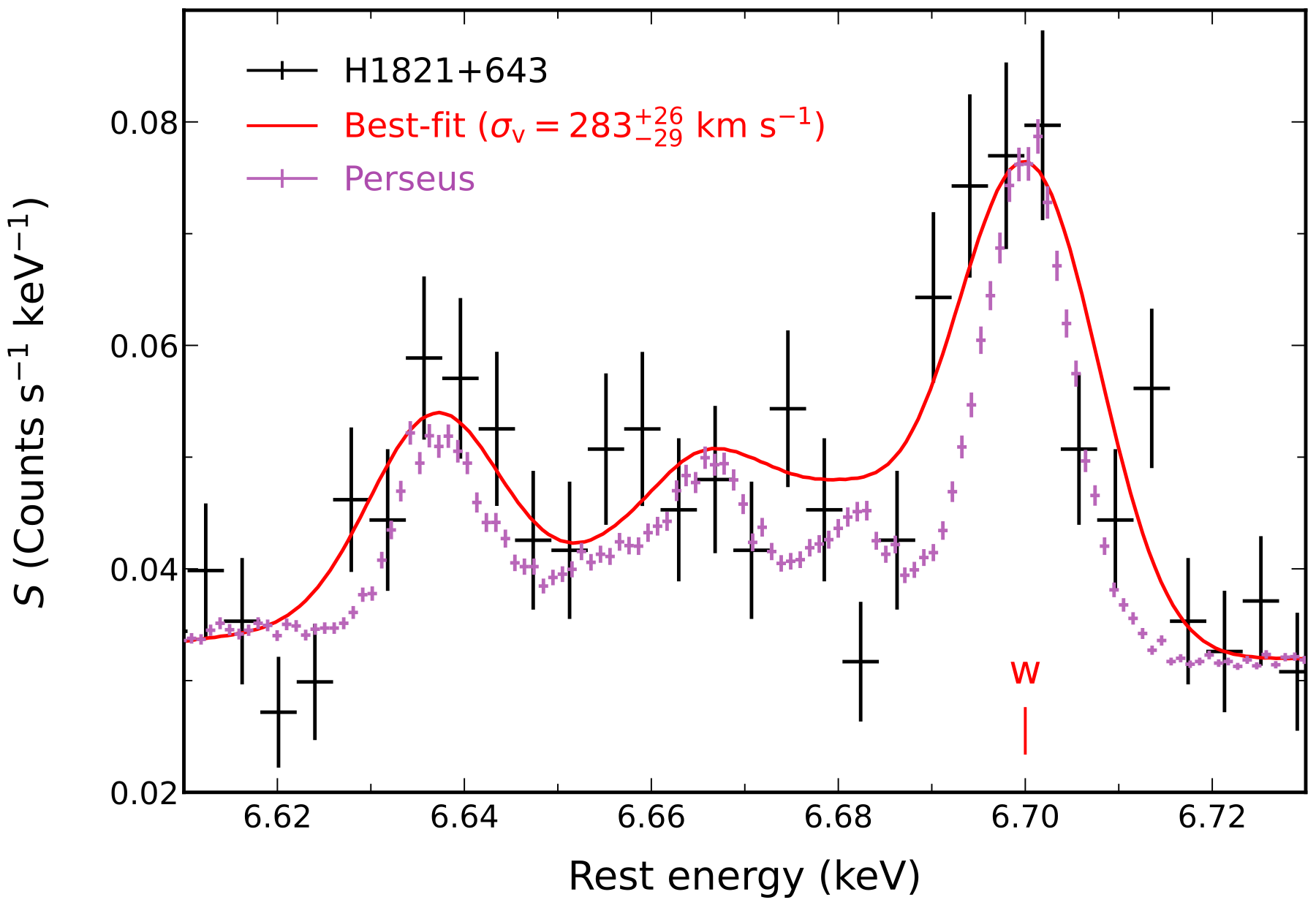
XRISM/Resolve spectroscopy of the z=0.297 quasar cluster H1821+643 measures unusually broad ICM Fe XXV lines, implying substantial non-thermal motions on 20–100 kpc scales. The authors interpret these motions as quasar-feedback coupling, but resonance scattering and sloshing remain relevant alternatives.

2026-07-27 · 2607.21869v1 · Research note

Stacked Reverberation Mapping of High Redshift Quasars in DESI. I. Feasibility Analysis

Rahma Alfarsy, R. E. A. Canning, Eva-Maria Mueller, et al.

DESI-like sparse spectroscopy plus ZTF-like photometry can, in simulations, recover stacked C IV reverberation lags and the input radius–luminosity relation within 1σ. Recovery depends especially on multi-hundred-day spectral baselines; this is feasibility evidence, not a measurement from DESI quasars.

Figure 2 from Outflows in super-Eddington quasars drive clumpy circumgalactic medium and extended H$α$ nebulae at $z \gtrsim 6$

2026-07-27 · 2607.21719v1 · Research note

Outflows in super-Eddington quasars drive clumpy circumgalactic medium and extended H$α$ nebulae at $z \gtrsim 6$

Lucas Tortora, Tiago Costa, Debora Sijacki, et al.

In one extreme z~6 halo, simulations predict that earlier seeding plus mildly super-Eddington growth drives cold, fast, neutral CGM clumps and extended Hα after feedback clears nuclear sightlines; this is a model prediction, not a population measurement.

2026-07-02 · 2607.00093v1 · Research note

Search for Quasar Pairs with ${\it Gaia}$ Astrometric Data. III. Discovery of 9 dual and projected quasars

Qihang Chen, Zizhao He, Zhuojun Deng, et al.

Long-slit follow-up of 11 Gaia-selected quasar-pair candidates yields six systems classified as dual quasars and three projected quasar pairs; however, lensing remains viable for three of the six nominal duals, requiring sharper imaging or time-domain tests.

Figure 2 from Kinematic detection of dusty outflows from active galactic nuclei: Polycyclic aromatic hydrocarbon kinematics of type 2 quasars with JWST/MIRI spectroscopy

2026-06-29 · 2606.28311v1 · Research note

Kinematic detection of dusty outflows from active galactic nuclei: Polycyclic aromatic hydrocarbon kinematics of type 2 quasars with JWST/MIRI spectroscopy

Fergus R. Donnan, Cristina Ramos Almeida, Omaira González Martín, et al.

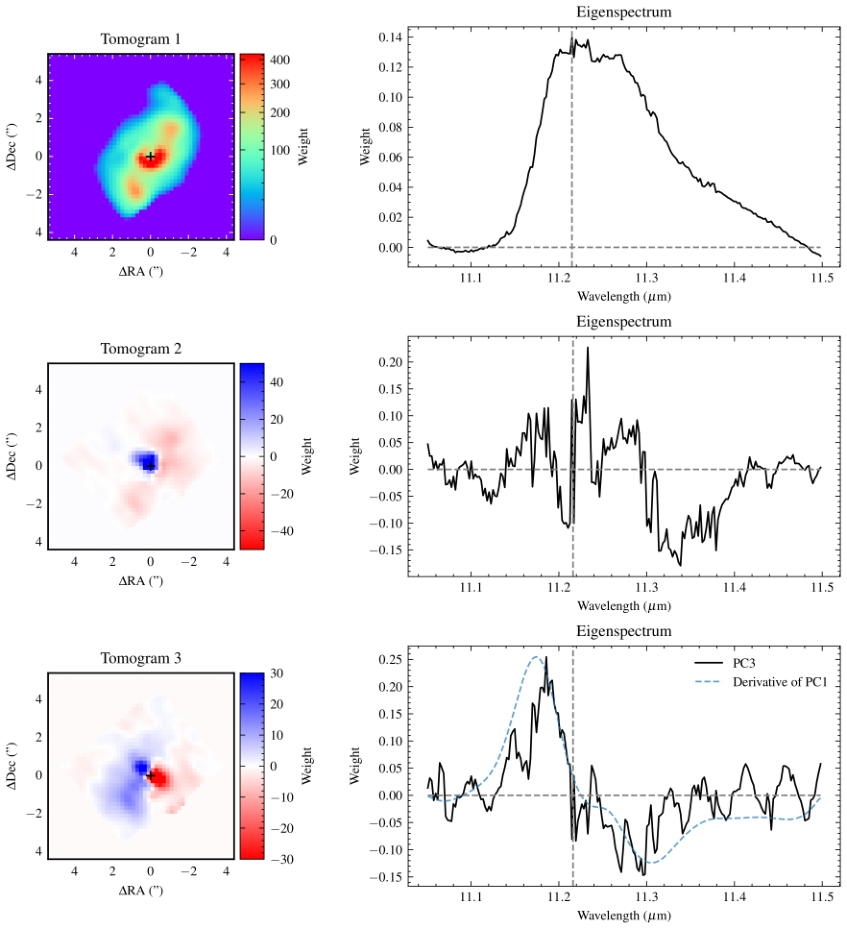
JWST/MIRI PCA tomography recovers 11.3-μm PAH velocity maps in three of five z~0.1 type-2 quasars; all three show dust-traced outflow kinematics, with molecular-gas residuals consistent with outflow after disk subtraction.

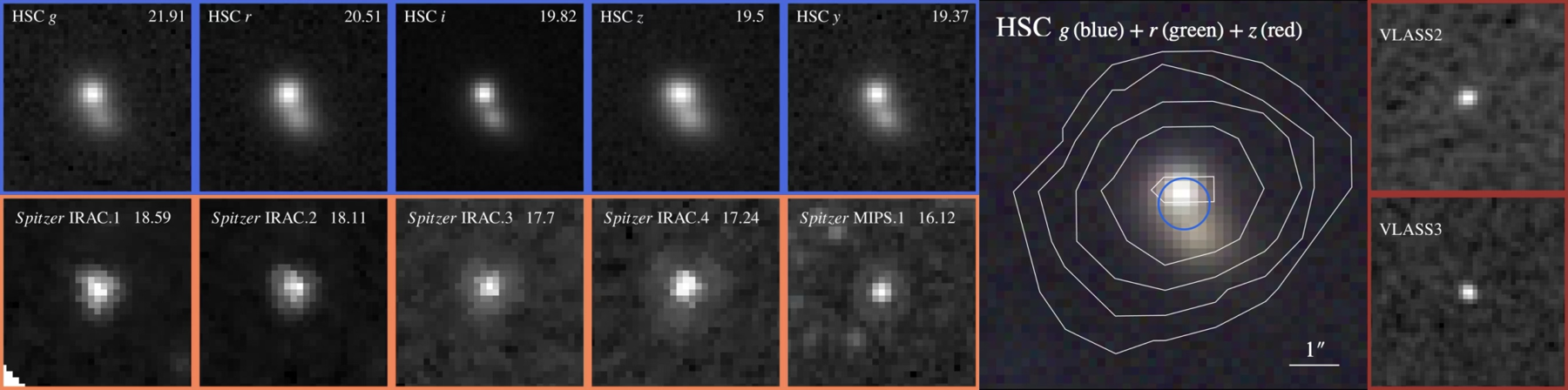
Figure 1 from A Population of Little Red Dot-like Quasars in SDSS

2026-06-25 · 2606.26098v1 · Research note

A Population of Little Red Dot-like Quasars in SDSS

Quinn O. Casey, Ryan C. Hickox, Nikko J. Cleri, et al.

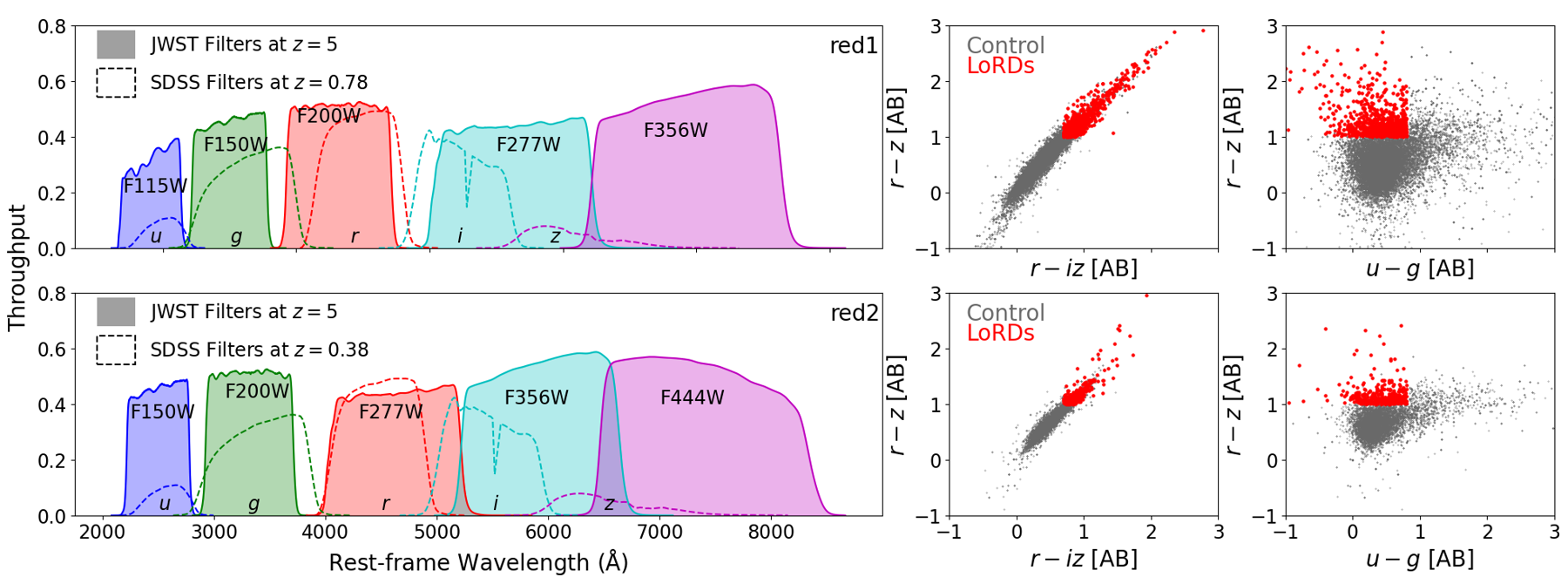
SDSS color selection identifies ~1,300 low-redshift “LoRD” quasars whose V-shaped subset resembles LRD spectral energy distributions, but host contamination, unresolved morphology, and weak high-z X-ray limits prevent establishing them as a uniformly faithful analog population.

Figure 5 from Probing Direct Contributions of Galaxies and AGN to Cosmic Reionization in a Quasar Field J0226+0302 with JWST NIRCam and NIRSpec

2026-06-16 · 2606.14959v1 · Research note

Probing Direct Contributions of Galaxies and AGN to Cosmic Reionization in a Quasar Field J0226+0302 with JWST NIRCam and NIRSpec

Xiangyu Jin, Jinyi Yang, Feige Wang, et al.

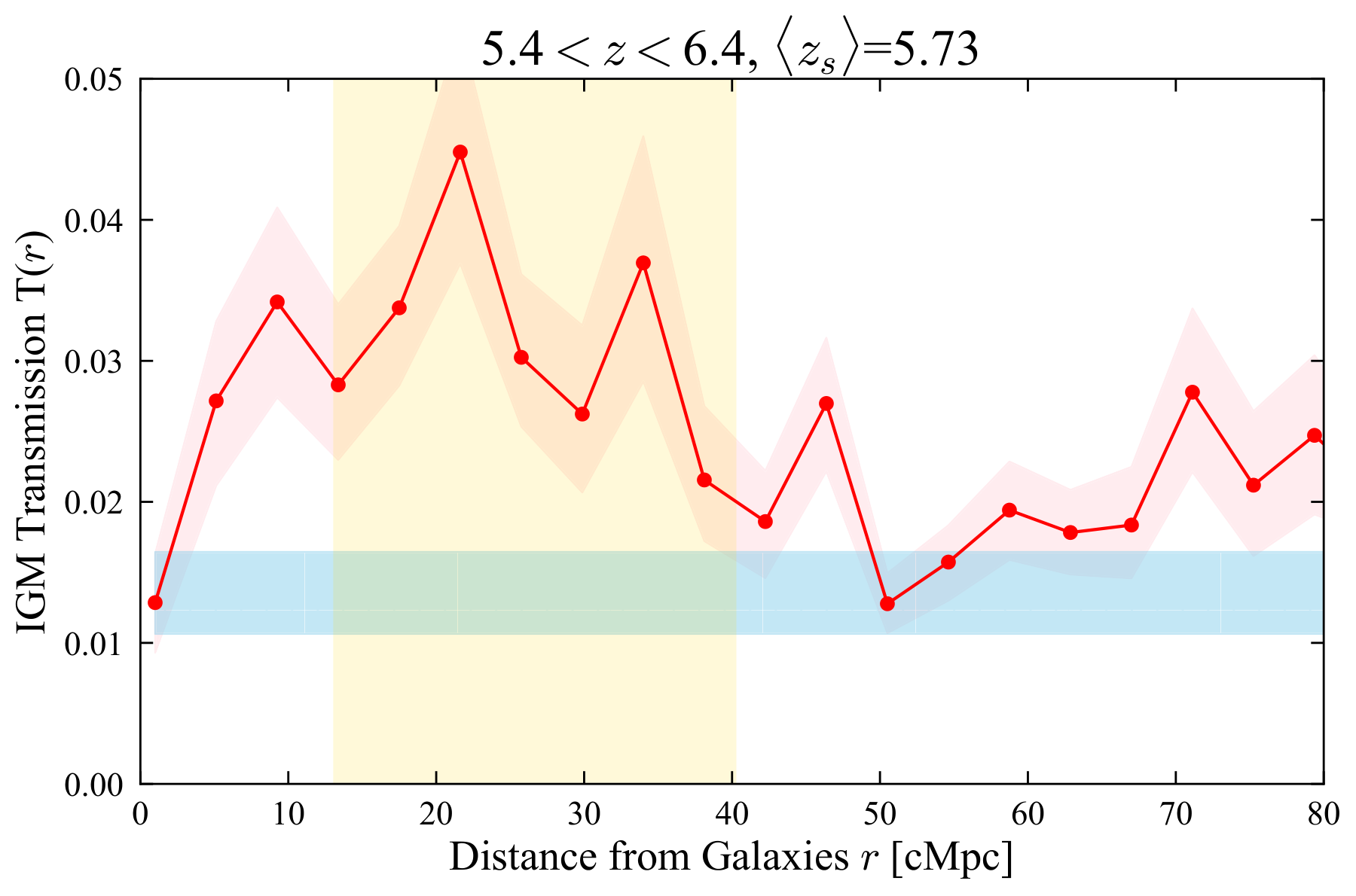
In the J0226+0302 quasar sightline, 73 line-emitting galaxies trace a tentative, 10–40 cMpc enhancement in IGM transmission, while four broad-line AGN show a possible smaller-scale enhancement. The results favor local ionizing-background variations but remain statistically and model limited.

Figure 2 from Aether-SHELLQs: JWST integral-field spectroscopy of candidate obscured quasars at z ~ 6

2026-06-10 · 2606.10160v1 · Research note

Aether-SHELLQs: JWST integral-field spectroscopy of candidate obscured quasars at z ~ 6

Yoshiki Matsuoka, Roberto Decarli, Emanuele Paolo Farina, et al.

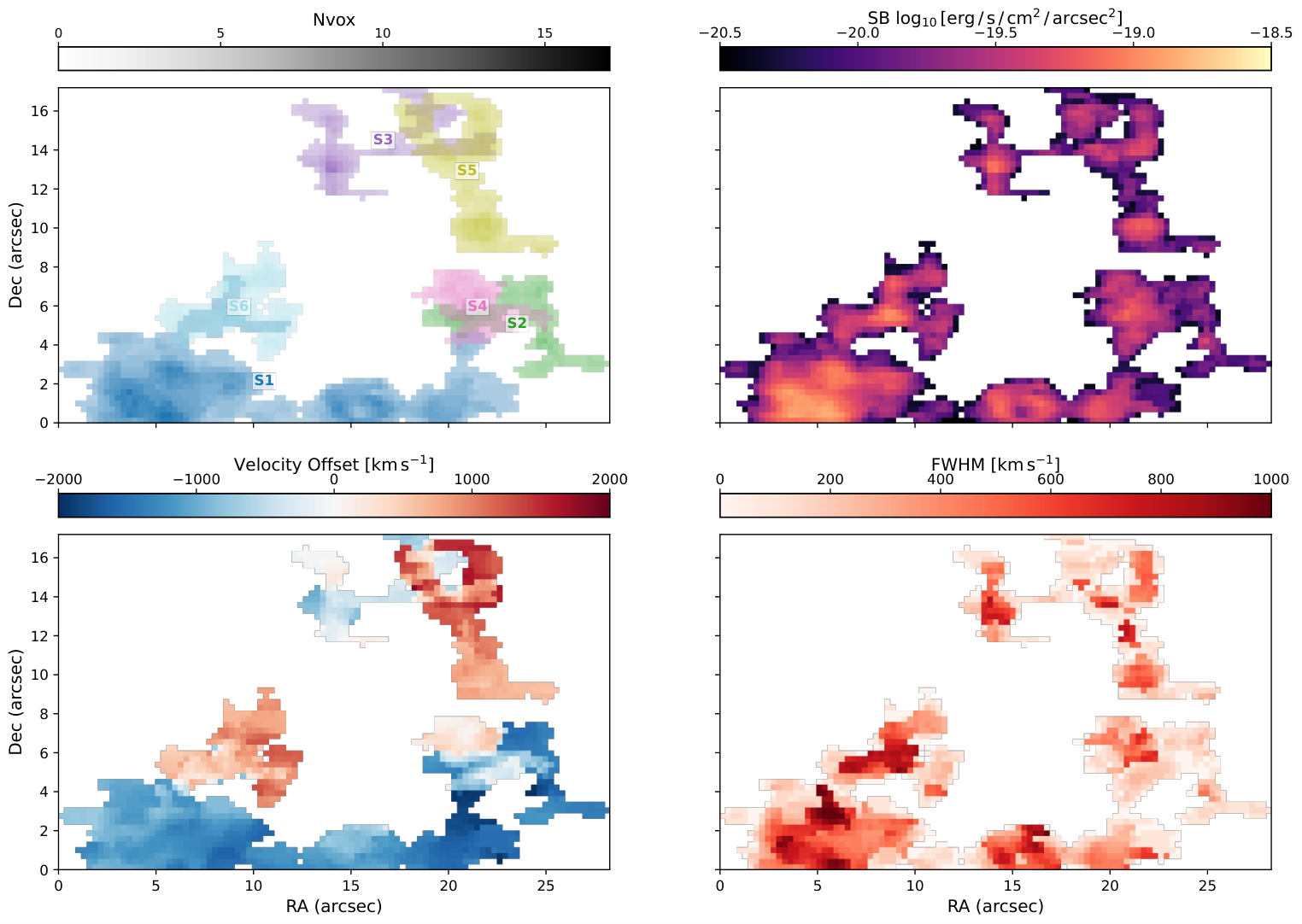
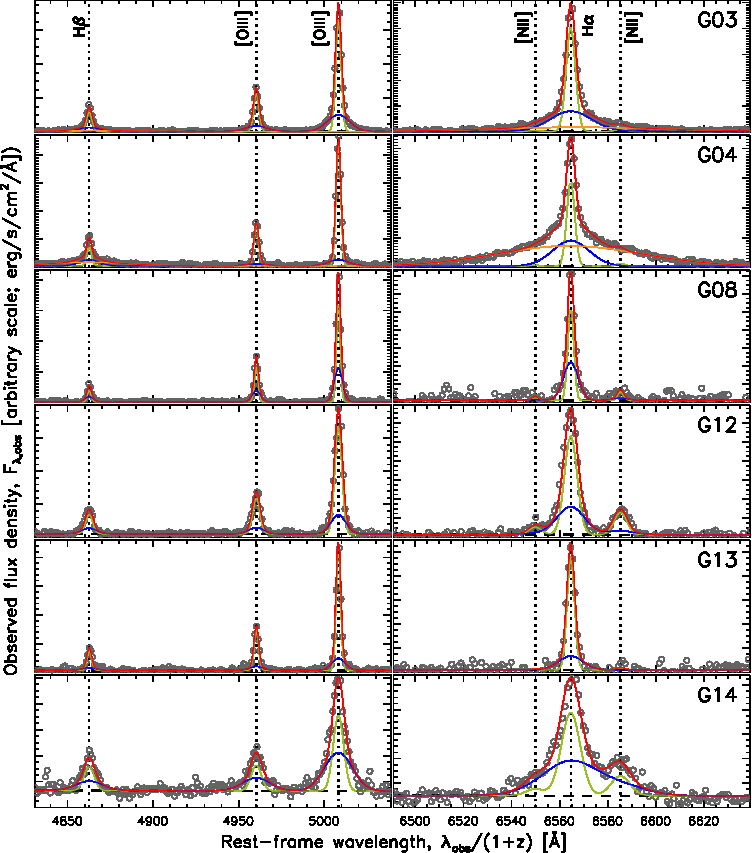
JWST/NIRSpec IFU spectroscopy of six z~6 SHELLQs narrow-Lyα candidates finds secure broad Balmer components in two, while extended, largely non-rotating ionized gas characterizes several non-broad-line systems. Broad-line incidence rises sharply with Lyα luminosity.

2026-06-03 · 2606.03667v1 · Research note

Constraining AGN accretion physics with black hole mass-luminosity scaling relations

F. Fiore, M. Gaspari, S. Puccetti, et al.

Across a large SDSS–eROSITA quasar sample, bolometric luminosity scales nearly linearly with virial black-hole mass while hard X-rays rise more slowly. The authors argue this disfavors classical Bondi feeding and favors CCA, but redshift covariances and JWST line-based systematics limit interpretation.

2026-05-26 · 2605.24112v1 · Research note

The Lumina Project: The Demographics of Active Galactic Nuclei from Quasars to Little Red Dots at $z\geq 3$

Xuejian Shen, Oliver Zier, Aaron Smith, et al.

Lumina couples a large radiation-hydrodynamic volume to an empirical SMBH-to-observable prescription, and its authors report simultaneous consistency with high-redshift quasar and LRD luminosity functions and LRD clustering. The agreement depends on assumed LRD demographics and spectral properties.

2026-05-11 · 2605.11077v1 · Research note

The Impact of Cosmic Variance and Satellites on JWST Clustering Measurements at Redshift around 6

Jiamu Huang, Elia Pizzati, Joseph F. Hennawi, et al.

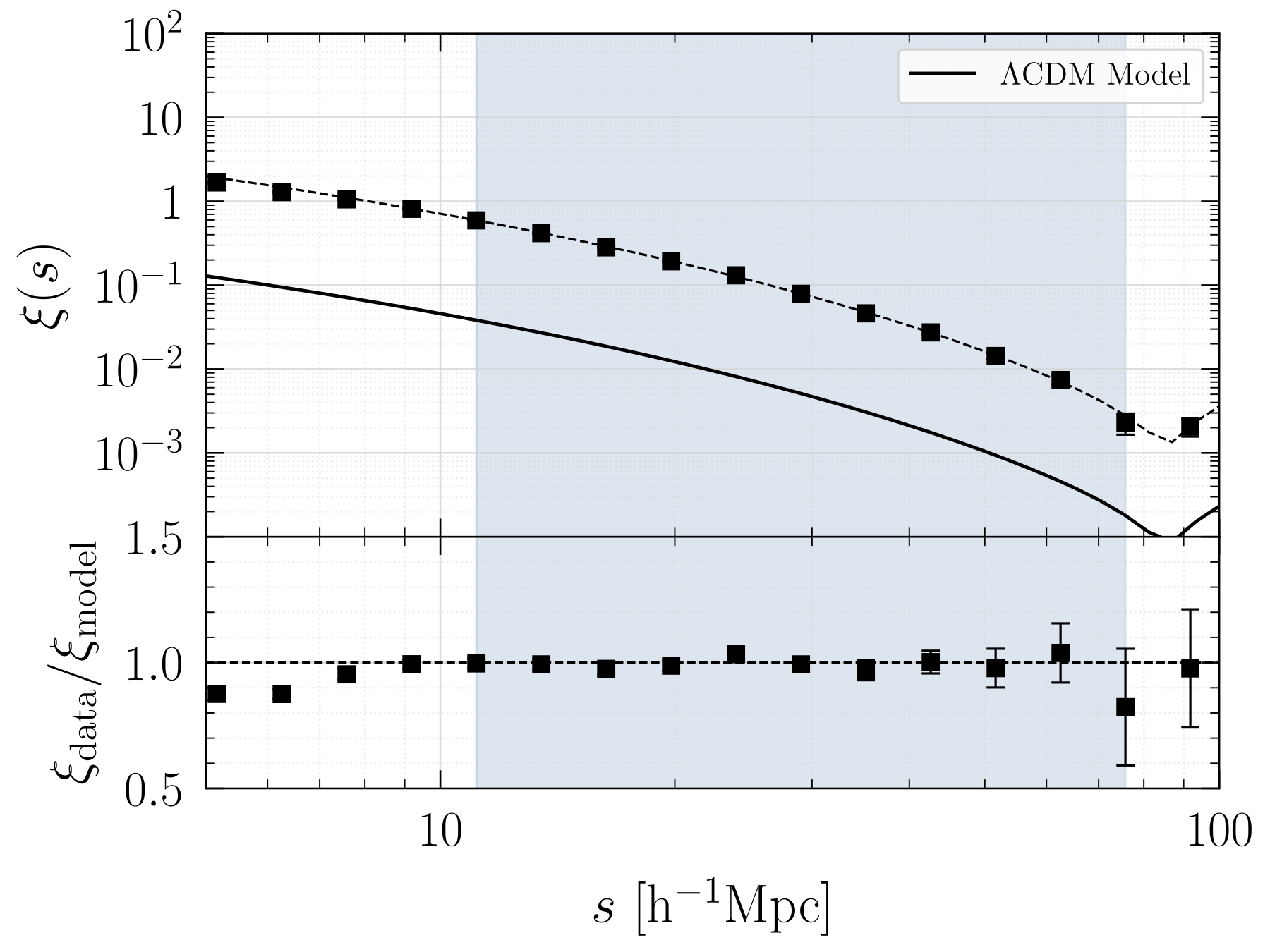
For ASPIRE-like JWST clustering at z≈6, mock-based covariances—not Poisson pair-count errors—are needed for calibrated halo-mass inference: Poisson intervals are systematically too narrow because they omit cosmic variance and correlated radial bins.

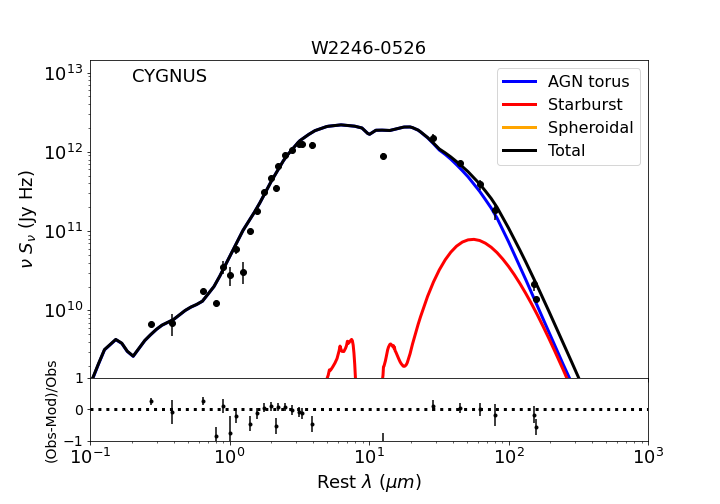
Figure 1 from JWST observations and a model for the extremely luminous obscured quasar W2246-0526 at z=4.6

2026-05-09 · 2605.09078v1 · Research note

JWST observations and a model for the extremely luminous obscured quasar W2246-0526 at z=4.6

Charalambia Varnava, Andreas Efstathiou, Tanio Díaz-Santos, et al.

JWST/MIRI-MRS-informed SED fits to the single z=4.601 Hot DOG W2246-0526 favor an added hot-dust component interpreted as polar dust. This changes inferred AGN luminosity, but its geometry and physical association with an outflow remain model-dependent.

2026-05-01 · 2605.00763v1 · Research note

Life After the Quasar: Overmassive Black Holes and Remnant Ionised Bubbles in and Around Two z~6.6 Galaxies

Romain A. Meyer, Pascal A. Oesch, Callum Witten, et al.

JWST/NIRSpec spectra of two z~6.6 ultra-luminous Lyα emitters reveal broad Balmer-line black-hole masses near 2×10^8 M⊙ and double-peaked Lyα, which the authors interpret as brief post-quasar phases inside relic ionised bubbles.

Figure 3 from 4MOST ChANGES: Catalog of high-redshift quasar candidates (4.5 < $z$ < 7) selected with SED fitting

2026-04-14 · 2604.13178v1 · Research note

4MOST ChANGES: Catalog of high-redshift quasar candidates (4.5 < $z$ < 7) selected with SED fitting

T. Mkrtchyan, C. Mazzucchelli, R. J. Assef, et al.

Using southern-sky multi-band photometry and quasar-versus-brown-dwarf SED fitting, the authors compile 6,104 z=4.5–7 quasar candidates. Three of six bright, visually screened follow-up targets are confirmed at z>5, but catalog-wide purity remains weakly constrained.

Figure 2 from A striking excess of red quasars with steep radio spectral slopes: a dusty blow-out phase revealed through AGN-driven shocks?

2026-03-25 · 2603.24739v1 · Research note

A striking excess of red quasars with steep radio spectral slopes: a dusty blow-out phase revealed through AGN-driven shocks?

Ciera L. Sargent, David M. Alexander, Claire L. Greenwell, et al.

Across SDSS quasars at 0.2<z<2.4, compact red quasars show an excess near α1.4–3 GHz≈−1 that strengthens with dust extinction. The authors interpret this as wind/jet–ISM shocks during a dusty blow-out phase, but radio spectra alone do not establish that mechanism.

2026-03-23 · 2603.22425v1 · Research note

A large population of over-massive black hole quasars at z=0.3-0.8 revealed by eROSITA

Johannes Buchner, Isabelle Gauger, Qiaoya Wu, et al.

In a 140 deg² eROSITA field, the authors identify eight z=0.3–0.8/1 quasars with inferred M•/M⋆>5%. Their abundance supports recurrent black-hole/host offsets among rapidly accreting AGN, but single-epoch masses and often upper-limited host masses temper the conclusion.