654 indexed papers · 430 research notes

Research archive

Reset
Figure 1 from $El\ Ascua$: An ultra-luminous, radio-loud, Compton-thick AGN at $z\sim 3.8$ hiding in plain sight revealed by MINERVA multi-band MIRI observations

2026-10-27 · 2610.33155v1 · Research note

$El\ Ascua$: An ultra-luminous, radio-loud, Compton-thick AGN at $z\sim 3.8$ hiding in plain sight revealed by MINERVA multi-band MIRI observations

Aidan P. Cloonan, Edgar P. Vidal, Alexandra Pope, et al.

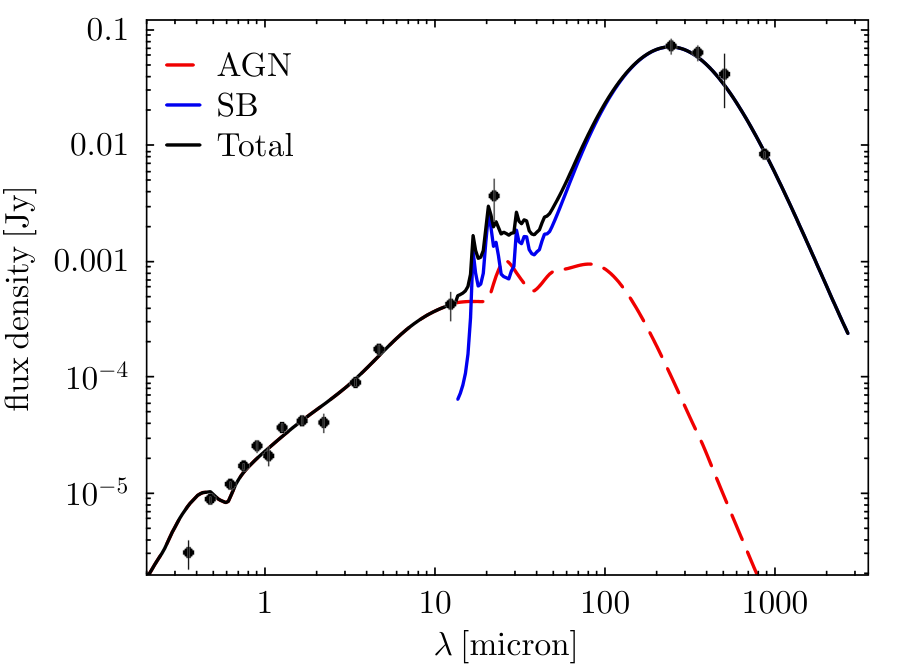
MINERVA/MIRI identifies el Ascua at z~3.8 as a mid-IR-dominant, X-ray-undetected Compton-thick AGN candidate. UV-to-radio SED fitting indicates rapid black-hole growth and a probable AGN radio excess, but obscuration and radio-loudness remain indirect inferences.

Figure 2 from Local Analogs of Little Red Dots: Clues to the X-ray Weakness

2026-10-26 · 2610.32430v1 · Research note

Local Analogs of Little Red Dots: Clues to the X-ray Weakness

Shi-Jiang Chen, Jun-Xian Wang, Zhen-Ya Zheng, et al.

Einstein Probe observations of six z≈0.3 local LRD analogs find an X-weak subgroup whose stacked soft-X-ray constraints favor modest intrinsic coronal weakness plus Compton-thin absorption, rather than the specific unobscured super-Eddington or local Compton-thick geometries tested.

Figure 3 from Dual and lensed AGN at sub-arcsecond separations uncovered by ERIS

2026-10-21 · 2610.27086v1 · Research note

Dual and lensed AGN at sub-arcsecond separations uncovered by ERIS

M. V. Zanchettin, F. Mannucci, Q. D'Amato, et al.

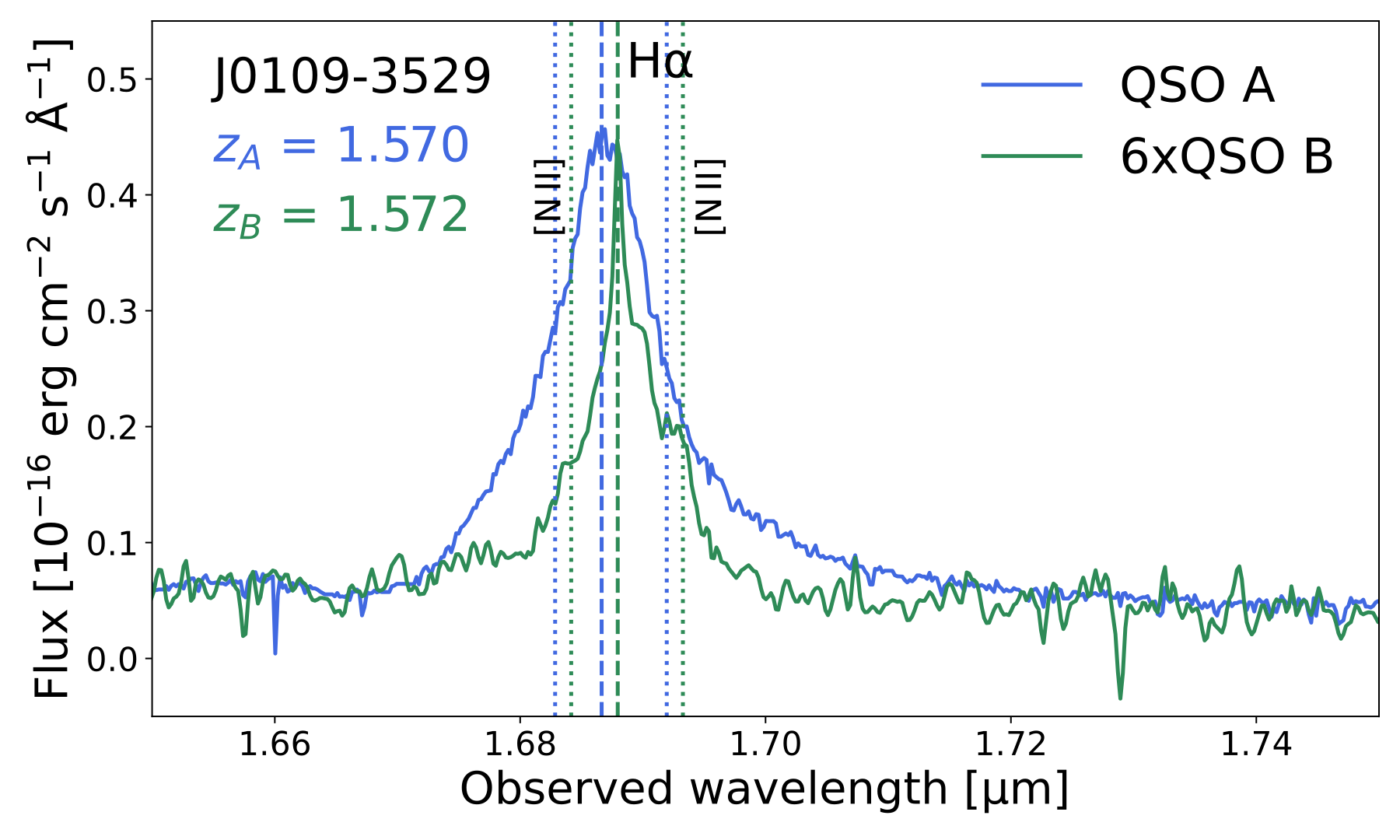
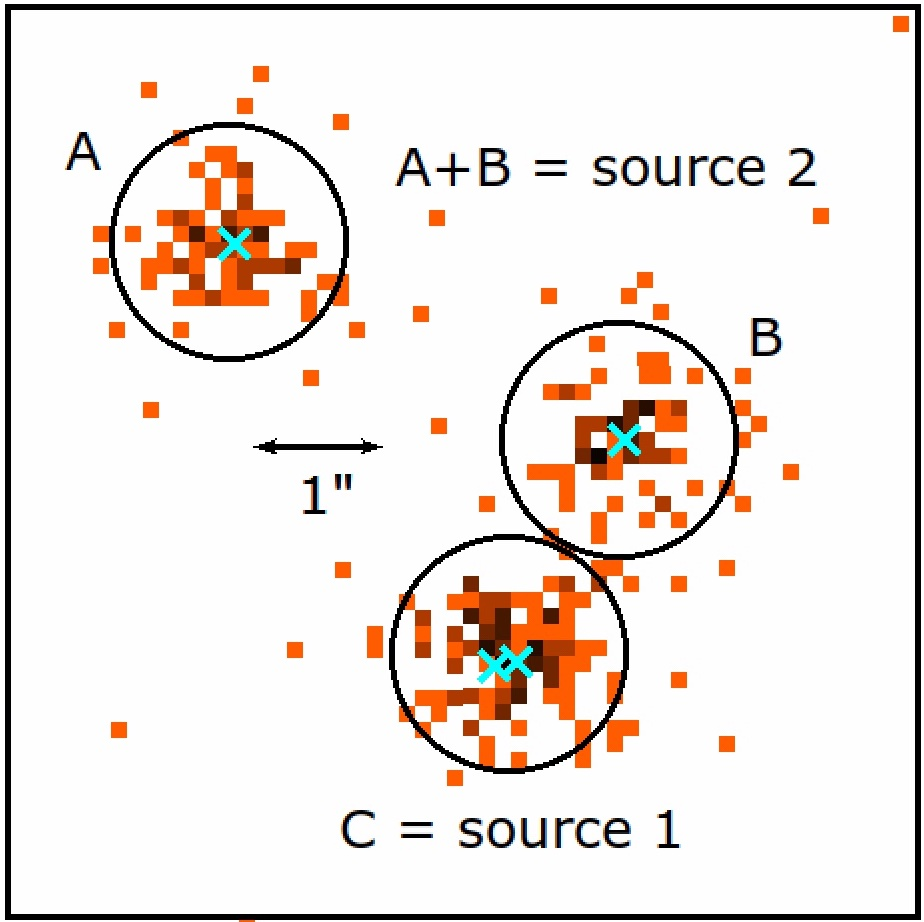
AO-assisted ERIS/SPIFFIER spectroscopy of 34 Gaia Multi-Peak candidates resolves six sub-arcsecond dual AGN and seven lensed quasars, but foreground-star superpositions dominate the non-multiple outcomes and broad-line velocity offsets do not securely measure systemic pair velocities.

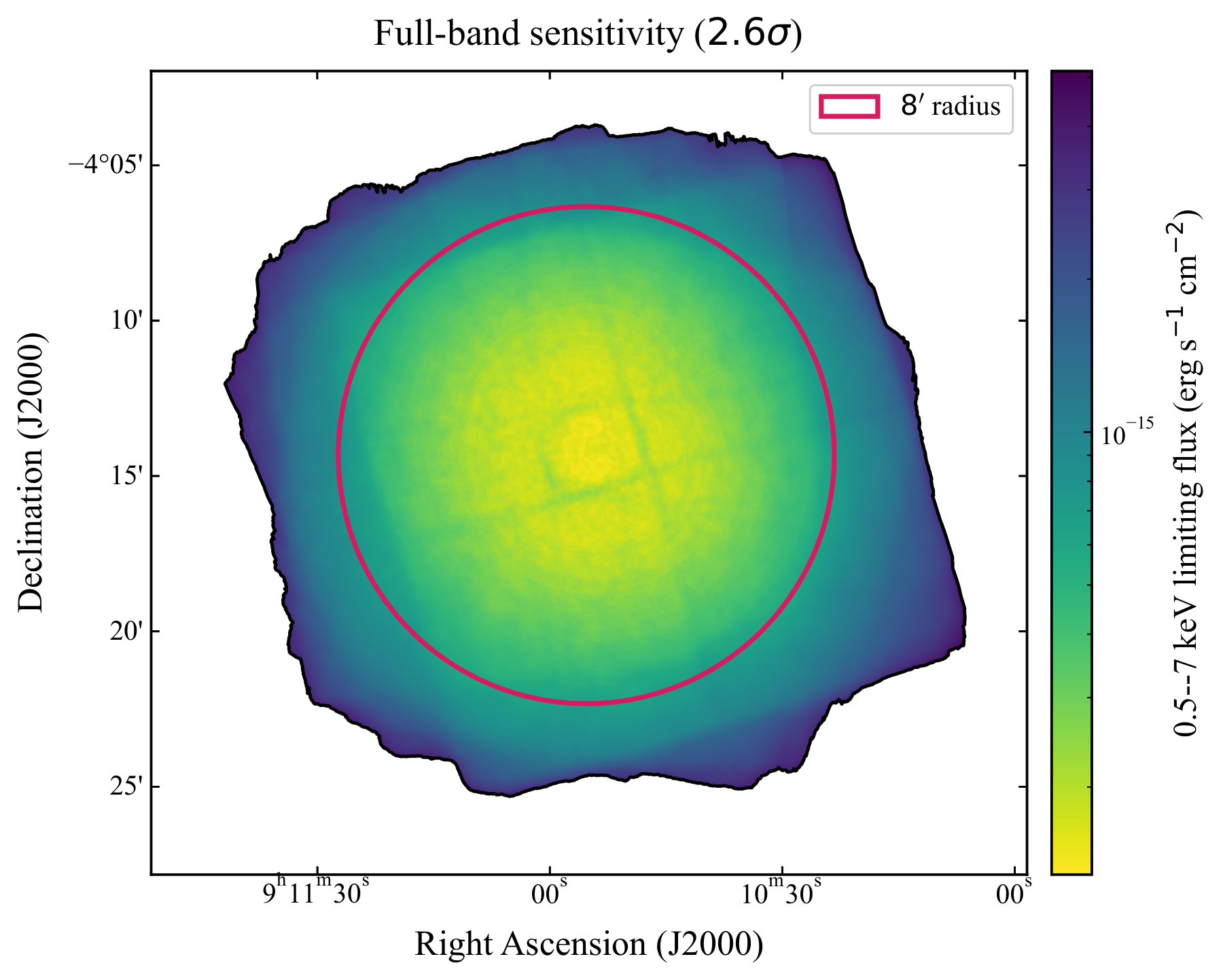
Figure 3 from Deep X-ray View of a Distant Protocluster Anchored by a Quasar at $z=6.63$: No Evidence for Enhanced X-ray AGN Activity

2026-10-15 · 2610.19317v1 · Research note

Deep X-ray View of a Distant Protocluster Anchored by a Quasar at $z=6.63$: No Evidence for Enhanced X-ray AGN Activity

Shouyi Wang, Feige Wang, Jinyi Yang, et al.

In 865 ks of Chandra imaging, no X-ray AGN is detected among 21 confirmed non-quasar members of the z=6.63 J0910−0414 protocluster. The resulting limits do not establish environmental enhancement, but still allow substantial excess activity.

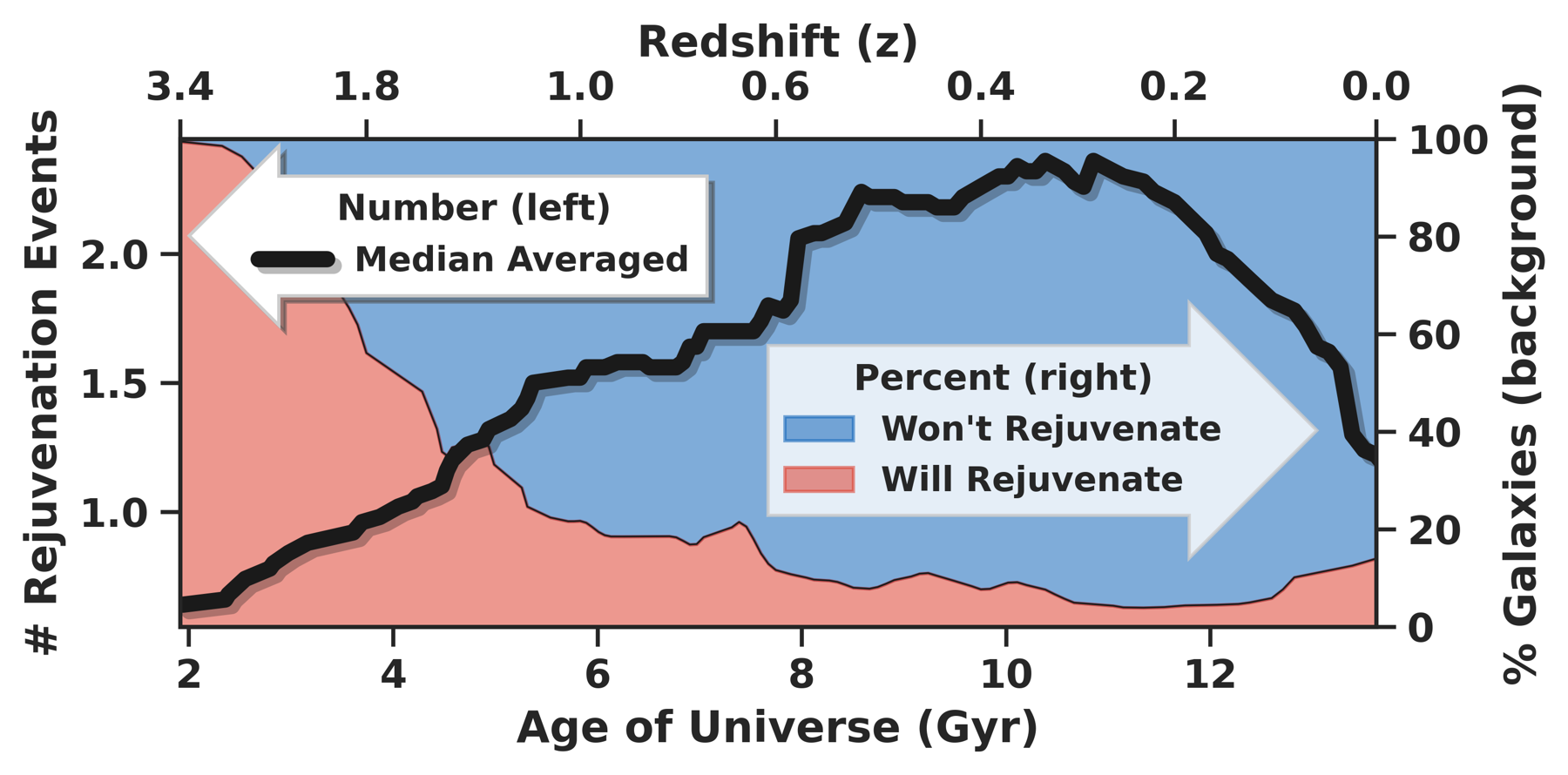
Figure 3 from Unveiling the Origins of the Molecular Gas Reservoirs in Recently Quenched Massive Galaxies

2026-10-06 · 2610.06680v1 · Research note

Unveiling the Origins of the Molecular Gas Reservoirs in Recently Quenched Massive Galaxies

E. Savitch, D. Narayanan, D. J. Setton, et al.

In Simba, apparently molecular-gas-rich recently quenched galaxies can reflect dust-hidden star formation, a low CO–H2 conversion factor, or temporary quiescence. The model favors no single explanation; rejuvenation is high-redshift-weighted and comparatively uncommon.

Figure 1 from The differences in the Narrow Line Region of nearby QSOs 1 and QSOs 2: II - Signatures of kinetic feedback

2026-10-06 · 2610.03925v1 · Research note

The differences in the Narrow Line Region of nearby QSOs 1 and QSOs 2: II - Signatures of kinetic feedback

Gabriel R. Hauschild-Roier, Thaisa Storchi-Bergmann, Rogério Riffel, et al.

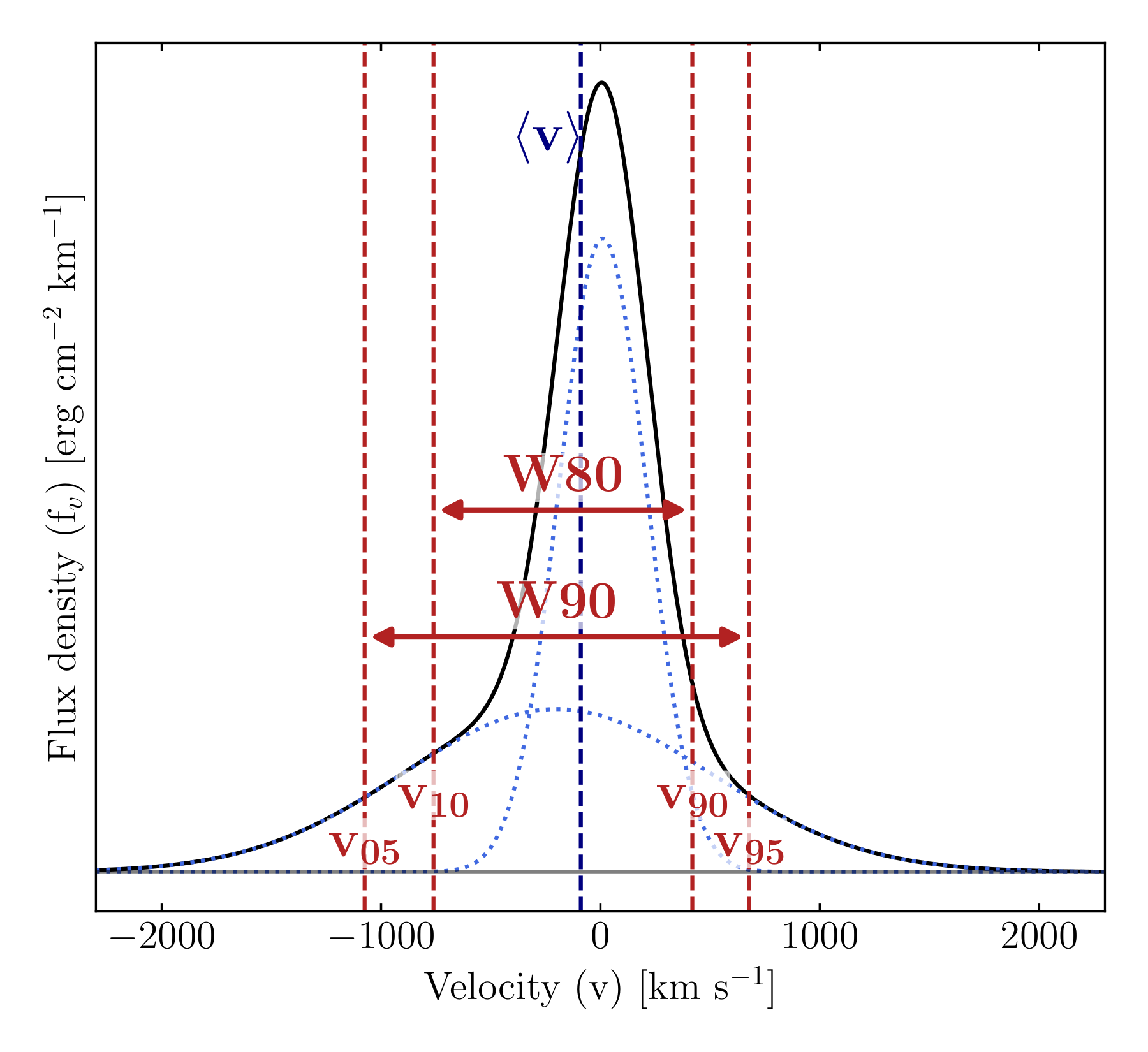
In SDSS fibre spectra of 1,541 type-1 and 688 type-2 QSOs at z=0.4–0.5, broad NLR components are more blueshifted in type 1s, consistent with orientation-dependent visibility of faster ionised outflowing gas, but energetics remain model-sensitive.

Figure 1 from Chandra X-ray Spectral Evidence of the Dual AGN Nature of the Gravitational lens MG B2016+112 at z=3.273 with 175 pc separation

2026-10-01 · 2609.38590v1 · Research note

Chandra X-ray Spectral Evidence of the Dual AGN Nature of the Gravitational lens MG B2016+112 at z=3.273 with 175 pc separation

Daniel A. Schwartz, Julia M. Sisk-Reynes, Anna Barnacka

Separate Chandra spectra of the two lensed X-ray emitters in MG B2016+112 support the authors’ dual-AGN interpretation: the inner-caustic component is intrinsically absorbed, disfavoring its alternative identification as a highly magnified jet feature.

2026-10-01 · 2609.38430v1 · Research note

Cosmic Collisions I: Optical Morphologies for MIRI-selected galaxies from the PRIMER survey

Gregory Troiani, Allison Kirkpatrick, Leyna Bajaj, et al.

JWST/MIRI F770W selection and volunteer classifications of 14,657 PRIMER galaxies at 1<z<3 reveal morphology trends unlike optical/near-IR samples, while wavelength-dependent structure and unresolved mid-IR cores complicate physical interpretation.

Figure 1 from SN Helios: A Multiply Imaged Type II Supernova Opening Time-Delay Cosmography beyond redshift of 3

2026-09-28 · 2609.30440v1 · Research note

SN Helios: A Multiply Imaged Type II Supernova Opening Time-Delay Cosmography beyond redshift of 3

Seiji Fujimoto, Conor Larison, Justin D. R. Pierel, et al.

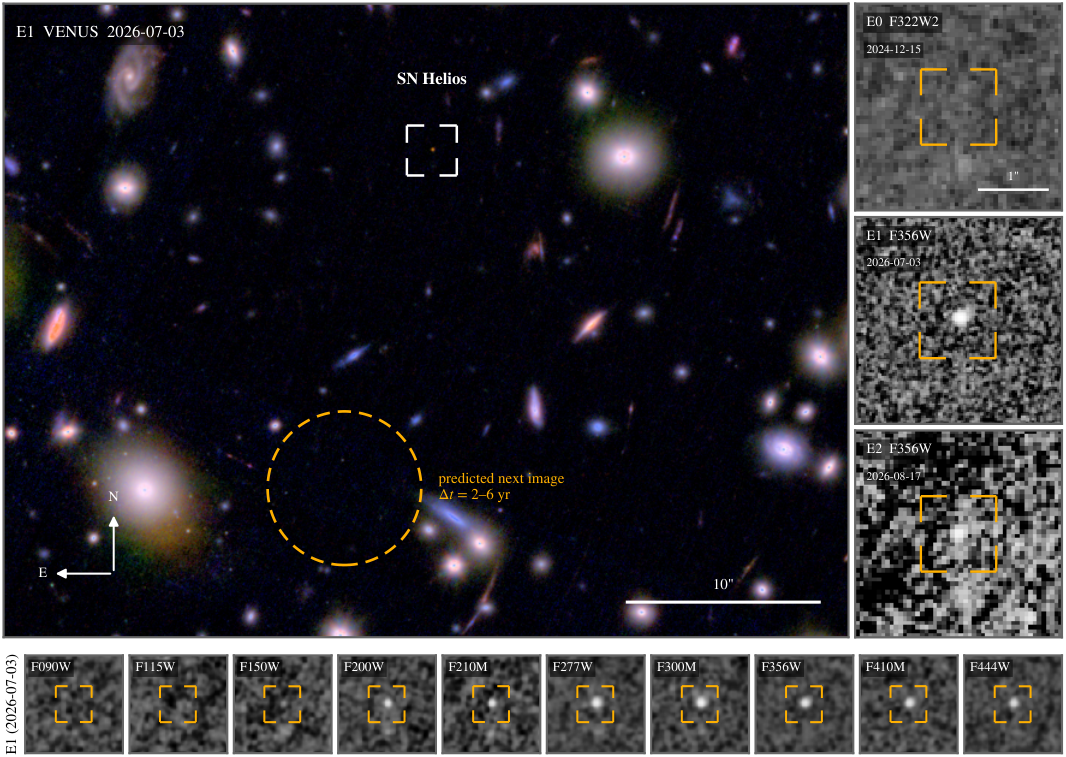
SN Helios is a spectroscopically confirmed, strongly lensed Type II supernova at z=3.34. Its predicted 2–6 yr reappearance could enable time-delay cosmography, but current lens-model spread and the absence of a measured delay preclude an H0 result.

Figure 1 from Breaking the Blend: A multi-tracer kinematic decomposition method for IFS data applied to disentangling the AGN outflow and circumnuclear ring in NGC 5728 with JWST

2026-09-25 · 2609.30232v1 · Research note

Breaking the Blend: A multi-tracer kinematic decomposition method for IFS data applied to disentangling the AGN outflow and circumnuclear ring in NGC 5728 with JWST

Oscar Veenema, Niranjan Thatte, Dimitra Rigopoulou, et al.

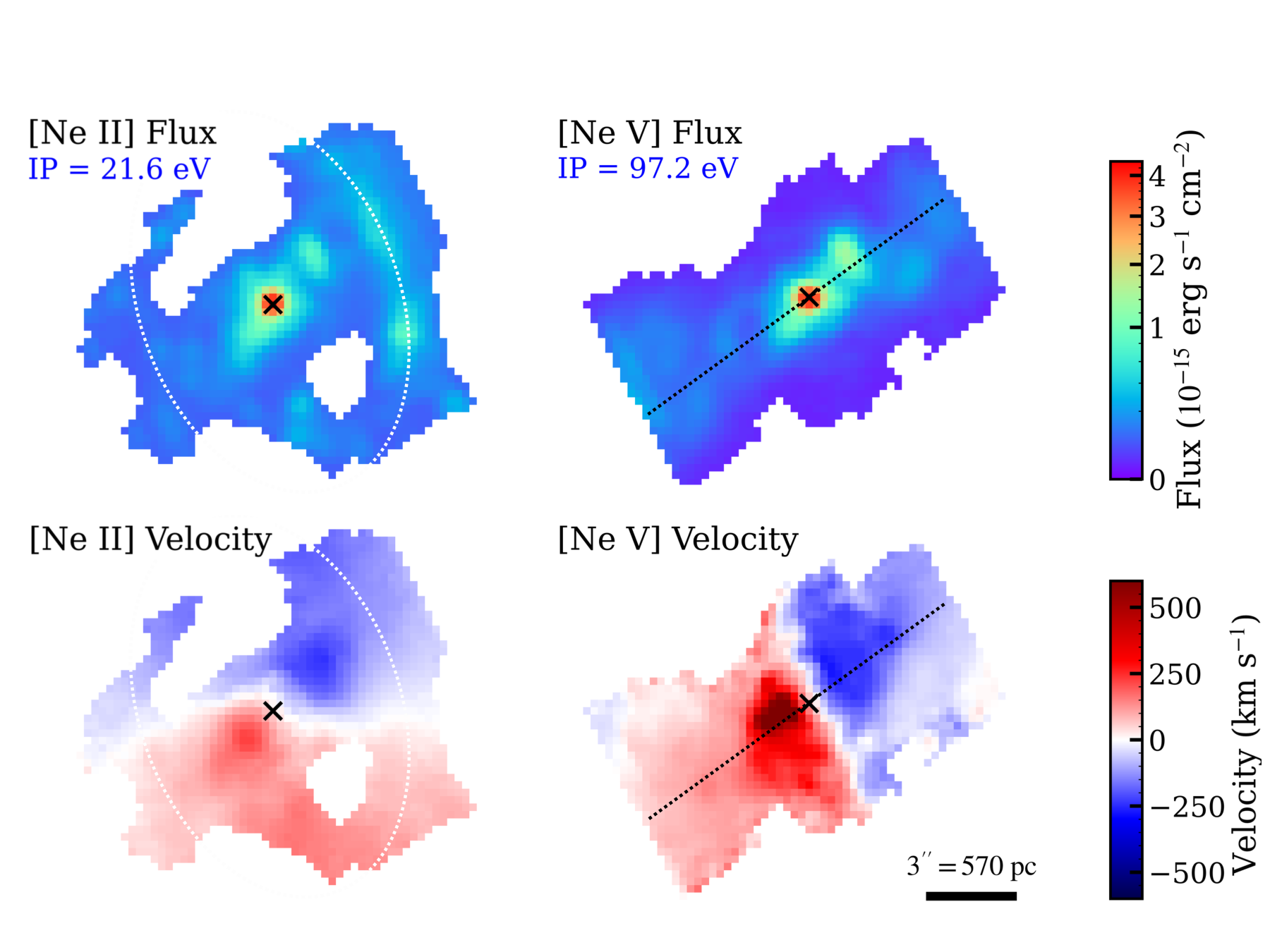
Using JWST mid-infrared IFS of NGC 5728, the authors decompose blended circumnuclear line emission into a star-forming ring and AGN bicone. Stacking twelve tracers yields spatial flux fractions that are stable across tested weighting choices.

Figure 3 from The lifetimes and properties of Little Red Dots in the AMBRA simulation

2026-09-24 · 2609.26999v1 · Research note

The lifetimes and properties of Little Red Dots in the AMBRA simulation

Patrick LaChance, Yihao Zhou, Aklant Kumar Bhowmick, et al.

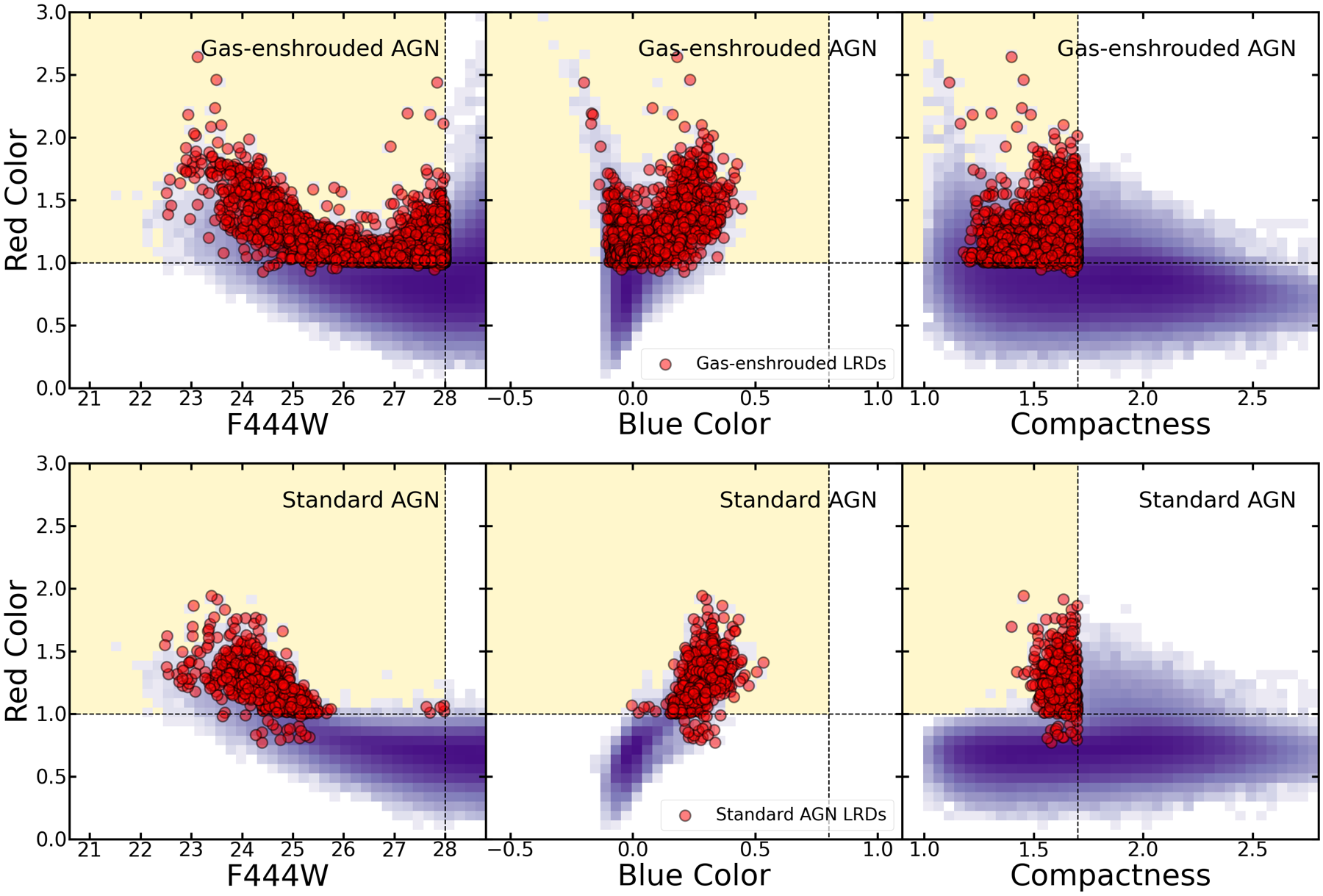
Mock JWST selection in AMBRA suggests LRDs are transient appearances of existing black hole–galaxy systems: dim sources require a gas-enshrouded AGN model, while massive compact hosts yield longer-lived phases. Redshift counts remain model-sensitive.

2026-09-22 · 2609.22623v1 · Research note

Balmer Absorption Series and Broad Metal Lines in Two Luminous Little Red Dots

Bingjie Wang, Jenny E. Greene, Hanpu Liu, et al.

Deep JWST/NIRSpec spectra of two luminous LRDs resolve Hα–Hδ absorption near systemic velocity, with higher-order troughs redder and unexpectedly persistent. Broad metal lines and diagnostic ratios favor dense gas, while a stratified failed wind remains an interpretation rather than a detection.

2026-09-22 · 2609.22428v1 · Research note

Star Formation and Nebular Attenuation from Pa$α$, Br$α$, and Br$β$ in Massive Dust-obscured Galaxies at Cosmic Noon using JWST

Virginia Vanicek, Jed McKinney, Alexandra Pope, et al.

JWST MIRI/Spitzer hydrogen-line measurements in 27 dusty z~1–2 infrared galaxies yield directly inferred nebular attenuation declining from ~3 mag near 2 μm to ~1 mag near 4 μm, yet IR-based SFRs remain ~2.5 times higher.

Figure 2 from Little Red Dots as a Transient Phase of Self-Interacting Dark Matter Assisted Black Hole Growth

2026-09-18 · 2609.20021v1 · Research note

Little Red Dots as a Transient Phase of Self-Interacting Dark Matter Assisted Black Hole Growth

Yu Rong, Shuang-Nan Zhang, Jian-Min Wang, et al.

This theory paper proposes that gas inflow compresses self-interacting dark matter (SIDM) around a pre-existing black hole while an optically thick nuclear disk obscures and reprocesses its emission. It reproduces two representative LRD continua, but does not establish SIDM observationally.

Figure 1 from An ALMA Band 7 survey of SDSS/Herschel quasars in Stripe 82: II. The nature of FIR-bright quasars

2026-09-16 · 2609.16951v1 · Research note

An ALMA Band 7 survey of SDSS/Herschel quasars in Stripe 82: II. The nature of FIR-bright quasars

Evanthia Hatziminaoglou, Hugo Messias, Duncan Farrah, et al.

For 142 optically unobscured, FIR-bright Stripe 82 quasars at z=1–4, ALMA deblending lowers inferred host SFRs yet leaves extreme starbursts. The authors find weak instantaneous starburst–accretion coupling and UV-line differences consistent with a transitional interpretation.

Figure 2 from Little Red Dots are Direct-Collapse Black Hole-Forming Galaxies

2026-09-14 · 2609.12049v1 · Research note

Little Red Dots are Direct-Collapse Black Hole-Forming Galaxies

Daniel J. Whalen, Muhammad A. Latif, Konstantinos Topalakis, et al.

Two-stage simulations and radiative-transfer spectral modeling suggest that LRDs could be direct-collapse black-hole hosts whose dense disks trap X-rays and generate Balmer absorption; fits spanning z=3.55–9.29 make this physically plausible, but not uniquely established.

2026-09-11 · 2609.11094v1 · Research note

SPURS: An Ultra-deep View Inside the Compact, Nitrogen-Enriched Nuclei of Little Red Dots

Mengtao Tang, Daniel P. Stark, Charlotte A. Mason, et al.

Ultra-deep JWST/SPURS rest-UV spectra of four UV-bright Little Red Dots find dense, nitrogen-enhanced, neutral-gas-embedded nuclei and diverse broad-line/wind signatures. The authors infer compact nuclear activity, while stellar and AGN contributions remain degenerate.

2026-09-11 · 2609.10803v1 · Research note

The THRILS Factor: Investigating the properties of Little Red Dots (LRDs) at 3<z<6 with JWST/NIRSpec

Ananya Ganapathy, Rebecca L. Larson, Erini Lambrides, et al.

Deep JWST/NIRSpec spectra of nine z=3–6 LRDs favor electron-scattering-like broad-line profiles in five cases, implying substantial ionized columns but ∼50% covering fractions; this challenges unity-covering cocoon models while supporting an AGN-related origin.

2026-09-09 · 2609.07825v1 · Research note

A Dusty Quenching-candidate AGN host at z=5.7: massive quiescent galaxies may quench already during the dust-obscured phase

Francesco D'Eugenio, Matilde Brazzini, Roberto Maiolino, et al.

RUBIES-EGS-9809 is a single, heavily obscured broad-line AGN host at z=5.7 whose resolved Balmer break and declining-SFR SED fit make it a quenching candidate, not a confirmed post-starburst. Outflow signatures make AGN feedback plausible but unproven.

2026-09-03 · 2609.01711v1 · Research note

JWST Reveals a Candidate Supermassive Black Hole Binary at z=4.3 in the Brightest Sub-millimeter Galaxy in COSMOS-Web

Jed McKinney, Ansh Gupta, Julian B. Munoz, et al.

JWST spectra of the single dusty galaxy AzTEC-1 at z=4.3419 reveal a broad Hα component blueshifted by 1245 km s⁻¹. The authors favor a candidate sub-pc SMBH binary or recoiling SMBH over an ionized outflow, but confirmation requires resolved follow-up.

Figure 2 from Extreme AGN Variability in WISE: Powerful Flares and Candidate Tidal Disruption Events in AGN

2026-09-02 · 2609.01421v1 · Research note

Extreme AGN Variability in WISE: Powerful Flares and Candidate Tidal Disruption Events in AGN

Satya Teja Anuraag Upadhyayula, Daniel Stern, Kishalay De, et al.

A WISE pilot search finds two extreme mid-infrared AGN flares, modeled as dust echoes and interpreted as candidate TDEs. Their high inferred energies and contrasting optical/spectroscopic behavior make them promising, but not definitive, disruptions in active nuclei.

Figure 2 from Weighing Little Red Dots with Transient Events

2026-09-02 · 2609.00113v1 · Research note

Weighing Little Red Dots with Transient Events

Vinh Tran, Xuejian Shen, Oliver Zier, et al.

This modelling study proposes tidal-disruption and quasi-periodic-eruption event rates as population-level probes of LRD black-hole masses. Its predictions depend strongly on assumed stellar cusps, black-hole–stellar-mass relations, and the possibility that most LRDs are obscured.

2026-09-02 · 2609.00033v1 · Research note

Lynx2030 Science Analysis Group: Final Report

Lynx2030 Science Analysis Group, Simon R. Bandler, Laura W. Brenneman, et al.

This strategic report argues that Lynx-class subarcsecond, high-throughput X-ray imaging spectroscopy would test why JWST little red dots are X-ray weak, while simulations illustrate broader gains for feedback, accretion, and circumgalactic-gas studies.

Figure 4 from Beyond orientation: Evidence for distinct physical regimes among Little Red Dots and Little Blue Dots

2026-08-25 · 2608.21522v1 · Research note

Beyond orientation: Evidence for distinct physical regimes among Little Red Dots and Little Blue Dots

L. Barrufet, J. S. Dunlop, M. L. Hamadouche, et al.

In 89 LRDs and 191 LBDs, LRDs have more luminous and broader Hα, larger Balmer decrements, and lower [O III]/Hβ. The authors argue these population-level differences strain luminosity-independent orientation alone, while not uniquely establishing a gas-cocoon mechanism.

Figure 3 from ATLAS. III. Dust Around Little Red Dots: Hydrogen Line Ratios beyond Dust-free Non-Case B Models

2026-08-12 · 2608.10832v1 · Research note

ATLAS. III. Dust Around Little Red Dots: Hydrogen Line Ratios beyond Dust-free Non-Case B Models

Tomokazu Kiyota, Masami Ouchi, Hiroto Yanagisawa, et al.

In 20 LRDs, extreme broad Balmer decrements require both dense, optically thick non-Case-B line formation and—when Hα/Hβ exceeds the model ceiling—additional broad-line-region-associated dust, rather than galaxy-wide extinction alone.

2026-07-29 · 2607.25696v1 · Research note

Tracing Obscured AGN Contribution and Number Fraction Across 0 < z < 6 with JWST

Angel Rodriguez Barbosa, Tomotsugu Goto, Daryl Joe D. Santos, et al.

Using GOODS-S JWST SMILES+JADES photometry and CIGALE fits, the authors report that obscured-AGN incidence and infrared contribution rise toward high redshift, but are consistent with no systematic dependence on total infrared luminosity within their uncertainties.

Figure 2 from Outflows in super-Eddington quasars drive clumpy circumgalactic medium and extended H$α$ nebulae at $z \gtrsim 6$

2026-07-27 · 2607.21719v1 · Research note

Outflows in super-Eddington quasars drive clumpy circumgalactic medium and extended H$α$ nebulae at $z \gtrsim 6$

Lucas Tortora, Tiago Costa, Debora Sijacki, et al.

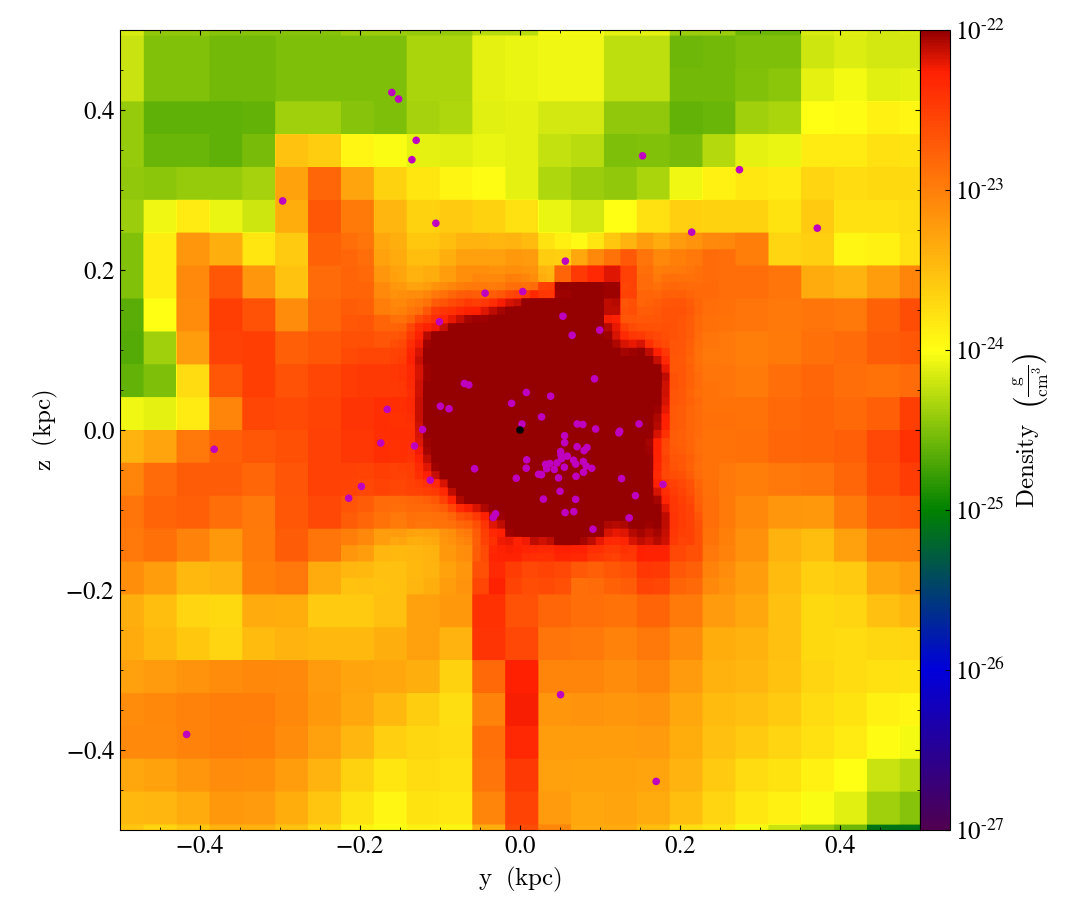
In one extreme z~6 halo, simulations predict that earlier seeding plus mildly super-Eddington growth drives cold, fast, neutral CGM clumps and extended Hα after feedback clears nuclear sightlines; this is a model prediction, not a population measurement.

Figure 2 from First detection of ultra-fast outflows in a quiescent galaxy

2026-07-09 · 2607.06844v1 · Research note

First detection of ultra-fast outflows in a quiescent galaxy

Yerong Xu, Malgorzata Siudek, Victor Rodríguez Morales, et al.

Using X-ray spectra of the single nearby, long-quenched galaxy KUG 1208+386, the authors report a ≈0.07c nuclear ultra-fast outflow. Its ≥3σ trial-corrected line evidence makes feedback in a quiescent host plausible, but not yet a demonstrated maintenance mechanism.

Figure 2 from The MIRI Early Obscured-AGN Wide Survey (MEOW): A Population of Hidden AGN at $z \gtrsim 5$ Revealed by JWST/MIRI Imaging

2026-07-07 · 2607.02666v1 · Research note

The MIRI Early Obscured-AGN Wide Survey (MEOW): A Population of Hidden AGN at $z \gtrsim 5$ Revealed by JWST/MIRI Imaging

Gene C. K. Leung, Anna-Christina Eilers, Ryan Endsley, et al.

MEOW uses JWST/MIRI hot-dust selection over GOODS to identify 16 z≳5 AGN candidates, mostly not previously selected as broad-line AGN. Its luminosity-function comparison suggests an obscured population comparable in abundance to broad-line AGN near log Lbol≈45, but faint-end constraints remain limited.

Figure 3 from AGN Feedback: The impact of galactic-scale radio jets on the interstellar medium in starbursting obscured AGN

2026-07-01 · 2606.31673v1 · Research note

AGN Feedback: The impact of galactic-scale radio jets on the interstellar medium in starbursting obscured AGN

M. Polletta, C. J. Lonsdale, P. Pallavi, et al.

This is a proposed ELT/VESPER integral-field program, not a feedback detection: it will map eleven z=1.5–2.5 obscured, starbursting radio AGN to test whether spatially resolved jet–ISM associations coincide with shocks, outflows, and altered star formation.

2026-07-01 · 2606.31312v1

Dissecting the Obscured Core of GN20: an Active Galactic Nucleus Outshone by Young Stars

M. Hamed, L. Colina, P. G. Pérez-González, et al.

This paper uses spatially resolved CIGALE SED fitting to separate the ∼1 kpc nuclear core of GN20 from the full 9.9 kpc galaxy, combining JWST NIRCam, MIRI, NIRSpec PRISM pseudo-continuum, HST, and millimeter data. The central result is that the galaxy-wide SED is overwhelmingly star-formation powered, with only a marginal integrated AGN fraction of 0.09 ± 0.02, while the nucleus requires a much stronger AGN contribution of 0.34 ± 0.05 to explain a rest-frame 2.5–3.6 μm mid-infrared excess from torus-heated dust. That means the AGN contributes about one-third of the nuclear infrared luminosity but only about 9% of the total L_IR, naturally explaining why integrated diagnostics and earlier Spitzer limits made the source look starburst-dominated. The broader significance is that GN20 looks like a buried-black-hole case where only JWST-resolution, nuclear-scale decomposition can uncover ongoing early SMBH growth inside an extreme z = 4.055 dusty starburst.

2026-07-01 · 2606.30757v1 · Research note

Unveil the nature of JWST-AGN and Little Red Dots with SKAO continuum surveys

Giovanni Mazzolari, Dharam V. Lal, Isabella Prandoni, et al.

This forecasting study argues that multi-frequency SKAO continuum observations could separate intrinsically weak, Compton-thick, and ionized-cocoon interpretations of radio-faint JWST AGN and LRDs, but it presents sensitivity-based predictions rather than new radio detections.

Figure 2 from Kinematic detection of dusty outflows from active galactic nuclei: Polycyclic aromatic hydrocarbon kinematics of type 2 quasars with JWST/MIRI spectroscopy

2026-06-29 · 2606.28311v1 · Research note

Kinematic detection of dusty outflows from active galactic nuclei: Polycyclic aromatic hydrocarbon kinematics of type 2 quasars with JWST/MIRI spectroscopy

Fergus R. Donnan, Cristina Ramos Almeida, Omaira González Martín, et al.

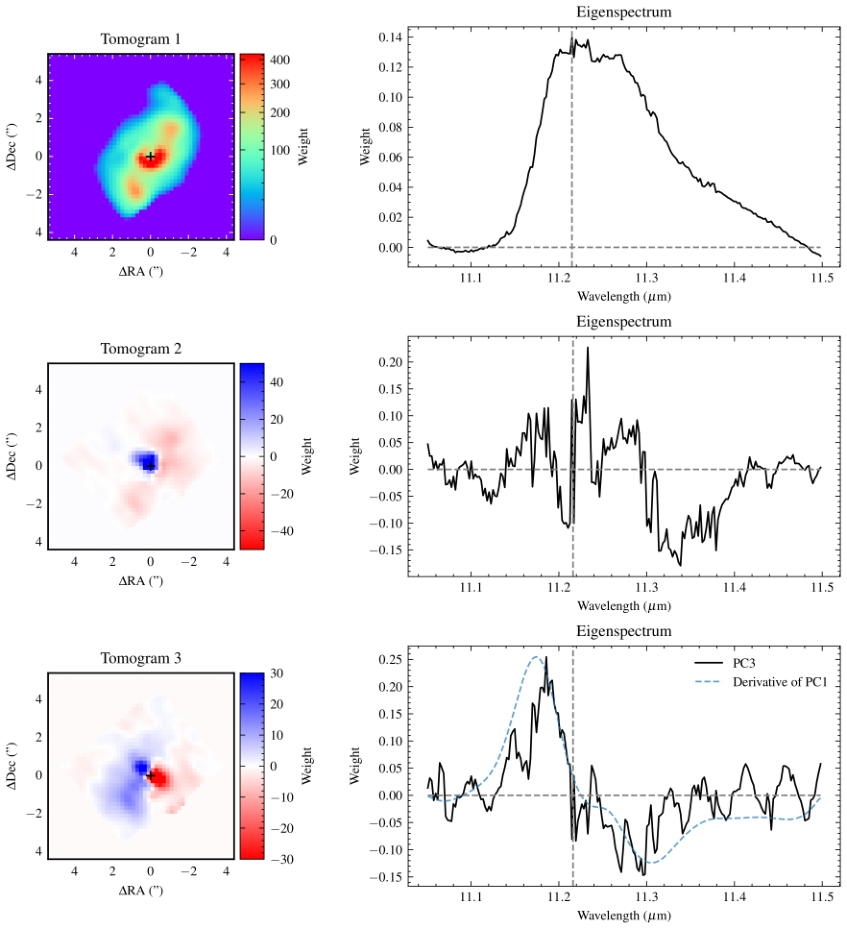
JWST/MIRI PCA tomography recovers 11.3-μm PAH velocity maps in three of five z~0.1 type-2 quasars; all three show dust-traced outflow kinematics, with molecular-gas residuals consistent with outflow after disk subtraction.

Figure 8 from X-rays Mark the Spot: The Effects of Reduced Metallicity on X-ray AGN Obscuration at High Redshift

2026-06-25 · 2606.25018v1 · Research note

X-rays Mark the Spot: The Effects of Reduced Metallicity on X-ray AGN Obscuration at High Redshift

Yash A. Gursahani, Christopher S. Reynolds

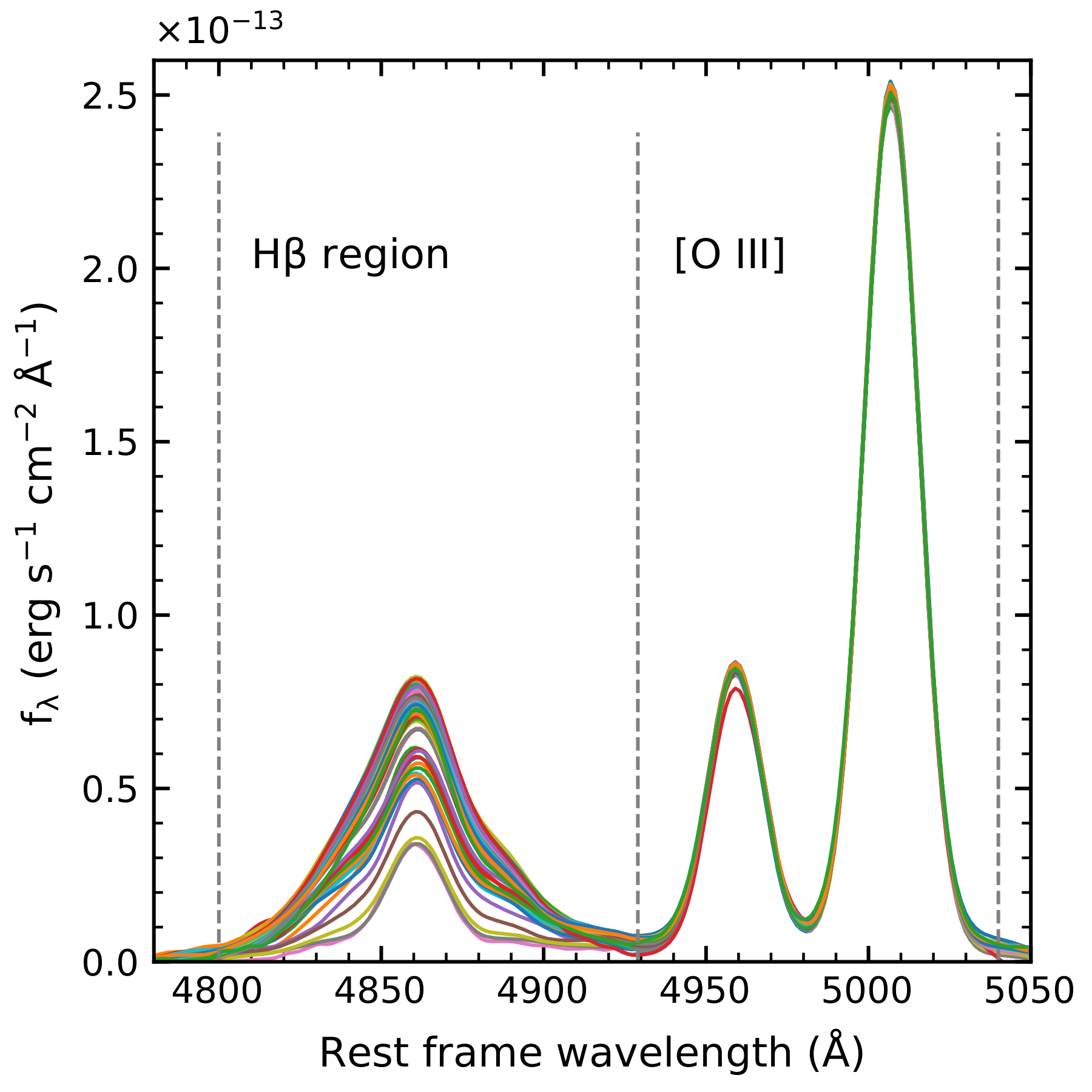
Monte Carlo torus calculations predict that metal-poor, Compton-thick AGN can transmit more X-ray flux than solar-metallicity counterparts, potentially aiding z≳10 detection. The result is model-based: geometry, viewing angle, abundance pattern, and cold-gas assumptions remain consequential.

Figure 2 from Constraints on the Gas Geometry Surrounding Little Red Dots through Narrow-Line Diagnostics

2026-06-24 · 2606.23778v1 · Research note

Constraints on the Gas Geometry Surrounding Little Red Dots through Narrow-Line Diagnostics

Visal Sok, Erica J. Nelson, Mitchell C. Begelman, et al.

Narrow-line ratios in roughly 20 high-S/N JWST/NIRSpec LRD spectra challenge a uniformly opaque, unity-covering gas envelope: at least 40% require extreme ionization conditions, while weak He II indicates an ionizing spectrum softer than standard AGN.

2026-06-22 · 2606.21614v1 · Research note

Little Red and Blue Dots: AGN-excited narrow lines, Lyman-$α$ emission, and resemblance to standard quasars

Sophia Geris, Roberto Maiolino, Xihan Ji, et al.

In 36 GOODS LRDs/LBDs at z=2.26–7.89, the authors find AGN-like narrow-line excitation, extreme X-ray weakness, and LRD Lyα excess with a broad component resembling Hα. They argue against completely enclosing cocoon geometries, while retaining obscured-LBD interpretations.

2026-06-22 · 2606.20800v1 · Research note

No hidden monsters: Probing recently-quenched galaxies for obscured AGN with JWST-PRIMER MIRI and NIRCam

Guillaume Hewitt, Omar Almaini, David Maltby, et al.

In 65 PRIMER-UDS post-starbursts at z=1–2, massive systems mostly lack mid-IR excess: template tests place population-level obscured accretion below 1% Eddington. Low-mass PSBs instead show 18-μm excess plausibly associated with residual star formation.

2026-06-17 · 2606.18155v1 · Research note

X-ray eclipse tomography: Resolving the extent of X-ray-emitting region(s) in the Seyfert galaxy ESO362-G18

Laura Rueda-Nieto, Beatriz Agís-González, Giovanni Miniutti

Swift eclipse monitoring of ESO 362-G18 uses time-resolved absorption changes to constrain an X-ray source within ~35 Rg. The authors infer a structured cloud and a soft-excess region ~50% larger than, yet overlapping, the hot corona.

2026-06-17 · 2606.17144v1 · Research note

Decoupled Kinematics and Excitation in the Compton-thick AGN NGC 6552: Spatially Resolved KOOLS-IFU Observations

Kyuseok Oh, Yoshihiro Ueda, Kanta Fujiwara, et al.

KOOLS-IFU maps of NGC 6552 find broad [O III] emission declining with radius but no significant full-sample association between local kinematics and [O III]/Hβ excitation, favoring spatial dynamical structure over a detected excitation–kinematics coupling.

2026-06-16 · 2606.16343v1 · Research note

Optical Variability as a Probe of Hidden Nuclear Activity in Type 2 AGNs

Maša Lakićević

In 412 Stripe 82 Type 2 AGNs, optical RMS variability anticorrelates with several narrow-line luminosities, equivalent widths, and widths. The authors interpret this as variability retaining information about obscured accretion, although controls and photometric-noise limits temper causal inference.

2026-06-11 · 2606.12076v1 · Research note

X-ray luminosity function of Compton-thick AGN in the early Universe (z > 3). Robustness and biases of the CTK population

Angel Ruiz, Ektoras Pouliasis, Ioannis Georgantopoulos

Using X-ray spectra and infrared-informed absorption priors, the authors infer that Compton-thick AGN comprise 17% of AGN at z=3–6. The revision sharply reduces candidate classifications, but supports no significant redshift evolution in this fraction.

Figure 2 from Aether-SHELLQs: JWST integral-field spectroscopy of candidate obscured quasars at z ~ 6

2026-06-10 · 2606.10160v1 · Research note

Aether-SHELLQs: JWST integral-field spectroscopy of candidate obscured quasars at z ~ 6

Yoshiki Matsuoka, Roberto Decarli, Emanuele Paolo Farina, et al.

JWST/NIRSpec IFU spectroscopy of six z~6 SHELLQs narrow-Lyα candidates finds secure broad Balmer components in two, while extended, largely non-rotating ionized gas characterizes several non-broad-line systems. Broad-line incidence rises sharply with Lyα luminosity.

Figure 5 from The Multi-phase Biconical Outflow in the local IR-Luminous Merger IRASF01364-1042

2026-06-05 · 2606.06005v1 · Research note

The Multi-phase Biconical Outflow in the local IR-Luminous Merger IRASF01364-1042

Y. Song</name> <arxiv:affiliation>European Southern Observatory, Chile</arxiv:affiliation> <arxiv:affiliation>Joint ALMA Observatory, Chile</arxiv:affiliation> <arxiv:affiliation>Max-Planck-Institut für Radioastronomie, Germany</arxiv:affiliation> </author> <author> <name>V. U</name> <arxiv:affiliation>IPAC, California Institute of Technology, USA</arxiv:affiliation> <arxiv:affiliation>University of California, Irvine, USA</arxiv:affiliation> </author> <author> <name>J. Kader</name> <arxiv:affiliation>University of California, Irvine, USA</arxiv:affiliation> </author> <author> <name>M. Bianchin</name> <arxiv:affiliation>University of California, Irvine, USA</arxiv:affiliation> <arxiv:affiliation>Instituto de Astrof\' isica de Canarias, Spain</arxiv:affiliation> <arxiv:affiliation>Universidad de La Laguna, Spain</arxiv:affiliation> </author> <author> <name>J. Agostino</name> <arxiv:affiliation>Ritter Astrophysical Research Center and Department of Physics and Astronomy, University of Toledo, USA</arxiv:affiliation> </author> <author> <name>L. Barcos-Muñoz</name> <arxiv:affiliation>National Radio Astronomy Observatory, Charlottesville, USA</arxiv:affiliation> <arxiv:affiliation>Department of Astronomy, University of Virginia, Charlottesville, USA</arxiv:affiliation> </author> <author> <name>N. Torres-Albà</name> <arxiv:affiliation>Department of Astronomy, University of Virginia, Charlottesville, USA</arxiv:affiliation> </author> <author> <name>A. Medling</name> <arxiv:affiliation>Ritter Astrophysical Research Center and Department of Physics and Astronomy, University of Toledo, USA</arxiv:affiliation> </author> <author> <name>C. Ricci</name> <arxiv:affiliation>Department of Astronomy, University of Geneva, Switzerland</arxiv:affiliation> <arxiv:affiliation>Instituto de Estudios Astrofísicos, Facultad de Ingeniería y Ciencias, Universidad Diego Portales, Chile</arxiv:affiliation> </author> <author> <name>L. Armus</name> <arxiv:affiliation>IPAC, California Institute of Technology, USA</arxiv:affiliation> </author> <author> <name>T. Lai</name> <arxiv:affiliation>IPAC, California Institute of Technology, USA</arxiv:affiliation> </author> <author> <name>L. Ghodsi</name> <arxiv:affiliation>Hiroshima Astrophysical Science Center, Hiroshima University, Japan</arxiv:affiliation> </author> <author> <name>A. Evans</name> <arxiv:affiliation>National Radio Astronomy Observatory, Charlottesville, USA</arxiv:affiliation> <arxiv:affiliation>Department of Astronomy, University of Virginia, Charlottesville, USA</arxiv:affiliation> </author> <author> <name>H. Inami</name> <arxiv:affiliation>Occidental College, Physics Department, USA</arxiv:affiliation> </author> <author> <name>S. Stierwalt</name> <arxiv:affiliation>Leiden Observatory, Leiden University, The Netherlands</arxiv:affiliation> </author> <author> <name>T. Bohn</name> <arxiv:affiliation>Occidental College, Physics Department, USA</arxiv:affiliation> </author> <author> <name>K. L. Emig</name> <arxiv:affiliation>National Radio Astronomy Observatory, Charlottesville, USA</arxiv:affiliation> </author> <author> <name>V. Buiten</name> <arxiv:affiliation>Instituto de Alta Investigación, Universidad de Tarapacá, Chile</arxiv:affiliation> </author> <author> <name>G. Donnelly</name> <arxiv:affiliation>Ritter Astrophysical Research Center and Department of Physics and Astronomy, University of Toledo, USA</arxiv:affiliation> </author> <author> <name>E. Treister</name> <arxiv:affiliation>European Space Agency, c/o STScI, USA</arxiv:affiliation> </author> <author> <name>A. Jimenez-Gallardo</name> <arxiv:affiliation>European Southern Observatory, Chile</arxiv:affiliation> </author> <author> <name>T. Böker</name> <arxiv:affiliation>Centre for Astrophysics Research, University of Hertfordshire, UK</arxiv:affiliation> </author> <author> <name>D. Kakkad</name> <arxiv:affiliation>Steward Observatory, University of Arizona, USA</arxiv:affiliation> </author> <author> <name>S. Linden</name> <arxiv:affiliation>School of Sciences, European University Cyprus, Cyprus</arxiv:affiliation> </author> <author> <name>P. van der Werf</name> <arxiv:affiliation>Instituto de Alta Investigación, Universidad de Tarapacá, Chile</arxiv:affiliation> </author> <author> <name>V. Charmandaris</name> <arxiv:affiliation>Institute of Astrophysics, Foundation for Research and Technology-Hellas</arxiv:affiliation> <arxiv:affiliation>Department of Physics, University of Crete, Greece</arxiv:affiliation> <arxiv:affiliation>Department of Astronomy, University of Florida, USA</arxiv:affiliation> </author> <author> <name>R. Remigio</name> <arxiv:affiliation>University of California, Irvine, USA</arxiv:affiliation> </author> <author> <name>L. Lenkic</name> <arxiv:affiliation>IPAC, California Institute of Technology, USA</arxiv:affiliation> </author> <author> <name>C. Finlez</name> <arxiv:affiliation>European Southern Observatory, Chile</arxiv:affiliation> <arxiv:affiliation>Joint ALMA Observatory, Chile</arxiv:affiliation> </author> <author> <name>M. Sanchez-García</name> <arxiv:affiliation>Department of Physics, University of Crete, Greece</arxiv:affiliation> <arxiv:affiliation>Department of Astronomy, University of Florida, USA</arxiv:affiliation> </author> <author> <name>C. Lofaro</name> <arxiv:affiliation>Department of Physics, University of Crete, Greece</arxiv:affiliation> <arxiv:affiliation>Department of Astronomy, University of Florida, USA</arxiv:affiliation> </author> <author> <name>A. Saravia</name> <arxiv:affiliation>National Radio Astronomy Observatory, Charlottesville, USA</arxiv:affiliation> <arxiv:affiliation>Department of Astronomy, University of Virginia, Charlottesville, USA</arxiv:affiliation> </author> <author> <name>I. Yoon</name> <arxiv:affiliation>National Radio Astronomy Observatory, Charlottesville, USA</arxiv:affiliation> </author> <author> <name>G. C. Privon</name> <arxiv:affiliation>National Radio Astronomy Observatory, Charlottesville, USA</arxiv:affiliation> <arxiv:affiliation>Department of Astronomy, University of Virginia, Charlottesville, USA</arxiv:affiliation> <arxiv:affiliation>Research School of Astronomy and Astrophysics, Australian National University, Australia</arxiv:affiliation> </author> <author> <name>T. Gao</name> <arxiv:affiliation>ARC Centre of Excellence for All Sky Astrophysics in 3 Dimensions</arxiv:affiliation> <arxiv:affiliation>W. M. Keck Observatory, USA</arxiv:affiliation> </author> <author> <name>H. Aziz</name> <arxiv:affiliation>University of California, Irvine, USA</arxiv:affiliation> </author> <author> <name>R. McGurk</name> <arxiv:affiliation>Institute for Astronomy, University of Hawaii, USA</arxiv:affiliation> </author> <author> <name>T. Díaz-Santos</name> <arxiv:affiliation>Department of Physics, University of Crete, Greece</arxiv:affiliation> <arxiv:affiliation>Department of Astronomy, University of Florida, USA</arxiv:affiliation> </author> <author> <name>D. Kunneriath</name> <arxiv:affiliation>National Radio Astronomy Observatory, Charlottesville, USA</arxiv:affiliation> </author> <author> <name>David B. Sanders

Spatially resolved JWST, ALMA and KCWI data support a multiphase, minor-axis biconical outflow in the dusty local merger IRAS F01364-1042. The authors infer faster ionized than molecular gas and argue a nuclear starburst can energetically drive it despite an obscured AGN.
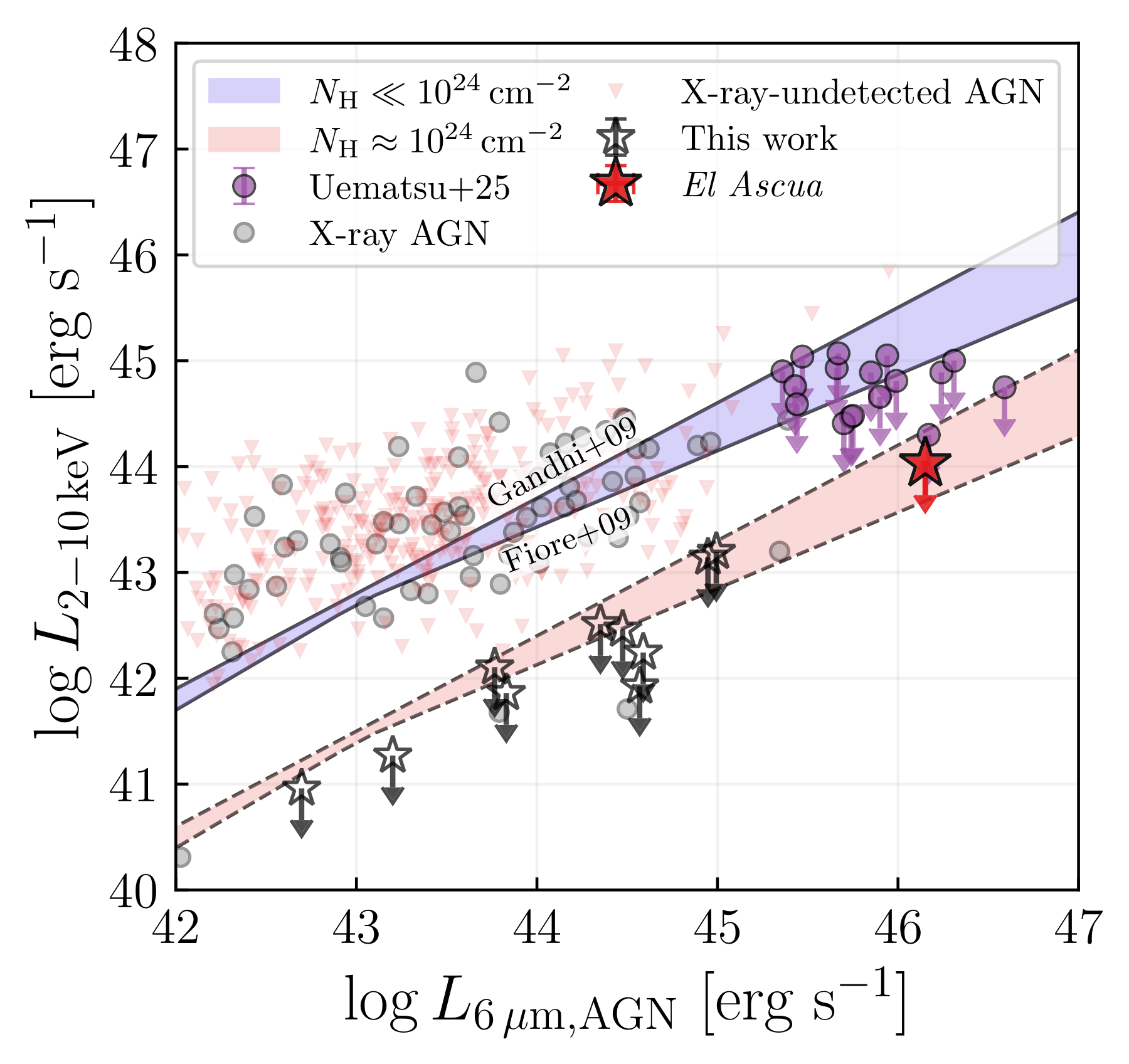
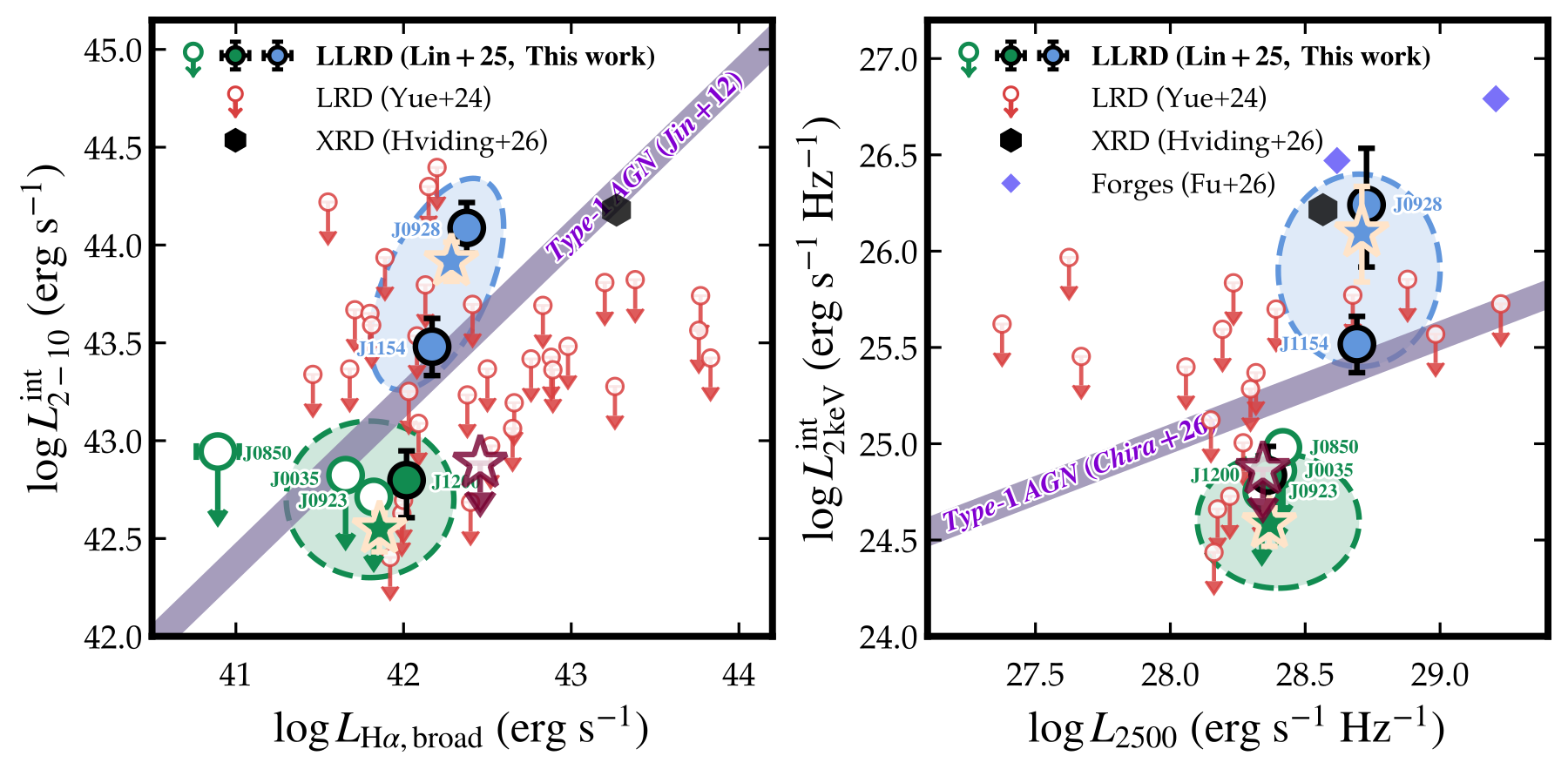
Figure 3 from ABCD: The Nuclear Structure of the Little Red Dots Revealted through Absorption, Break, Continuum, and Decrement

2026-06-04 · 2606.04711v1 · Research note

ABCD: The Nuclear Structure of the Little Red Dots Revealted through Absorption, Break, Continuum, and Decrement

Chang-Hao Chen, Jinyi Shangguan, Luis C. Ho, et al.

JWST/NIRSpec spectroscopy of 14 LRDs separates Balmer emission and absorption, favoring dense broad-line gas over dust as the main origin of elevated broad Balmer decrements. A clumpy, viewing-angle-dependent nuclear geometry is proposed, but velocity-profile fits succeed in only three of five high-S/N sources.

Figure 1 from Population synthesis of active galactic nuclei based on the radiation-regulated unification model

2026-05-17 · 2605.17547v1 · Research note

Population synthesis of active galactic nuclei based on the radiation-regulated unification model

D. Gerolymatou, S. Paltani, C. Ricci, et al.

Using simulation-based inference on a synthetic local AGN population, the authors find an intrinsic Compton-thick fraction of 40±3%. Their radiation-regulated geometry broadly reproduces several X-ray observables, but depends materially on fixed, simplified broad-line-region and torus assumptions.

2026-05-14 · 2605.15263v1 · Research note

On the quenching of LRD X-ray emission by both Compton-thick gas and high accretion rates

Albert Sneppen, Darach Watson, James H. Matthews, et al.

Sirocco cocoon models suggest that current LRD X-ray non-detections require both moderately enriched, Compton-thick gas and intrinsically X-ray-weak/soft AGN emission. The inference is conditional on assumed intrinsic SEDs, metallicities, columns, and redshift-dependent observing bandpasses.

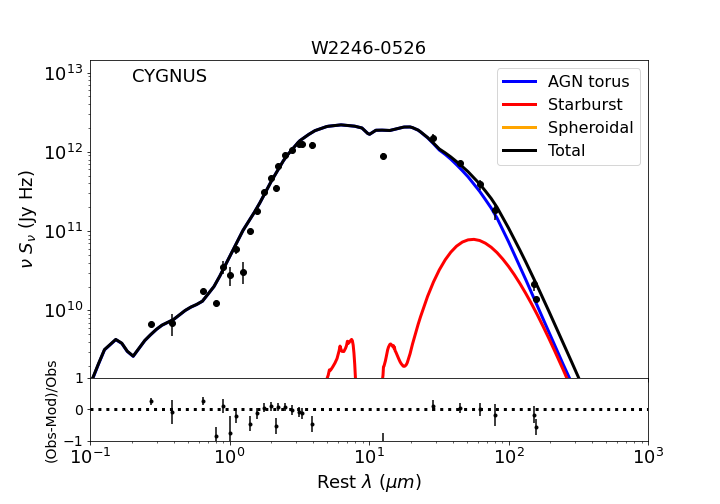
Figure 1 from JWST observations and a model for the extremely luminous obscured quasar W2246-0526 at z=4.6

2026-05-09 · 2605.09078v1 · Research note

JWST observations and a model for the extremely luminous obscured quasar W2246-0526 at z=4.6

Charalambia Varnava, Andreas Efstathiou, Tanio Díaz-Santos, et al.

JWST/MIRI-MRS-informed SED fits to the single z=4.601 Hot DOG W2246-0526 favor an added hot-dust component interpreted as polar dust. This changes inferred AGN luminosity, but its geometry and physical association with an outflow remain model-dependent.

2026-05-06 · 2605.05074v1 · Research note

Little red dots as obscured little blue dots: relative abundances, luminosities, and black-hole masses

Piero Madau, Roberto Maiolino

A forward model treating little red dots as dust-intercepted, inclined counterparts of compact broad-line AGN matches the currently measured UV luminosity function, but dust covering fraction and cloud extinction remain substantially degenerate.

Figure 1 from A Rare Eddington-Limited, Heavily Obscured Low-Mass Active Galactic Nucleus Likely Triggered by a Galaxy Merger

2026-04-29 · 2604.26743v1 · Research note

A Rare Eddington-Limited, Heavily Obscured Low-Mass Active Galactic Nucleus Likely Triggered by a Galaxy Merger

Shouyi Wang, Fan Zou, Chang-Hao Chen, et al.

For the single $M_\star\sim10^{10}\,M_\odot$ host GAMA 376183, NuSTAR and multiwavelength data support a heavily obscured, rapidly accreting AGN in a disturbed system; the proposed merger-triggered starburst/accretion connection remains suggestive rather than demonstrated.

Figure 5 from Decoupling the AGN outflow and star-forming disk kinematics in the nuclear region of NGC 7582 with JWST NIRSpec and MIRI/MRS

2026-04-27 · 2604.24892v1 · Research note

Decoupling the AGN outflow and star-forming disk kinematics in the nuclear region of NGC 7582 with JWST NIRSpec and MIRI/MRS

Oscar Veenema, Niranjan Thatte, Dimitra Rigopoulou, et al.

JWST IFU spectroscopy of NGC 7582 separates rotating circumnuclear-disk gas from an AGN bicone by ionisation potential and line-profile decomposition, finding distinct kinematic axes and broader outflow lines; mixed-ionisation tracers require two components.

Figure 3 from Constraints on the host galaxy and AGN properties of three z > 6 JWST AGN from NOEMA observations

2026-03-31 · 2603.29652v1 · Research note

Constraints on the host galaxy and AGN properties of three z > 6 JWST AGN from NOEMA observations

Giovanni Mazzolari, Hannah Übler, Rodrigo Herrera Camus, et al.

Deep NOEMA observations of three z>6 JWST AGN—two Little Red Dots and one blue Type-I source—yield no significant [C II] or dust-continuum detection, tightening host-galaxy and SED constraints while leaving the physical origin of their [C II] deficit unresolved.

2026-03-26 · 2603.24893v1 · Research note

Revisiting the Claim for a Direct-Collapse Black Hole in UHZ1 at $z=10.05$

Fan Zou, Elena Gallo, Zihao Zuo, et al.

A reanalysis of UHZ1’s full Chandra exposure and new MIRI non-detections reduces the evidence for its proposed luminous, Compton-thick direct-collapse black hole: the X-ray excess is marginal and non-persistent, while infrared limits exclude the originally inferred luminosity scale.