654 indexed papers · 430 research notes

Research archive

Reset

2026-02-14 · 2602.13902v1 · Research note

J-PAS: Semi-Supervised Sim-to-Obs Transfer for Robust Star--Galaxy--Quasar Classification

Daniel López-Cano, L. Raul Abramo, L. Nakazono, et al.

Semi-supervised adaptation from DESI-derived mocks to J-PAS observations improves held-out four-class photometric classification over mocks-only and equally label-limited J-PAS-only baselines, chiefly for quasars. Results demonstrate mitigation of this specific simulation-to-observation shift, not a general guarantee of transferability.
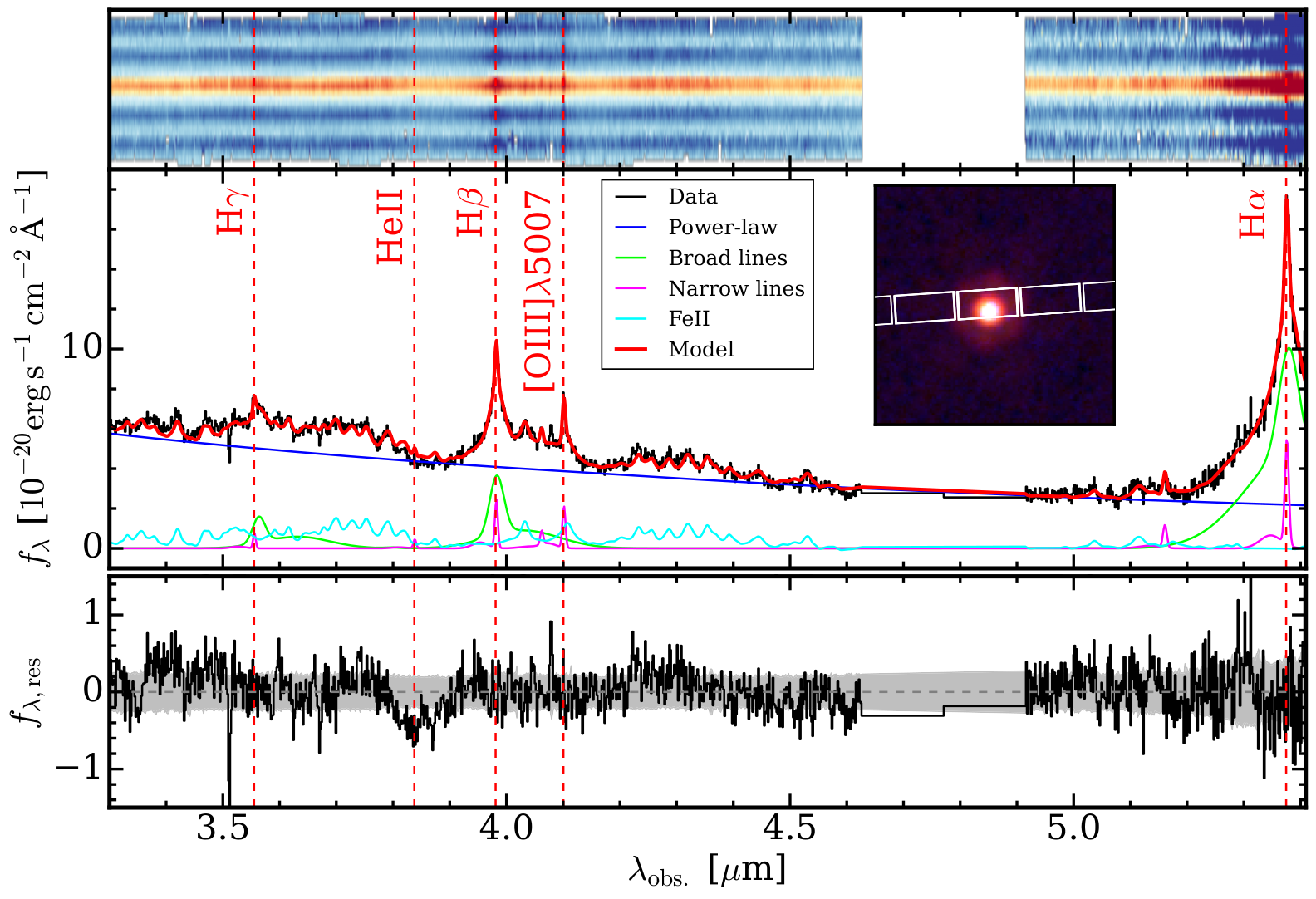
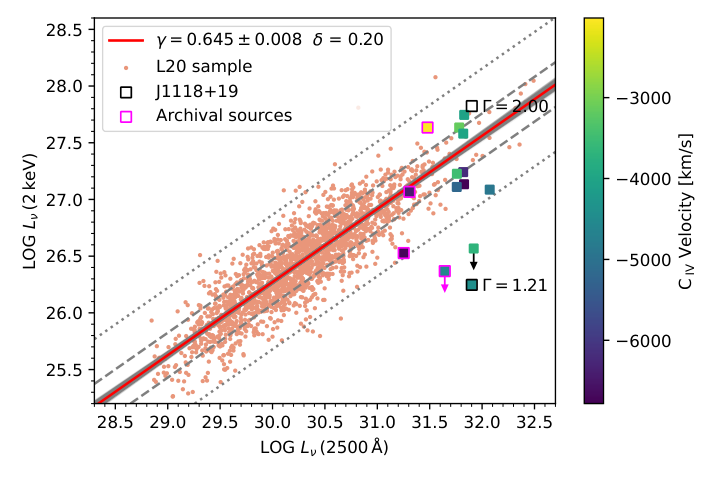
Figure 1 from Direct pathway to the Early Supermassive Black Holes: A Red Super-Eddington Quasar in a Massive Starburst Host at $z=7.2$

2026-02-12 · 2602.12325v1 · Research note

Direct pathway to the Early Supermassive Black Holes: A Red Super-Eddington Quasar in a Massive Starburst Host at $z=7.2$

Qinyue Fei, Seiji Fujimoto, Gabriel Brammer, et al.

GNz7q at z=7.1899 combines a 10^7.55-M⊙, apparently super-Eddington black hole with a massive, rapidly star-forming host. The authors argue that its near-local BH-to-stellar mass ratio makes it a plausible progenitor channel for luminous z≈6 quasars.

2026-02-04 · 2602.04974v1 · Research note

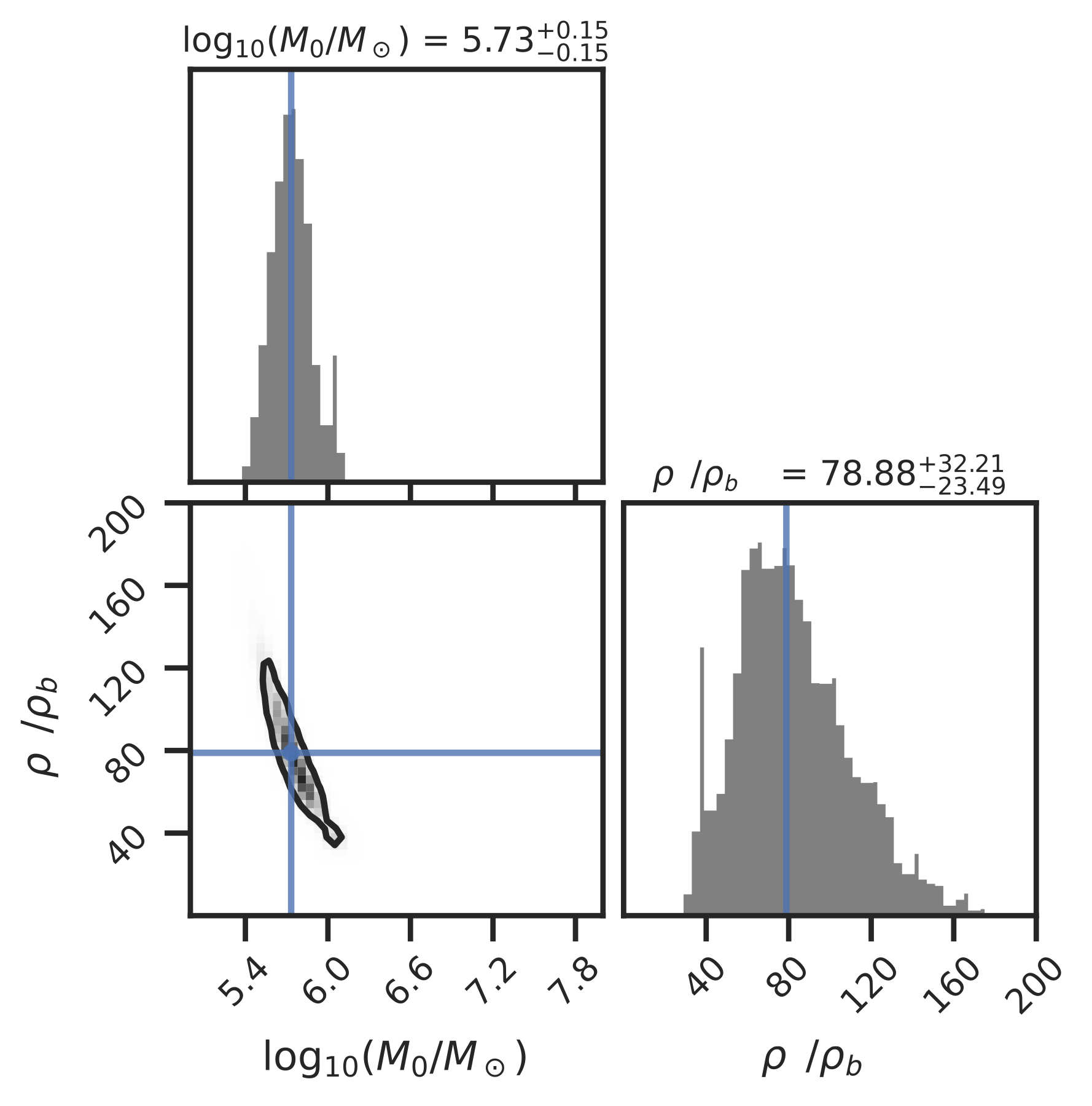
Clustering of z~6.6 Quasars and [O III] Emitters Constrains Host Halo Masses and Duty Cycles in 25 ASPIRE Fields

Jiamu Huang, Joseph Hennawi, Elia Pizzati, et al.

JWST/ASPIRE clustering across 25 z≈6.6 quasar fields associates UV-bright quasars with substantially more massive minimum host halos than [O III] emitters, but the inferred ≈Myr quasar lifetime has a highly asymmetric, large uncertainty.

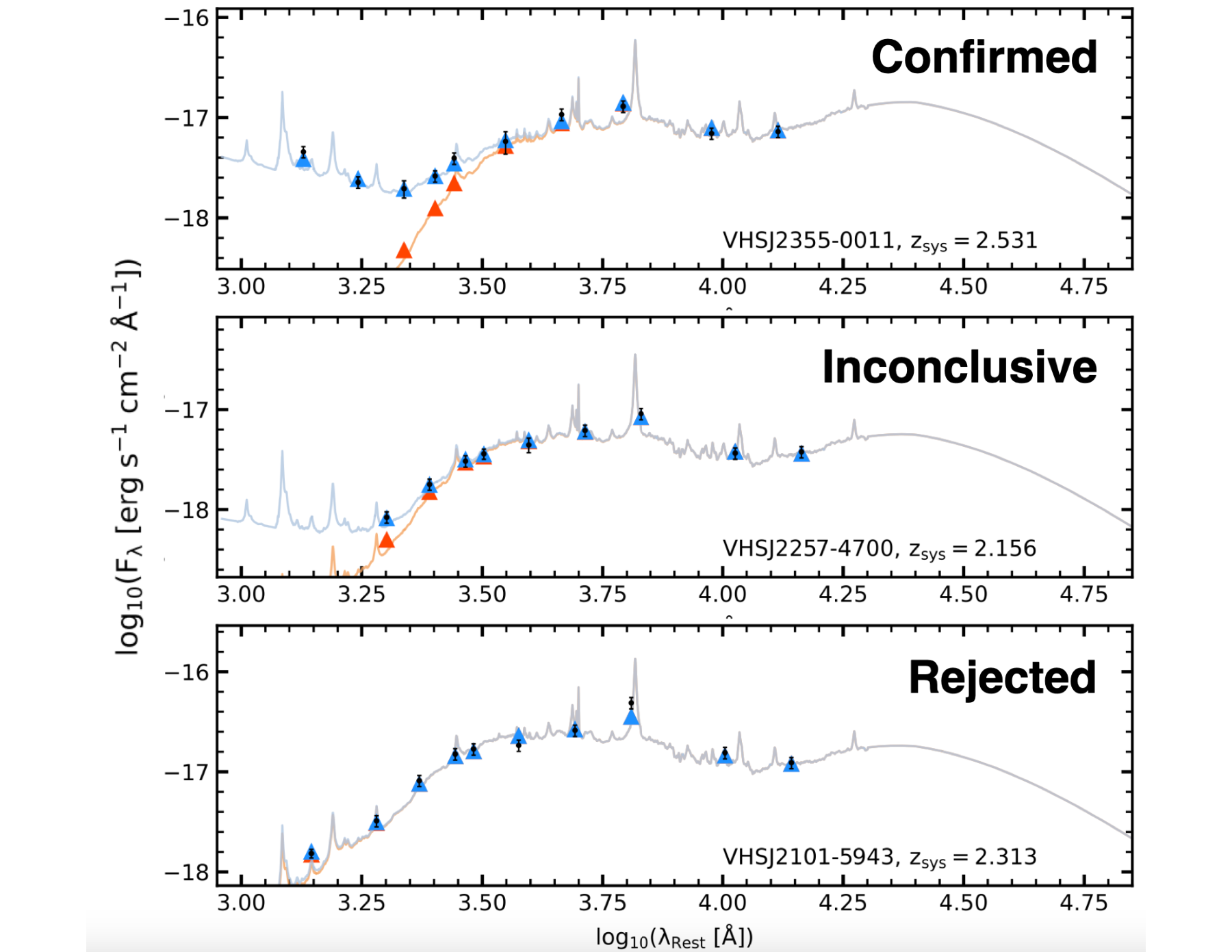
Figure 3 from The rest ultraviolet to infrared spectral energy distributions of heavily reddened quasars are "V-shaped" and hot-dust poor

2026-01-24 · 2601.17416v1 · Research note

The rest ultraviolet to infrared spectral energy distributions of heavily reddened quasars are "V-shaped" and hot-dust poor

Matthew Stepney, Manda Banerji, Shenli Tang, et al.

For 63 heavily reddened quasars at z=0.7–2.7, two-component UV–IR fits frequently yield V-shaped SEDs and comparatively weak hot dust. The authors identify four cosmic-noon objects meeting Little Red Dot continuum-slope selections, but do not uniquely establish the UV-emission mechanism.

2026-01-23 · 2601.16710v1 · Research note

One H2 molecule per ten million H-atoms reveals sub-pc scale cold overdensities at z~4

P. Noterdaeme, S. Balashev, T. Berg, et al.

R≈120,000 ESPRESSO spectroscopy resolves exceptionally weak H2 at z=4.24 into cold, dense and warmer components. The authors interpret the narrow component as a ~0.01-pc atomic-gas overdensity, demonstrating that trace H2 can reveal otherwise elusive small-scale structure.

2025-12-20 · 2512.18421v1 · Research note

The evolution of obscured AGN across cosmic time -- A large quasar survey for the 2040s

Tanya Urrutia, Darshan Kakkad, Paula Sánchez-Sáez, et al.

This is a survey proposal, not a new AGN measurement: it argues that repeat optical MOS spectroscopy of >50 million multi-selected candidates to z~6.5 could quantify obscuration demographics while exposing selection biases among obscured populations.

Figure 4 from The accretion of quasars at the epoch of reionisation: $JWST$ catches the primeval monsters slowly feasting

2025-12-18 · 2512.16981v1 · Research note

The accretion of quasars at the epoch of reionisation: $JWST$ catches the primeval monsters slowly feasting

B. Trefoloni, E. Nardini, S. Carniani, et al.

JWST/NIRSpec disc fits for eight luminous z≥5.9 quasars yield a sub-Eddington distribution, ⟨log λEdd⟩=−0.86. The authors argue that self-consistent disc luminosities and masses reduce apparent super-Eddington incidence relative to conventional single-epoch estimates.

Figure 1 from Shedding the envelope: JWST reveals a kiloparsec-scale [OIII]-weak Balmer shell around a z=7.64 quasar

2025-12-17 · 2512.15881v1 · Research note

Shedding the envelope: JWST reveals a kiloparsec-scale [OIII]-weak Balmer shell around a z=7.64 quasar

Julien Wolf, Eduardo Bañados, Xiaohui Fan, et al.

JWST/NIRSpec IFU data reveal Hβ emission to ~1.8 kpc around the z=7.64 quasar J0313−1806 but no significant [O III]. The authors favor dense, clumpy fossil-outflow gas, while the single-object data leave its geometry and evolutionary interpretation uncertain.

2025-12-16 · 2512.14844v1

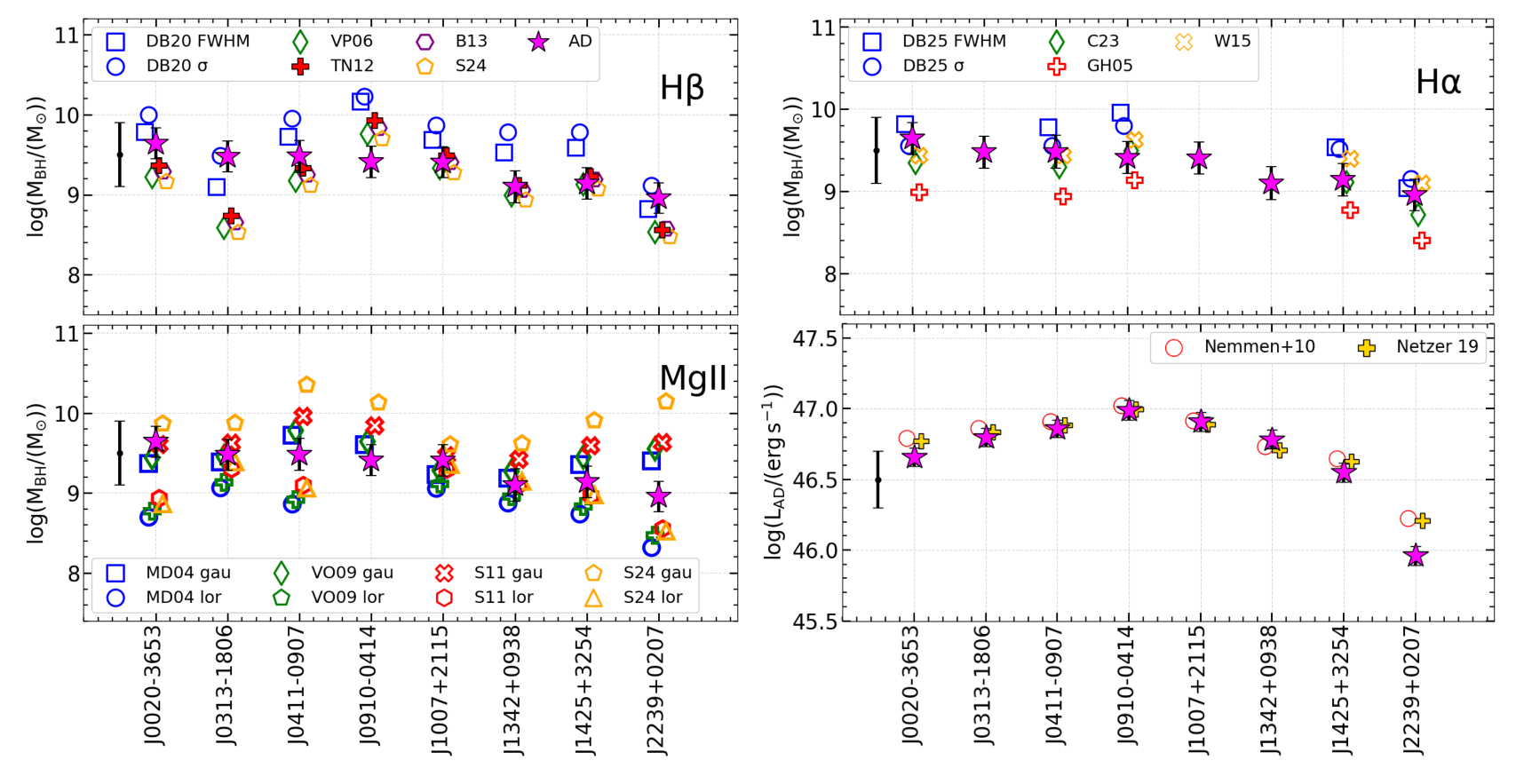
Doubling NIRSpec/IFS capability to calibrate the single epoch black hole mass relation at high redshift

Eleonora Parlanti, Bartolomeo Trefoloni, Stefano Carniani, et al.

Presents a NIRSpec/IFU reduction that exploits the red signal on NRS2 for medium‑resolution gratings, effectively doubling the usable wavelength coverage and recovering Hα beyond the nominal range; the authors also note the exposure‑time trade‑off when using adjacent dispersers. Applied to five z≈2 quasars with reverberation‑mapped MBH, the extended cubes enable joint Hβ–Hα measurements at R≈1000. Hβ‑based single‑epoch masses best match RM, while Hα recipes show ≈0.5 dex larger scatter; for the least‑massive, high‑λEdd object (MBH,RM≈10^7.5 M⊙, λEdd=0.8) all SE estimators overpredict by ~1 dex, suggesting a bias at high accretion. The work delivers the first high‑z SE calibrations from Hβ and Hα for the newfound early‑BH population, with uncertainties still limited by sample size.

2025-12-05 · 2512.06159v1

From the Intergalactic to the Interstellar Scales -- EQUALS: a High-resolution Legacy Survey of Gas in the Distant Universe Using ESPRESSO

Trystyn Berg, Valentina D'Odorico, Elisa Boera, et al.

EQUALS is an ESPRESSO Large Programme delivering R ≈ 140,000 spectra for 23 bright z ≈ 4 QUBRICS quasars, reaching ~20 per 1 km s−1 pixel in the Lyα forest and ~40 redward via hour-long, Fabry–Pérot–calibrated blocks. The survey is tuned to the small-scale Lyα forest (k > 0.1 s km−1), promising a ~20× tighter IGM temperature measurement at z ~ 4 and, consequently, 5–15× stronger constraints on dark-matter particle mass. The resolution enables weak-line work (e.g., Mg II) to separate thermal from turbulent broadening, and isotopic C II shifts (~3 km s−1) in ~8 high-N(H I) systems to probe early stellar yields. Data products will be released via CANFAR and the ESO Archive as a legacy benchmark for future epoch measurements.

2025-11-19 · 2511.15359v1 · Research note

Changing-look Active Galactic Nuclei from the Dark Energy Spectroscopic Instrument. V. Dramatic Variability in High-Ionization Broad Emission Lines

Zhi-Qiang Chen, Jun-Jie Jin, Wei-Jian Guo, et al.

A DESI–SDSS comparison identifies 97 z>0.9 changing-look quasars with high-ionization broad-line transitions. Their lower Eddington ratios, line–luminosity co-variability, and ∼3-year rest-frame transition times are consistent with—though do not prove—accretion-state changes.

2025-11-12 · 2511.09304v1 · Research note

Variability of optical spectral index to support a central sub-parsec binary black hole system in quasar SDSS J001224-102226.51

Zhang XueGuang

Using two SDSS epochs of the z=0.228 quasar SDSS J0012-1022, the authors argue that an anomalous luminosity–optical-slope change is consistent with phase-dependent obscuration of two accreting black holes. It supports, but does not establish, a sub-parsec binary interpretation.

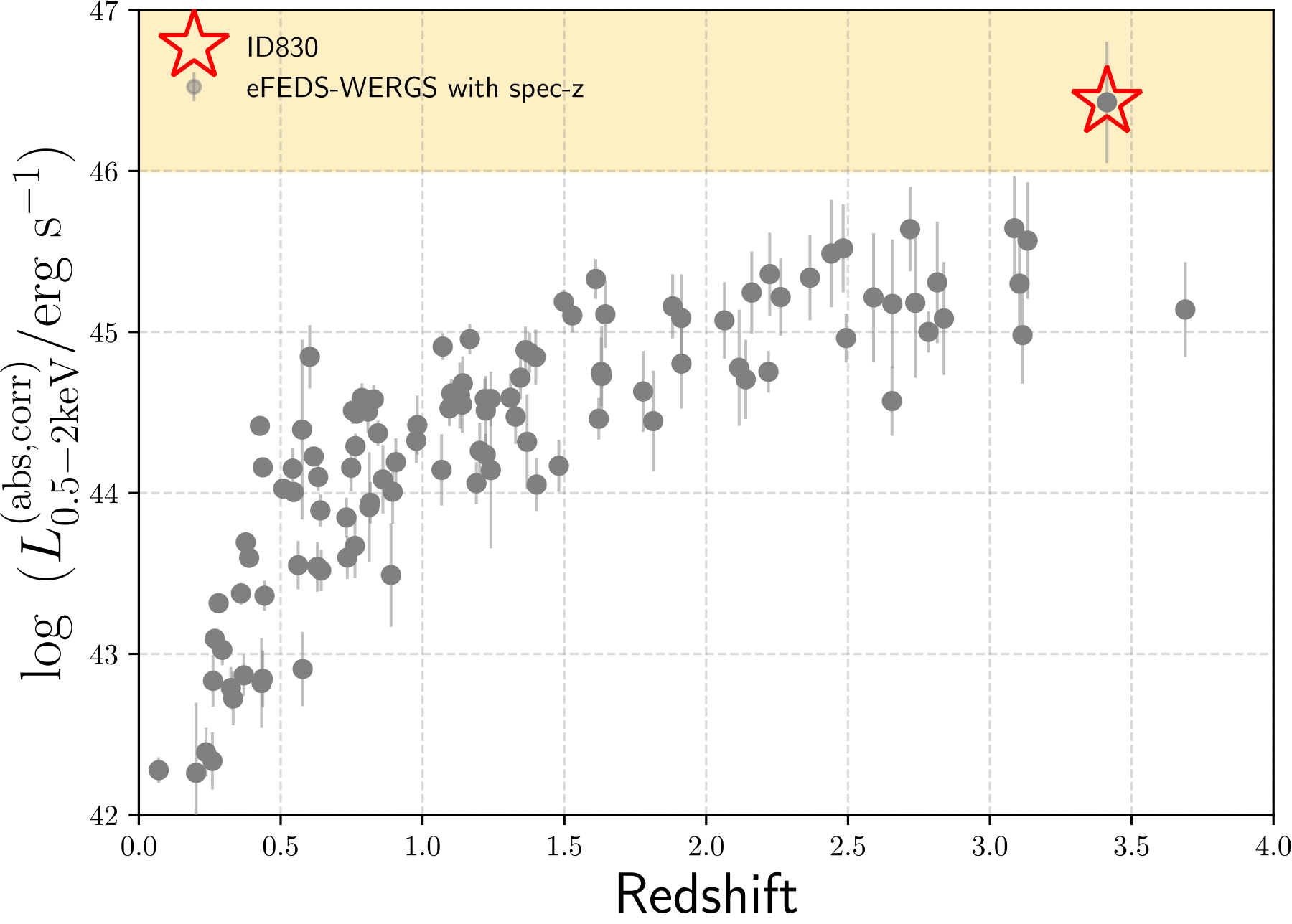
Figure 1 from Discovery of an X-ray Luminous Radio-Loud Quasar at $z=3.4$: A Possible Transitional Super-Eddington Phase

2025-11-07 · 2511.05029v1 · Research note

Discovery of an X-ray Luminous Radio-Loud Quasar at $z=3.4$: A Possible Transitional Super-Eddington Phase

Sakiko Obuchi, Kohei Ichikawa, Satoshi Yamada, et al.

ID830 is a z=3.4351 radio-loud quasar with extreme, steep X-ray emission and a UV-based super-Eddington estimate. The authors interpret its X-ray excess as corona-plus-jet emission during a possible post-burst transition, not a demonstrated evolutionary state.

Figure 2 from SHELLQs-JWST: Revealing the Spectra of Extended Emission in 12 z > 6 Quasar Host Galaxies using the JWST NIRSpec Fixed Slit

2025-10-25 · 2510.22403v1 · Research note

SHELLQs-JWST: Revealing the Spectra of Extended Emission in 12 z > 6 Quasar Host Galaxies using the JWST NIRSpec Fixed Slit

Camryn L. Phillips, Michael A. Strauss, Masafusa Onoue, et al.

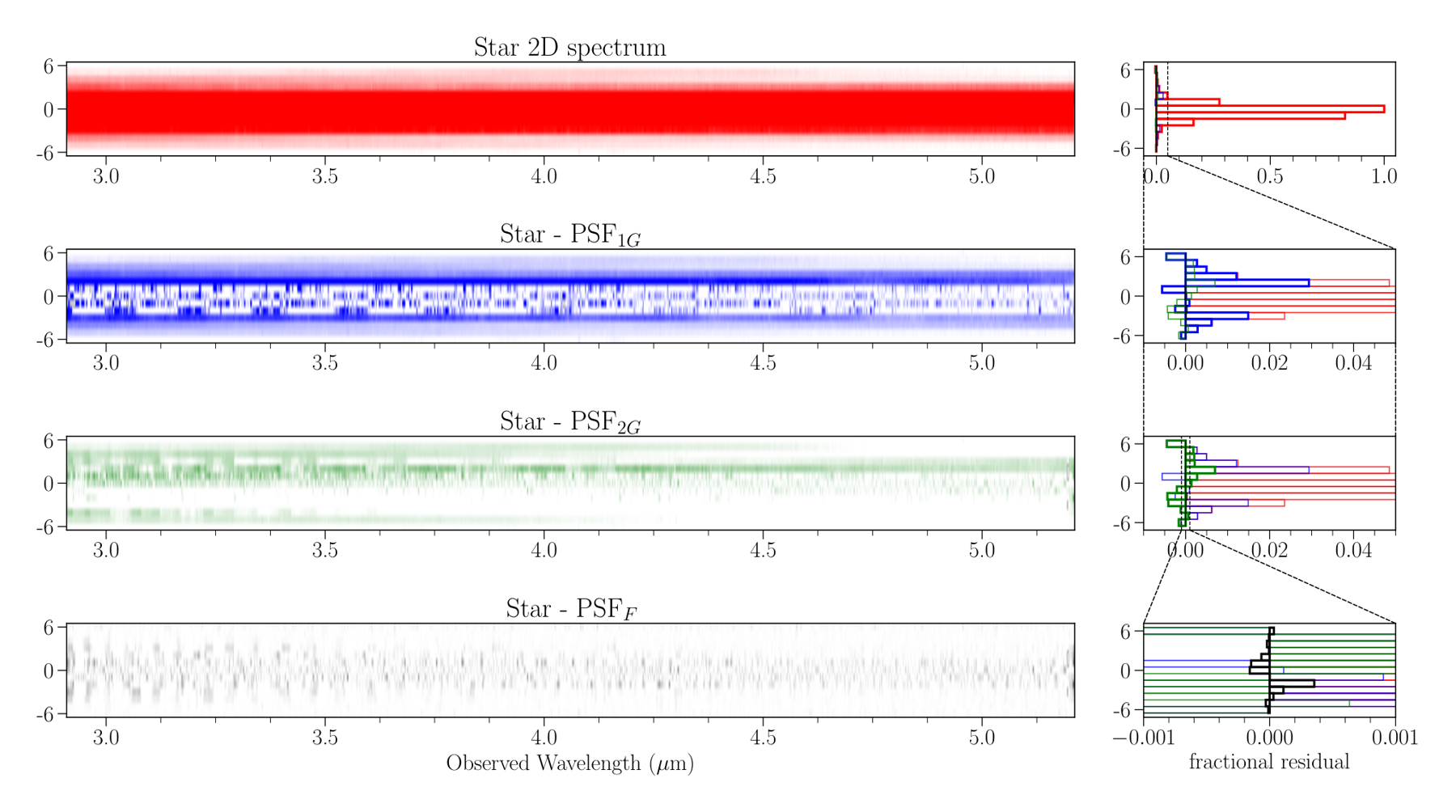
In twelve z=6.0–6.4 low-luminosity SHELLQs quasars, wavelength-dependent PSF subtraction isolates extended host emission. The authors report mostly main-sequence-consistent Hα upper-limit SFRs, one [O III] outflow, and one disk-like rotation, while narrow-line-region contamination complicates interpretation.

2025-10-13 · 2510.11780v1 · Research note

Cross-correlation of Luminous Red Galaxies with ML-selected AGN in HSC-SSP III: HOD Parameters for Type I and Type II Quasars

Rodrigo Córdova Rosado, Andy D. Goulding, Jenny E. Greene, et al.

LRG–AGN cross-correlations at z=0.7–1.0 imply that luminous unobscured quasars occupy roughly three-times more massive halos and far fewer satellite galaxies than reddened/obscured AGN, challenging a purely orientation-based unification picture.

2025-10-10 · 2510.09753v1 · Research note

BEES: Quasar lifetime measurements from extended rest-optical emission line nebulae at $z\sim6$

Dominika Ďurovčíková, Anna-Christina Eilers, Yuzo Ishikawa, et al.

JWST/NIRSpec IFU observations of five z~6 small-proximity-zone quasars find extended Hα and [O III] around four, using nebular light-travel scales to support very short UV-luminous episodes (tQ≲10^5 yr) independently of resonant Lyα interpretation.

2025-10-09 · 2510.08455v1 · Research note

A first look at quasar-galaxy clustering at $z\simeq7.3$

Jan-Torge Schindler, Joseph F. Hennawi, Frederick B. Davies, et al.

JWST spectroscopy of galaxies around two z=7.0–7.5 quasars yields a tentative z≈7.3 quasar–galaxy clustering measurement, implying comparatively modest halo masses and a short duty cycle, but only eight associated galaxies make cosmic variance and modeling assumptions consequential.

2025-09-11 · 2509.09770v1

Early Stages of Dusty Tori: The First Infrared Spectra from a Highly Multiscale Quasar Simulation

Jaeden Bardati, Philip F. Hopkins, Gordon T. Richards

First IR spectra from a fully self-consistent, cosmological-to-sub-sublimation quasar simulation (post-processed with SKIRT) show that the emission is dominated by a torus-like structure built from a highly magnetized, turbulence-supported outer accretion disk plus dusty gas tidally stripped from the ISM. In this early phase the nucleus is buried and Compton-thick, and the escaping near–mid-IR luminosity varies by nearly an order of magnitude with sightline, driven largely by extinction in an inflowing cold dusty stream. Self-absorption within the torus cools the SED and suppresses silicate emission, while reprocessing by the surrounding ISM imprints prominent silicate absorption; sublimation zones stratified by grain size/composition yield intrinsically varied extinction curves that emerge grayed after multiple scatterings. Clearing biconical cavities in later stages preserves MIR anisotropy and silicate features, implying a buried, IR-bright phase early in dusty starburst quasar evolution.

2025-09-09 · 2509.07611v1

Balmer Absorption in Iron Low-Ionization Broad Absorption Line Quasars

Karen M. Leighly, Sarah C. Gallagher, Hyunseop Choi, et al.

Analyzes Balmer absorption in 14 FeLoBAL quasars (8 new), measuring velocities, widths, and apparent optical depths, and correcting for partial covering to infer true H(n=2) columns. Finds only a weak Eddington ratio–outflow speed trend because most objects are low‑speed “loitering” outflows; dN/dv peaks at low velocities and anticorrelates with luminosity and Eddington ratio. Reports a correlation between Balmer-line width and the optical–IR slope αoi, tying absorber kinematics to SED/accretion state. Notes parallels with Little Red Dots—V‑shaped continua, steep reddening with a scattered blue component, weak hot dust, and X‑ray weakness—hinting at shared conditions that elevate the n=2 population.

2025-09-08 · 2509.07064v1

GA-NIFS: an extended [OIII] halo around the sub-Eddington quasar J1342+0928 at z=7.54

Bartolomeo Trefoloni, Stefano Carniani, Elena Bertola, et al.

JWST/NIRSpec IFS (GA-NIFS) observations of ULAS J1342+0928 (z=7.54) combine prism (R~100) and high-resolution grating (R~2700) to map rest-UV–optical emission and kinematics. The prism cube reveals [O III] λ5007 extended over ~7 kpc—well beyond typical galaxy sizes—consistent with a relic from a past outflow, while the grating data resolve a compact (≤0.6 kpc) nuclear ionized outflow with a mass-loss rate of 50–300 Msun/yr, comparable to the host SFR of 85–545 Msun/yr. Accretion-disk modeling yields log(MBH/Msun)=9.2±0.2 and log(Lbol/erg s−1)=46.8±0.1, implying λEdd≈0.4 and pointing to sub-Eddington growth at the epoch of reionization. The most distant BLR ratios (Fe II UV/Mg II and Fe II opt/Hβ) indicate early metal enrichment; the outflow-rate range is chiefly set by uncertain ne.

2025-09-05 · 2509.05417v1

The Light Echo of a High-Redshift Quasar mapped with Lyman-$α$ Tomography

Anna-Christina Eilers, Minghao Yue, Jorryt Matthee, et al.

Deep JWST/NIRSpec MSA spectroscopy of twelve background galaxies behind the z_QSO ≈ 6.3 quasar J0100+2802 yields the first spectroscopic Lyα-tomography map of a quasar “light echo” in the transverse direction. Clear excess Lyα transmission at the quasar’s systemic redshift appears along multiple sightlines, enabling a 3D reconstruction of the ionized bubble and its ionization-cone orientation/inclination, and setting f_obsc < 91%. Modeling the light-travel geometry implies a UV-on timescale t_QSO = 10^{5.6+0.1}_{-0.3} yr (≈2–5×10^5 yr), far shorter than required for continuous thin-disk growth to the observed SMBH mass. This disfavors purely geometric obscuration as the sole cause of short lifetimes and points to radiatively inefficient or initially enshrouded accretion phases in early SMBH growth.

2025-08-29 · 2509.00153v1

Quasar Radiative Feedback May Suppress Galaxy Growth on Intergalactic Scales at $z = 6.3$

Yongda Zhu, Eiichi Egami, Xiaohui Fan, et al.

Using JWST/NIRCam grism WFSS from the SAPPHIRES and EIGER programs, the authors map [O III] emitters around the z=6.3 quasar J0100+2802 and analyze 130 sources to test radiative feedback. They find a clear decline in [O III] λ5008-to-UV luminosity (L5008/L1500) toward the quasar over ~8–10 cMpc: L1500 stays flat with distance while L5008 rises away from the quasar, and the trend tracks the projected photoionization-rate profile Γ_qso, with a weaker but consistent signal along the line of sight. The inferred transverse suppression radius implies a recent radiative episode of ~4.5 Myr, favoring rapid H2 photodissociation over slower thermal photoheating as the mechanism. Environmental effects alone cannot reproduce the signal, offering geometry-based constraints on intergalactic quasar feedback and recent quasar lifetimes.

2025-08-29 · 2508.21818v1

First constraints on the local ionization topology in front of two quasars at z ~ 7.5

Timo Kist, Joseph F. Hennawi, Frederick B. Davies, et al.

Uses JWST/NIRSpec damping-wing fits and a three-parameter local model to extract the Lorentzian-weighted HI column N_HI^DW, the distance to the first neutral patch r_patch, and the quasar lifetime t_Q in front of two z ≈ 7.5 quasars. J1007+2115 favors a moderately ionized IGM with ⟨x_HI⟩ = 0.32^{+0.22}_{-0.20}, an exceptionally short lifetime log10 t_Q/yr = 4.14^{+0.74}_{-0.18}, r_patch ≈ 28.9 cMpc, and log10 N_HI^DW ≈ 19.70, while J1342+0928 implies a higher neutral fraction ⟨x_HI⟩ = 0.58^{+0.23}_{-0.23}, an intermediate lifetime log10 t_Q/yr = 5.64^{+0.25}_{-0.43}, r_patch ≈ 10.9 cMpc, and log10 N_HI^DW ≈ 20.24. Mapping these local constraints through topology-informed priors links the sightline-level topology to global reionization timing. The N_HI^DW metric also naturally captures potential contributions from foreground absorbers toward J1342+0928.

2025-08-19 · 2508.14164v1

The implications of overmassive black holes at $z > 5$ for quasar and black hole growth

Judah Luberto, Steven R. Furlanetto

Analyzing recent JWST reports of ~100× overmassive black holes at z>5, the authors show that if such BHs are common, the global black hole mass density at z≈5 would already rival today’s value—unless the overmassive systems are rare or accrete with very high radiative efficiencies (implying rapid spin). Tracking representative z≈5 detections forward using average growth rates from modern models keeps them overmassive relative to the local Mbh–M⋆ relation. To land within the local scatter by z≈0, these BHs must grow at least an order of magnitude more slowly than expected. This creates tension with the rapid early growth needed to assemble them and complicates standard expectations for quasar feedback on galaxies.

2025-08-04 · 2508.02792v1

Luminous Mid-IR Selected Obscured Quasars at Cosmic Noon in SDSS Stripe82 II: Spectroscopic Diversity and Broad H$α$ Emissions

Ben Wang, Yuzo Ishikawa, Joseph F. Hennawi, et al.

Survey of 24 WISE W4–bright, optically faint/red SDSS Stripe 82 candidates confirms 23 luminous Type‑2 quasars at z = 0.88–3.49 using Gemini/GNIRS plus Keck/LRIS and KCWI spectra. About one‑third (8/23) unexpectedly show broad Hα (FWHM > 2000 km/s) while sharing SEDs with JWST “little red dots,” marking them as lower‑z analogues of heavily obscured broad‑line AGN. The sample also exhibits relatively weak [O III] λ5007 given their high bolometric luminosities, and the authors construct a new Type‑2 QSO composite spectrum. Results demonstrate that simple mid‑IR plus extreme r−W4 color selection efficiently recovers a spectroscopically diverse obscured quasar population at cosmic noon, informing SMBH growth demographics that connect to the LRD population.

2025-07-31 · 2508.00209v1

Accretion disc reverberation mapping in a high-redshift quasar

F. Pozo Nuñez, E. Bañados, S. Panda, et al.

Six months of medium-band photometric reverberation mapping on the MPG/ESO 2.2 m captured inter-band lags in the z=2.66 quasar QSO J0455-4216, isolating continuum windows with ~7% variability and day-scale micro-variations. GPCC-derived lags follow a wavelength-dependent delay spectrum consistent with an SS73 thin disc plus lamp-post, placing the ultraviolet-emitting outermost radius at 3.02(+0.33/−0.57) light-days (~500 AU). Transfer-function modeling shows the light curves are disc-dominated, with only minor diffuse BLR continuum allowed; large DCE fractions oversmooth the variability. This delivers the first direct disc-size measurement at this redshift for an ~9×10^8 M⊙ black hole, validating thin-disc expectations and enabling faster high‑z mass estimates.

2025-07-30 · 2507.23066v1

SHELLQs-JWST perspective on the intrinsic mass relation between supermassive black holes and their host galaxies at z > 6

John Silverman, Junyao Li, Xuheng Ding, et al.

Using nine SHELLQs quasars at 6.18<z<6.4 with NIRCam host detections and NIRSpec Balmer-line M_BH, the authors infer the intrinsic M_BH–M_* relation via forward modeling that accounts for selection and measurement systematics, with the slope fixed to 1.61 and acknowledging parameter degeneracies. The sample (log M_BH≈8–9; log M_*≈9.5–11) is consistent with a non-evolving relation but with markedly larger intrinsic scatter, σ≈0.80 dex. The preferred model implies an active UV-unobscured AGN fraction of ~2.3% at z≈6 and predicts many lower-mass AGN soon to be found. An overmassive normalization is disfavored, as it would require unrealistically small scatter (~0.22 dex) and a very low AGN fraction (~0.6%).

2025-07-02 · 2507.01952v1

The Lockman-SpReSO project. Spectroscopic analysis of Type 1 AGN

Castalia Alenka Negrete, Hector J. Ibarra-Medel, Erika Benitez, et al.

First optical–UV spectral analysis of 30 faint (mB=19.6–21.8) Type 1 AGN from the Lockman‑SpReSO survey spanning 0.33<z<4.97, using Quasar Main Sequence–based deblending of the principal UV/optical broad‑line regions. Derived ranges are 44.85<log Lbol<47.87, 7.59<log MBH<9.80, and −1.70<log REdd<0.56; 18 high‑z sources fall in Population B, with a few A/B1/B1+ at low z, and none are extreme accretors. CIV c(1/2) indicates modest winds (941 to −1587 km s−1) and the Baldwin effect shows a slope of −0.23±0.03, consistent with comparable samples. Twelve spectra overlap with SDSS DR17 and show no variability, providing a stable benchmark for FIR/X‑ray–selected quasar demographics.

2025-06-30 · 2507.00129v1

Lya2pcf: an efficient pipeline to estimate two- and three-point correlation functions of the Lyman-$α$ forest

Josue De-Santiago, Rafael Gutiérrez-Balboa, Gustavo Niz, et al.

Lya2pcf introduces a GPU-optimized pipeline for three-dimensional two- and three-point correlation measurements of the Lyman-α forest, including the standard distortion matrix and covariance estimation. Applied to SDSS DR16 and a DESI Year-5 mock, it achieves substantial computational speedups over PICCA, most notably for the 2PCF and its distortion matrix. The code delivers the first large-sample anisotropic 3PCF measurement for all triangle configurations out to 80 Mpc/h, with signal-to-noise above one for many bins. This demonstrates that higher-order Lyα statistics are ready for inclusion in Stage IV cosmological inference.

2025-06-30 · 2506.24128v1

Beneath the Surface: >85% of z>5.9 QSOs in Massive Host Galaxies are UV-Faint

R. J. Bouwens, E. Banados, R. Decarli, et al.

Ranks 190 z>5.9 QSOs by host mass using ALMA [CII] luminosity as a gas/host-mass proxy, boosted by CISTERN cycle-10 coverage of UV-faint sources, and defines “massive hosts” at L[CII]>1.8x10^9 Lsun. From the resulting UV-luminosity distribution and [CII] luminosity functions, only ~3% of massive-host QSOs are UV-bright (Muv<-26) while >85% are UV-faint (Muv>-24.5). At Muv≈-23 the median extrapolated log10(MBH/Msun)=8.1±0.4, implying UV-bright QSOs host SMBHs ~15x more massive than typical massive-host systems at z~6. This points to most SMBH growth in massive galaxies being missed by UV-bright QSO selections; spectroscopy is still needed to confirm the MBH interpretation.

2025-06-27 · 2506.22416v1

Cosmology from Planck CMB Lensing and DESI DR1 Quasar Tomography

R. de Belsunce, A. Krolewski, S. Chiarenza, et al.

Cross-correlating Planck PR4 (NPIPE) CMB lensing maps with 1.22M DESI DR1 spectroscopic quasars over 7,200 deg², the authors perform three-bin quasar–lensing tomography at z≈1.44, 2.27, and 2.75. A joint fit to quasar auto- and quasar×lensing power spectra, with an Ωm prior from DESI DR1 BAO, yields σ8=0.929(+0.059/−0.074) and S8=0.922(+0.059/−0.073), with detections of the cross and auto signals at S/N=21.7 and 27.2, respectively. The inferred growth amplitude is ≈1.5σ higher than ΛCDM predictions from Planck primary CMB, providing a high‑z, matter‑era check on structure formation. Combining with the Planck PR4 and ACT DR6 lensing auto-spectra, they obtain a sound-horizon-free H0=69.1(+2.2/−2.6) km s⁻¹ Mpc⁻¹ via sensitivity to the matter–radiation equality scale.

2025-06-26 · 2506.21658v1

Euclid and Roman with JWST Could Reveal Quasars at up to $z \sim$ 15

Muhammad A. Latif, Daniel J. Whalen

Normalizing a thin-disk+corona spectrum to a J1120-like quasar grown in the Smidt et al. (2018) simulation, the authors predict continuum NIR AB magnitudes from z = 6–15 in Euclid, Roman, and JWST bands. They find Euclid can photometrically select such SMBHs to z ≈ 11 (Wide), z ≈ 13 (Deep), and z ≈ 14 (Ultra Deep), while Roman reaches z ≈ 14.5 in Y/J/H and its F213 band extends selection to z ≈ 18. JWST’s sensitivity enables spectroscopic redshift confirmation to z ≈ 15 and even detects ≳10^6 M⊙ BHs accreting near Eddington. This Euclid/Roman discovery plus JWST follow-up pipeline could inventory early SMBHs (including analogs of UHZ1 and GHZ9) and discriminate their growth channels beyond z > 10.

2025-06-17 · 2506.14896v1

Overmassive Black holes live in compact galaxies in the early Universe

Yuxuan Wu, Tao Wang, Daizhong Liu, et al.

Uniform ALMA [CII] 158 μm size measurements for a curated sample of 22 z≈6 quasars show their hosts are systematically compact, with a median Re≈1.58 kpc versus 2.26 kpc for main-sequence SFGs measured in the same line. The hosts also have elevated MBH/M* and, for the most compact systems, reduced cold-gas content and sizes akin to massive quiescent galaxies at z≈4–5. Simple evolution over a gas-depletion timescale moves them toward the local MBH–M* relation as stellar mass builds. The compact, gas-poor subset likely marks the late stage of rapid BH growth and are prime progenitors of the first quiescent galaxies.

2025-06-16 · 2506.13945v1

Euclid: The potential of slitless infrared spectroscopy: A z=5.4 quasar and new ultracool dwarfs

E. Bañados, V. Le Brun, S. Belladitta, et al.

Euclid NISP slitless spectra demonstrate blind, space-based identification of both high‑z quasars and their chief photometric contaminants, ultracool dwarfs. The team reports a bright z=5.404 quasar, EUCL J181530.01+652054.0, flagged by strong broad CIII] and MgII in RGE (1206–1892 nm) with CIV/CIII] also in BGE (926–1366 nm) and confirmed by LBT optical data. It is a high‑excitation BAL quasar detected by LOFAR at 144 MHz (L144≈4×10^25 W/Hz), with Lbol≈3×10^12 Lsun and MBH≈3.4×10^9 Msun—an unexpectedly luminous find within only ~20 deg2. Cross-correlation of NISP spectra likewise yields new ultracool dwarfs (e.g., T3 EUCL J002516.31+491618.5; M6 EUCL J174429.80+672728.1), underscoring RGE’s ability to uncover bright quasars at z~5.5 and z>7 where photometric selection struggles.

2025-06-13 · 2506.12124v1

JWST IFU observations uncover host galaxy continua in extremely red and obscured quasars

Yu-Ching Chen, Nadia L. Zakamska, Andrey Vayner, et al.

JWST/NIRSpec IFU datacubes of six extremely red quasars at z=2.4–2.9 plus two lower‑z dust‑obscured quasars are decomposed across wavelength to isolate host‑galaxy continua and morphologies. The hosts are compact (Re = 1.4–2.9 kpc) with stellar masses 10^10.6–10.9 Msun, and many targets show quasar–host centroid offsets of 0.4–1.3 kpc suggestive of post‑merger dynamics or patchy obscuration. ERQs sit 0.5–2 dex above the local MBH–M* relation and appear more compact, lower‑n, and lower‑mass than HST‑based inferences, underscoring the leverage of IFU‑based continuum separation. The authors note that the apparent over‑massive black holes may reflect selection bias.

2025-05-21 · 2505.15923v1

Discovery and characterization of 25 new quasars at 4.6 < z < 6.9 from wide-field multi-band surveys

Silvia Belladitta, Eduardo Bañados, Zhang-Liang Xie, et al.

Targeted optical/IR/radio selections across wide-area surveys yield 25 new luminous quasars at 4.6<z<6.9 (six at z≥6.5; M1450 −25.4 to −27.0), plus new spectra for six independently discovered z>6.5 sources. Three are strong radio emitters, including a z=4.71 object with blazar-like traits (flat spectrum, radio-loudness ~1000, multi-frequency variability) and an SRG/eROSITA X-ray detection (f0.2–2.3 keV ≈1.3×10^−13 erg s^−1 cm^−2). NIR spectroscopy for seven 6.3<z<6.9 quasars gives MgII-based black hole masses of 10^8.58–10^9.14 Msun and Eddington ratios 0.74–2.2, with one source showing an extreme CIV–MgII velocity offset of ~9000 km s^−1. The sample also includes three HiBALs, one with a potential 48,000 km s^−1 outflow, expanding the rare jetted/outflowing quasar census that constrains early SMBH growth and feedback.

2025-05-20 · 2505.14025v1

Quasar identifications from the slitless spectra: a test from 3D-HST

Yuxuan Pang, Xue-Bing Wu, Yuming Fu, et al.

Pang et al. build a slitless-spectrum QSO selector on 3D-HST/G141 by first flagging >6,000 sources with apparently broad lines and then using forward modeling to test whether the “broad” features require a point-like QSO component rather than size-broadened ELG lines. Calibrated on known QSOs, ELGs, and simulations, the criterion recovers ~90% of point-like QSOs with Hα/Hβ while keeping ELG contamination at ~5%. Applied to clean emission-line sources, it yields 19 QSO candidates at z=0.12–1.56 (12 X-ray detections) with broader UV colors and redder optical slopes than SDSS QSOs and MBH≈10^6.9–10^8.3 M⊙, consistent with normal QSOs rather than little red dots. The method boosts QSO completeness at z≈0.8–1.6 in 3D-HST and is directly portable to Euclid and CSST slitless surveys.

2025-05-08 · 2505.05556v1

Super-Eddington accretion in high-redshift quasar hosts: Black-hole driven outflows, galaxy quenching, and the nature of little red dots

Giada Quadri, Alessandro Trinca, Alessandro Lupi, et al.

Zoom-in cosmological simulations of a quasar host including super-Eddington accretion track how MBH feedback shapes gas, star formation, and emergent spectra. Outflows usually vent perpendicular to the disc and only moderately suppress the SFR, but after rapid super-Eddington growth the galaxy spends ≈10% of its lifetime in a distinct quenched state. This phase culminates in a powerful jet+disc-wind event that couples to the disc and excavates a central cavity. Across its history the system’s spectra can look like little red dots or quenched galaxies, implying both are transient stages in early quasar hosts.

2025-04-28 · 2504.20299v1

The Cosmic Evolution of CIV Absorbers at $1.4<z<4.5$: Insights from $100,000$ Systems in DESI Quasars

Abhijeet Anand, J. Aguilar, S. Ahlen, et al.

From 300,637 DESI quasar spectra, the team assembles the largest C IV absorber catalog to date—101,487 systems across 1.4<z<4.5—via an automated matched‑kernel finder with adaptive S/N thresholds. After Monte Carlo completeness corrections (50% complete at EW_CIV ≥ 0.4 Å), the EW frequency distribution declines exponentially with weak redshift evolution, while the incidence per comoving path rises by a factor of 2–5 toward z≈1.4, most strongly for the strongest systems. Apparent‑optical‑depth column densities yield Ω_CIV increasing by ~3.8×, from (0.82±0.05)×10^-8 at z≈4.5 to (3.16±0.2)×10^-8 at z≈1.4. Interpreting Ω_CIV as enrichment, they infer a lower limit log(Z_IGM/Z⊙) ≳ −3.25 at z≈2.3, tracking cosmic SFR and He II photoheating and providing a foundation to link CGM metals to galaxy growth near cosmic noon.

2025-04-14 · 2504.10573v1

High-$z$ radio Quasars in RACS I: Selection, identification, and multi-wavelength properties

L. Ighina, A. Caccianiga, A. Moretti, et al.

Cross-matching RACS-low (888 MHz) with DES and Pan-STARRS, the authors selected 45 bright radio/optical-dropout candidates (S_888MHz>1 mJy, z_mag<21.3) over 16,000 deg^2 and spectroscopically confirmed 24 new quasars, 13 at 4.5<z<5 and 11 at z>5. Including comparable literature objects, the z>5 RACS set reaches 33 powerful radio quasars with νL_1.4GHz≈10^41.5–10^44.4 erg s^-1 and is ~90% complete at the stated flux and magnitude limits. Multi-band radio plus new X-ray coverage (Chandra, uGMRT, MeerKAT, ATCA) reveal predominantly flat spectra (22 with −0.5<α_r<0.5) and X-ray luminosities exceeding coronal expectations. The combined evidence points to many blazar-like, jet-aligned systems, delivering a bright, homogeneous anchor sample for population studies of early SMBH growth.

2025-04-04 · 2504.03848v1

Large-scale surveys of the quasar proximity effect

Rupert A. C. Croft, Patrick Shaw, Ann-Marsha Alexis, et al.

Develops a CDM halo-model framework for the quasar proximity effect that explicitly includes overdense quasar environments and fits individual Lyα spectra for the radiation-equality radius r_eq and large-scale quasar bias b_q, validated on the ASTRID hydrodynamic simulation. Demonstrates that r_eq can be recovered without bias from a single spectrum with 25–50% statistical uncertainty. Scaling to DESI-sized samples enables precise measurements of the UV background intensity and its redshift evolution. Using the Uchuu simulation, shows that proximity-effect measurements could map spatial UV radiation fluctuations and measure their power spectrum on 100–1000 h−1 Mpc scales, making the radiation field a cosmological observable alongside density.

2025-04-01 · 2504.01079v1

HI 21-cm Absorption Associated with Foreground Galaxies on Top of Quasars

Labanya Kumar Guha, Raghunathan Srianand, Rajeshwari Dutta

Pilot uGMRT 21-cm searches toward three SDSS-identified Galaxies On Top Of Quasars (J0758+1136, J1159+5820, J1451+0857) yield a 100% detection rate of HI absorption at extremely small impact parameters. Combining with literature, the authors argue GOTOQs form a distinct absorber population with much higher detection rates than DLA- or metal-selected samples. They find a Milky Way–like reddening relation, ∫τ dv (km s⁻¹) = 13.58(+2.75/−2.35) E(B−V) + 0.68(+1.06/−1.27), and show both detection rate and optical depth drop rapidly with impact parameter. This demonstrates that fiber-selected GOTOQs efficiently trace cold HI close to star-forming galaxies and set the stage for a large, intervening 21-cm absorber sample with upcoming wide-field spectroscopy.

2025-03-18 · 2503.14739v1

DESI DR2 Results I: Baryon Acoustic Oscillations from the Lyman Alpha Forest

DESI Collaboration, M. Abdul-Karim, J. Aguilar, et al.

DESI DR2 doubles the Lyα-forest dataset over DR1, analyzing both the Lyα auto-correlation and the Lyα–QSO cross-correlation from >820k quasar spectra and >1.2M quasar positions. It delivers sub‑percent BAO distances at zeff=2.33: 1.1% radial and 1.3% transverse, for 0.65% isotropic precision, measuring DH/rd=8.632±0.098(stat)±0.026(sys) and DM/rd=38.99±0.52(stat)±0.12(sys). The team details analysis upgrades, validation on improved synthetic data, and refined DLA identification. Motivated by nonlinear BAO shift studies, they include—for the first time in Lyα BAO—a dedicated systematic error term, strengthening high‑z expansion constraints.

2025-03-05 · 2503.03547v1

Exploring the physical properties of Type II Quasar candidates at intermediate redshifts with CIGALE

P. A. C. Cunha, A. Humphrey, J. Brinchmann, et al.

CIGALE SED fits are used to derive SFR, M*, AGN luminosity, and AGN fraction for 366 machine‑learned Type II quasar candidates in the redshift desert (median z≈1.1), then benchmarked against SPRITZ populations and literature samples. On the SFR–M* plane many candidates sit above the main sequence at their redshift, while a tail appears quenched, pointing to episodes of enhanced star formation alongside possible feedback or obscured SF. The inferred properties align with SPRITZ composite systems and AGN2, supporting their obscured‑AGN nature and validating machine‑learning selection beyond simple colour–colour cuts.

2025-03-04 · 2503.02942v1

Spectroscopic AGN survey at $z$ $\sim$ 2 with NTT/SOFI for GRAVITY+ observations

D. J. D. Santos, T. Shimizu, R. Davies, et al.

NTT/SOFI K-band spectroscopy vets 29 z≈2 type 1 quasars for GRAVITY+, measuring Hα fluxes and Balmer-line shapes to preview BLR kinematics. The Balmer profiles are strongly non-Gaussian with narrow cores plus broad wings, consistent with rotation plus turbulence or a two-zone BLR; two objects show tentative radial-motion dominance. Low FWHM/σ ratios yield small Hα virial factors, cautioning that single-epoch mass scalings can under-estimate MBH for these profiles. Predicted differential-phase signals guide VLTI/GRAVITY+ strategies to secure dynamical BLR masses at cosmic noon.

2025-02-27 · 2502.20550v1

JWST's PEARLS: A z=6 quasar in a train-wreck galaxy merger system

Madeline A. Marshall, Rogier A. Windhorst, Giovanni Ferrami, et al.

JWST/NIRSpec IFU prism data (0.6–5.3 μm, R≈100) on the z=5.89 quasar NDWFS J1425+3254 capture rest-UV/optical lines and spatially resolve its host environment. Broad Hα and Hβ yield MBH≈1.4×10^9 M⊙ and Lbol/LEdd≈0.3, while [O III] exposes a quasar-driven outflow with v≈6050 km s−1 and an ionized outflow rate ≈1650 M⊙ yr−1. The cube maps a “train-wreck” triple merger: an older, massive NE companion (M⋆≈3.6×10^11 M⊙, age≈65 Myr) linked to the host by a gas bridge, plus a very young SE companion (age≈6.7 Myr, M⋆≈1.9×10^10 M⊙) with ongoing star formation. These results argue for merger-triggered early SMBH growth; a likely foreground z=1.135 galaxy may modestly lens the quasar (1<μ<2; <0.75 mag).

2025-02-18 · 2502.12664v1

Where to search for supermassive binary black holes

Paola Marziani, Edi Bon, Natasa Bon, et al.

This note argues that the best hunting ground for supermassive binary black holes is a specific, evolved segment of the quasar main sequence—Population B/B1 sources with weak Fe II and broad Balmer lines—where BLR kinematics most clearly betray companions. On a flux-limited sample, the authors decompose Hβ and Mg II with broad/very-broad components and measure centroids at multiple fractional intensities, finding characteristic offsets and asymmetries suggestive of perturbed BLR dynamics. In the M•–L plane, these targets cluster at low Eddington ratios (Population B), reinforcing a focused search strategy. They advocate time-domain spectroscopy to confirm periodic profile changes, cautioning that photometric periodicities alone are vulnerable to red-noise false positives.

2025-02-06 · 2502.03684v1

Iron-corrected Single-epoch Black Hole Masses of DESI Quasars at low redshift

Zhiwei Pan, Linhua Jiang, Wei-Jian Guo, et al.

Using >55,000 type 1 DESI quasars at 0.25<z<0.8, the authors show that Fe emission strength (R_Fe) tracks Eddington ratio and derive iron-corrected R–L relations for Hβ, then calibrate Mg II masses against the Hβ-based results. Relative to canonical single-epoch scalings, black hole masses are overestimated by ~1.5× on average and up to ~5× for super-Eddington objects, which raises the super-Eddington fraction to ~5% (vs. 0.4%). The Mg II relation adds a −0.34 R_Fe term and is applied to build a ~0.5M-quasar DESI catalog at 0.6<z<1.6. If these iron-corrected relations hold at high z, z≥6 quasar masses would drop by a mean factor of ~2.3, easing early SMBH growth tension.

2025-01-23 · 2501.14026v1

Luminous Mid-IR Selected Type-2 Quasars at Cosmic Noon in SDSS Stripe82 I: Selection, Composite Photometry, and Spectral Energy Distributions

Ben Wang, Joseph F. Hennawi, Zheng Cai, et al.

WISE W4>5 mJy selection in SDSS Stripe 82 yielded 24 candidates, with GNIRS (all) plus LRIS (18/24) confirming 23 luminous Type‑2 QSOs at 0.88<z<2.99, including 12 at z>2. Multi‑band photometry (DESI Legacy, PS1, UKIDSS, Spitzer, WISE) enables rest‑frame 0.1–10 μm composite photometry and AGNfitter SEDs. The IR is torus‑dominated with average L_torus ≈10^46.84 erg s−1; inferred L_bol spans 10^46.28–10^47.49 erg s−1 and Eddington masses ~10^8.18–10^9.39 M⊙, and the sample is redder with brighter tori than earlier Type‑2 SEDs. Their SED shapes closely resemble JWST “little red dots,” highlighting mid‑IR selection as an efficient path to luminous z>2 Type‑2s; a key open point is the origin of the rest‑UV/optical light (scattered, stellar, or a reddened disk).

2025-01-22 · 2501.12567v1

Exploring quasar evolution with proximate molecular absorbers: Insights from the kinematics of highly ionized nitrogen

R. Cuellar, P. Noterdaeme, S. Balashev, et al.

X-shooter spectroscopy of 13 z≈2.5–3.3 quasars with proximate H2+HI absorbers finds NV in 9/13 (70%), far exceeding intervening DLA (~10%) and generic proximate (~30%) rates. High-ionization lines show blue-extended, broader kinematics decoupled from the neutral/low-ionized profiles, and NV/SiIV varies with velocity such that blueshifted components require higher ionization parameters. Redshifted systems lack NV and are interpreted as infall pre-feedback, while blueshifted proximate H2 systems trace outflow phases that can reach neutral/molecular gas. The authors argue that ionization state—not a fixed velocity threshold—should define “associated” versus “intervening” classifications.

2025-01-21 · 2501.12449v1

Intervening nuclear obscuration changing the X-ray look of the $z\approx6$ QSO CFHQS J164121+375520

Fabio Vito, William Nielsen Brandt, Andrea Comastri, et al.

The authors re-monitor the z=6.025 QSO CFHQS J164121+375520 (J1641) with Chandra and rest‑UV imaging in 2022–2024 after a dramatic X-ray dimming seen between 2018 and 2021. J1641 is now detected only in the hard 2–7 keV band, while its soft 0.5–2 keV flux has faded by >20× relative to 2018, establishing it as an X‑ray changing‑look quasar at z>6. They attribute the transition to intervening, ongoing Compton‑thick obscuration along our line of sight—potentially a thickened inner disk/failed wind or an occultation by dust‑free sub‑pc clouds—with the near‑constant rest‑UV light curve supporting obscuration over intrinsic fading. Catching such events in the reionization era offers a new handle on how rapidly growing SMBHs are fueled and shrouded.

2025-01-17 · 2501.10574v1

A Large Systematic Search for Close Supermassive Binary and Rapidly Recoiling Black Holes -- IV. Ultraviolet spectroscopy

Jessie C. Runnoe, Michael Eracleous, Tamara Bogdanović, et al.

HST UV spectra (COS/STIS) for 13 z<0.7 quasars with large H-beta velocity offsets are compared to contemporaneous optical Balmer profiles to test supermassive black hole binary (SBHB) versus single-BH disk-like BLR scenarios. The authors isolate broad components and ask whether UV resonance lines (e.g., Lyα, C IV) share the same velocity offset as Balmer lines set by [O III]. They find three objects with strong SBHB support, five tentative, one disfavored, and four inconclusive due to severely absorbed UV profiles. This cross-wavelength line-profile test tightens SBHB vetting by demanding consistent Doppler shifts across independent broad lines.

2025-01-08 · 2501.04770v1

Lyman Alpha Forest - Halo Cross-Correlations in Effective Field Theory

Anton Chudaykin, Mikhail M. Ivanov

This paper develops a redshift-space EFT for Lyα forest cross-correlations with biased tracers and delivers one-loop full-shape power-spectrum predictions. Tested on Sherwood hydrodynamic simulations at z=2.8 with massive and light halo catalogs, the model jointly fits the Lyα auto, halo auto, and Lyα–halo cross spectra. Adding the cross term significantly tightens constraints on Lyα and halo EFT parameters relative to auto-only fits. The combined model attains percent-level accuracy for the cross-spectrum up to k_max=1 h Mpc^{-1}, improving over prior analytic approaches and enabling precision DESI-era Lyα–quasar analyses.