654 indexed papers · 430 research notes

Research archive

Reset
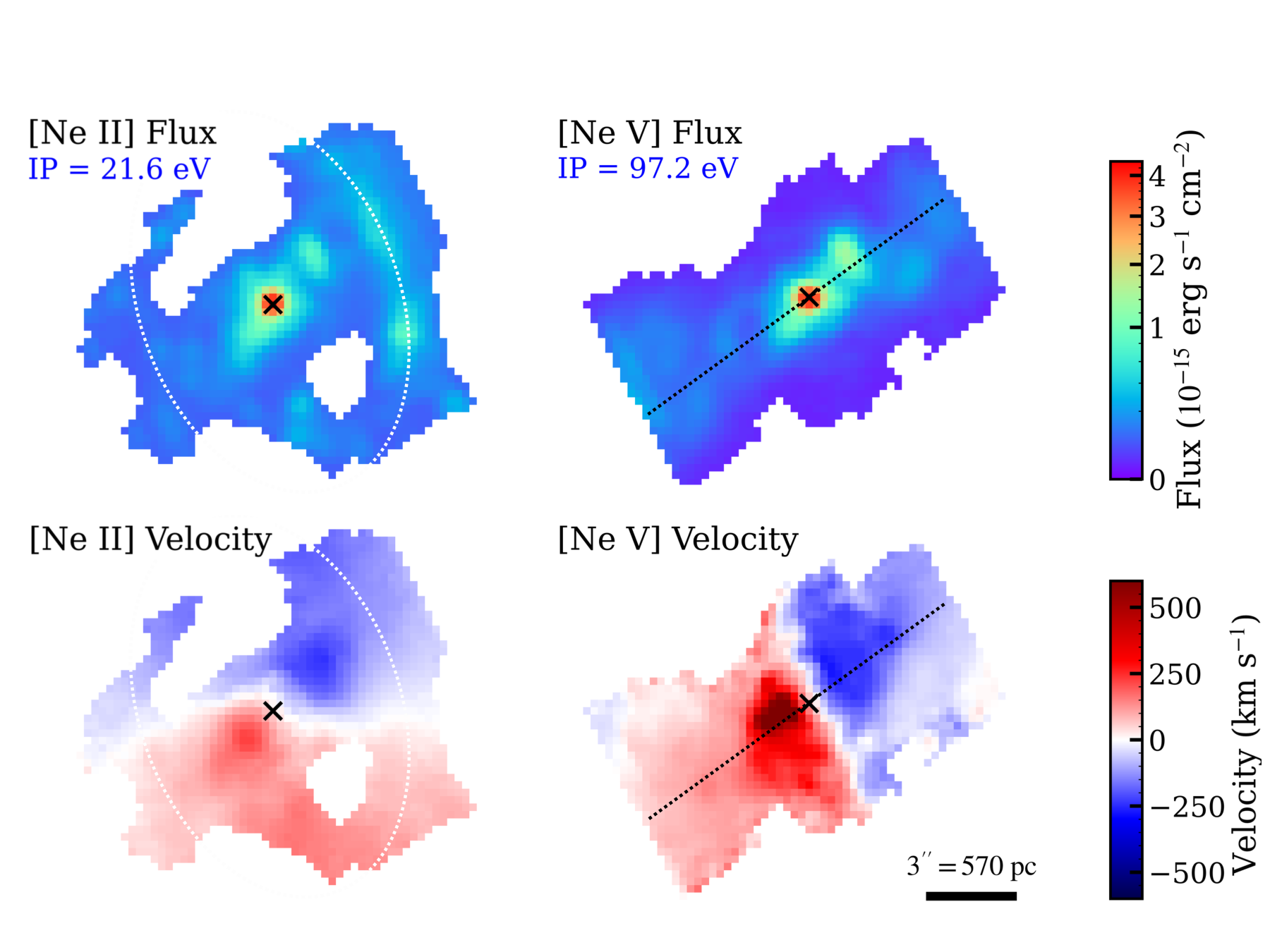
Figure 1 from Breaking the Blend: A multi-tracer kinematic decomposition method for IFS data applied to disentangling the AGN outflow and circumnuclear ring in NGC 5728 with JWST

2026-09-25 · 2609.30232v1 · Research note

Breaking the Blend: A multi-tracer kinematic decomposition method for IFS data applied to disentangling the AGN outflow and circumnuclear ring in NGC 5728 with JWST

Oscar Veenema, Niranjan Thatte, Dimitra Rigopoulou, et al.

Using JWST mid-infrared IFS of NGC 5728, the authors decompose blended circumnuclear line emission into a star-forming ring and AGN bicone. Stacking twelve tracers yields spatial flux fractions that are stable across tested weighting choices.

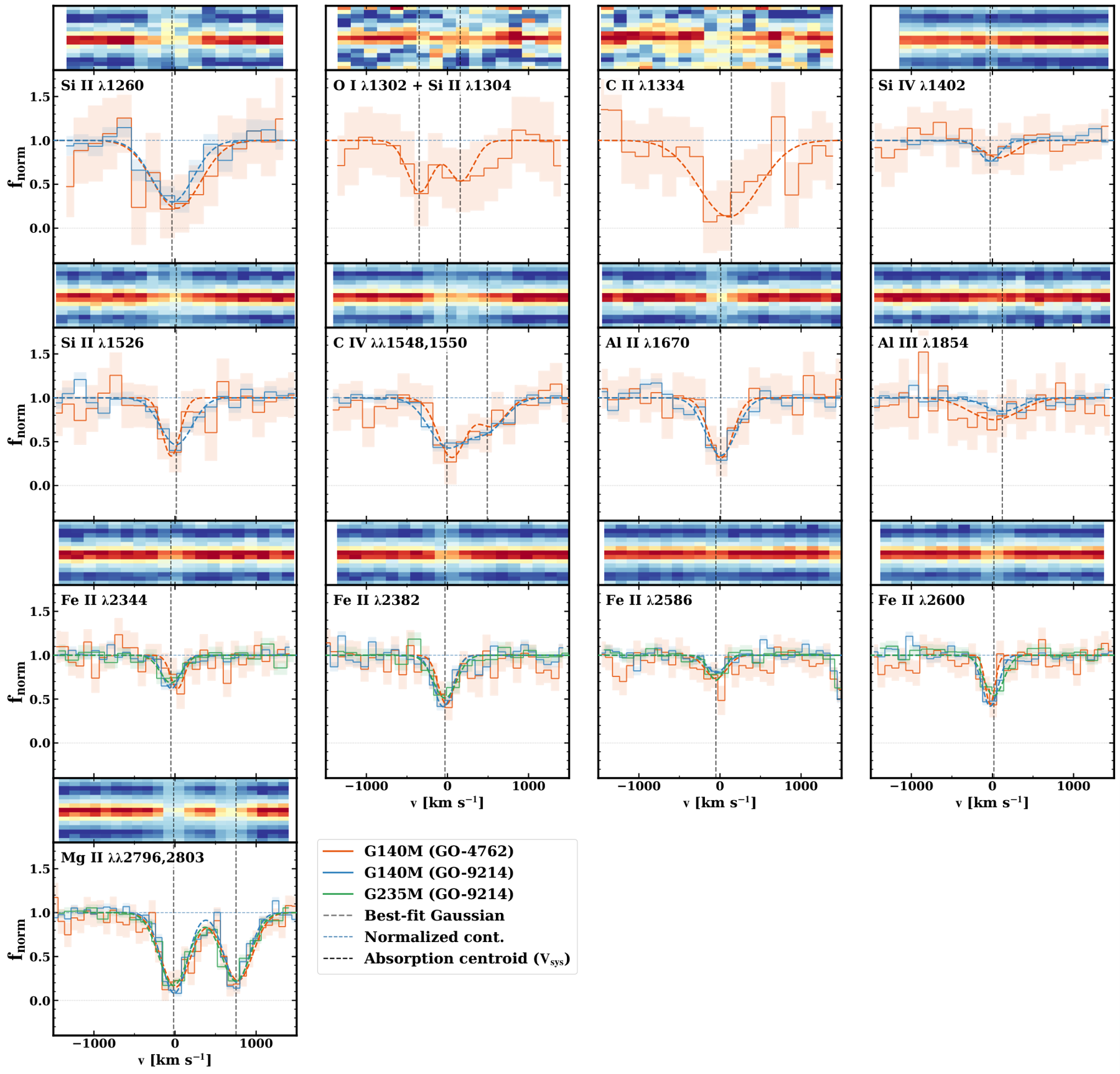
Figure 2 from A dense, metal-rich absorber driven by a heavily dust-obscured galaxy: The direct evidence of CGM enrichment at $z\sim7$

2026-09-17 · 2609.17680v1 · Research note

A dense, metal-rich absorber driven by a heavily dust-obscured galaxy: The direct evidence of CGM enrichment at $z\sim7$

Qinyue Fei, Seiji Fujimoto, Gabriel Brammer, et al.

A single z=7.03 galaxy–absorber pair links a dusty, intensely star-forming galaxy to unusually strong multiphase metal absorption at 16 kpc. Blueshifted gas is consistent with an outflow, while abundance evidence for Population III enrichment remains suggestive rather than decisive.

Figure 1 from An ALMA Band 7 survey of SDSS/Herschel quasars in Stripe 82: II. The nature of FIR-bright quasars

2026-09-16 · 2609.16951v1 · Research note

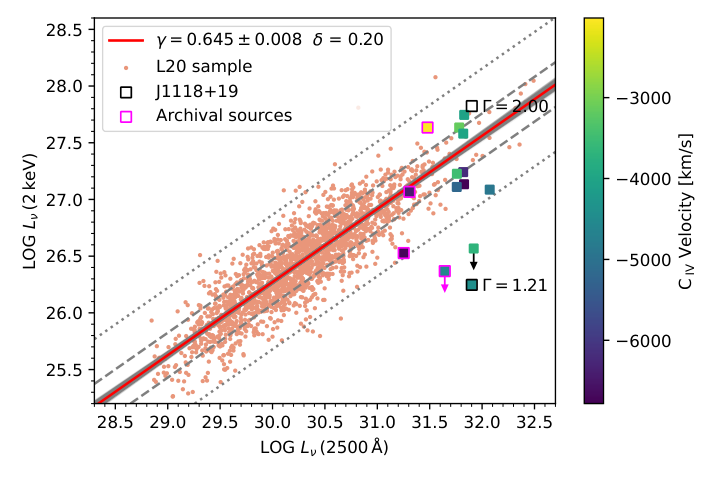
An ALMA Band 7 survey of SDSS/Herschel quasars in Stripe 82: II. The nature of FIR-bright quasars

Evanthia Hatziminaoglou, Hugo Messias, Duncan Farrah, et al.

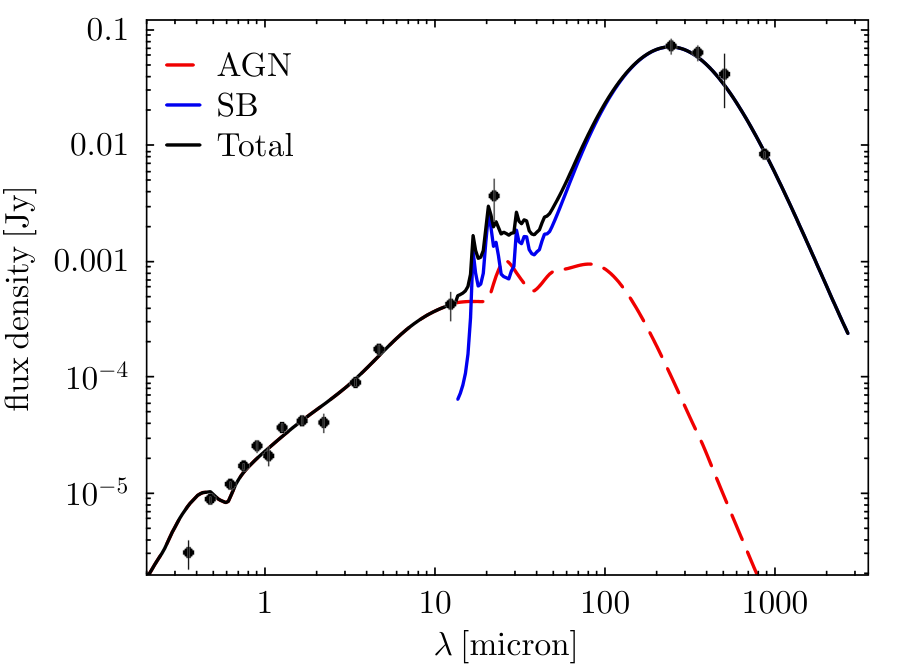
For 142 optically unobscured, FIR-bright Stripe 82 quasars at z=1–4, ALMA deblending lowers inferred host SFRs yet leaves extreme starbursts. The authors find weak instantaneous starburst–accretion coupling and UV-line differences consistent with a transitional interpretation.

2026-09-11 · 2609.11094v1 · Research note

SPURS: An Ultra-deep View Inside the Compact, Nitrogen-Enriched Nuclei of Little Red Dots

Mengtao Tang, Daniel P. Stark, Charlotte A. Mason, et al.

Ultra-deep JWST/SPURS rest-UV spectra of four UV-bright Little Red Dots find dense, nitrogen-enhanced, neutral-gas-embedded nuclei and diverse broad-line/wind signatures. The authors infer compact nuclear activity, while stellar and AGN contributions remain degenerate.

2026-09-09 · 2609.07825v1 · Research note

A Dusty Quenching-candidate AGN host at z=5.7: massive quiescent galaxies may quench already during the dust-obscured phase

Francesco D'Eugenio, Matilde Brazzini, Roberto Maiolino, et al.

RUBIES-EGS-9809 is a single, heavily obscured broad-line AGN host at z=5.7 whose resolved Balmer break and declining-SFR SED fit make it a quenching candidate, not a confirmed post-starburst. Outflow signatures make AGN feedback plausible but unproven.

Figure 1 from GATOS: Distinct Feedback Modes in AGN Central Regions Revealed by Spatially Resolved JWST Spectroscopy

2026-08-11 · 2608.08369v1 · Research note

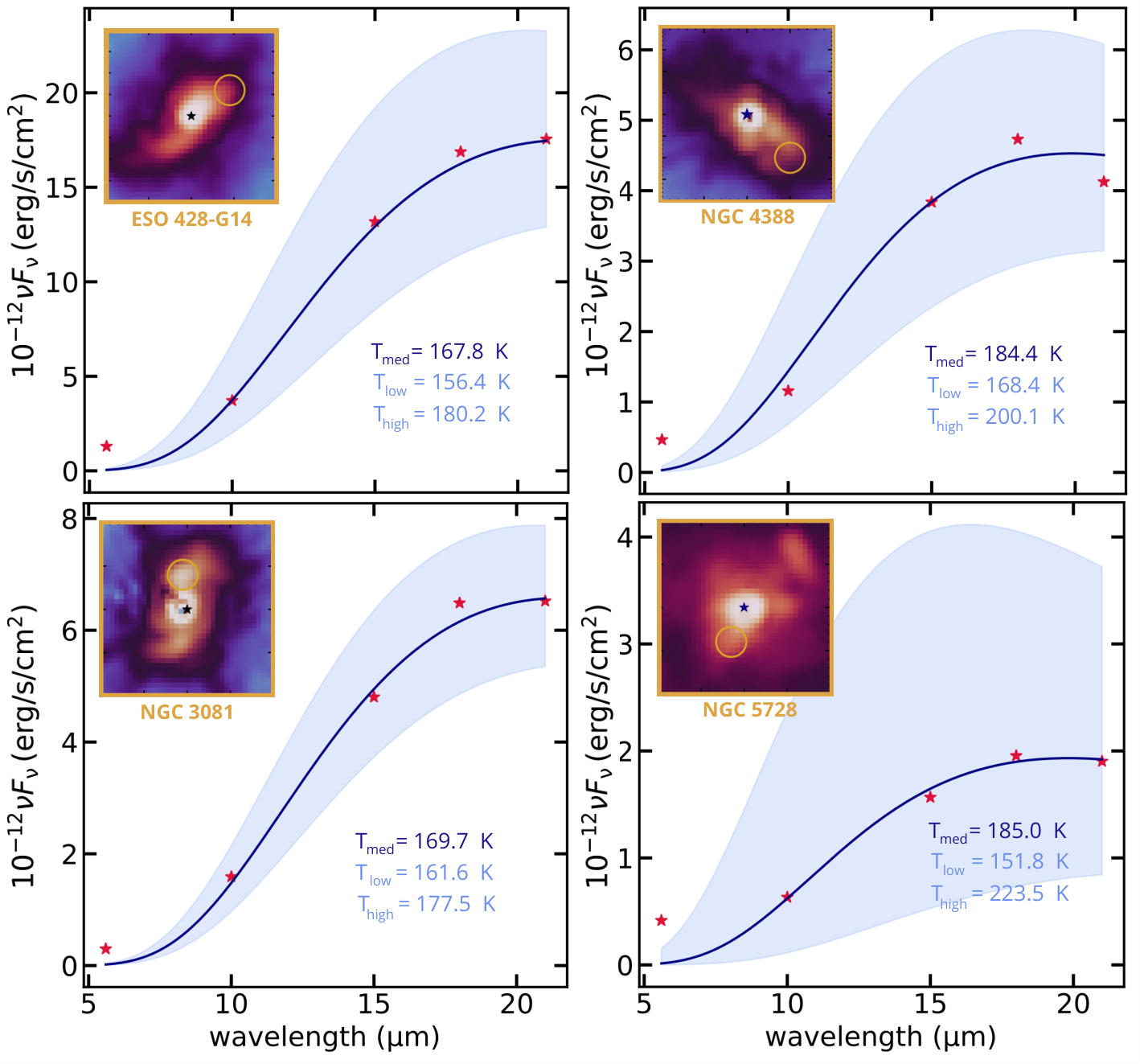
GATOS: Distinct Feedback Modes in AGN Central Regions Revealed by Spatially Resolved JWST Spectroscopy

Lulu Zhang, Chris Packham, Erin K. S. Hicks, et al.

Spatially resolved JWST/MIRI spectroscopy of five nearby AGN links contrasting PAH-ratio trends to AGN irradiation and shock-processing diagnostics. The authors interpret their coexistence as a route to nuclear PAH suppression and to divergent PAH star-formation calibrations.

Figure 2 from ATLAS. II. Extremely High Incidence of Balmer Line Absorption with Predominant Blueshifts in LRDs: Statistical Insights through Comparison with Type 1 AGNs

2026-07-30 · 2607.26269v1 · Research note

ATLAS. II. Extremely High Incidence of Balmer Line Absorption with Predominant Blueshifts in LRDs: Statistical Insights through Comparison with Type 1 AGNs

Hiroto Yanagisawa, Masami Ouchi, Tomokazu Kiyota, et al.

Among 40 JWST-selected LRDs, 14 show Hα absorption, far exceeding SDSS type-1 AGNs; the compiled absorbers are mostly blueshifted and kinematically narrower, consistent with line-of-sight outflows but not uniquely establishing their fate.

2026-07-30 · 2607.26255v1 · Research note

Tracing the Cosmic web across Cosmic time through SKA observations of radio galaxies

Pratik Dabhade, Gianluca Castignani, Mousumi Mahato, et al.

This review argues that SKA radio morphology, spectra and polarimetry, tied to redshift-resolved environmental maps, can turn radio galaxies into statistical cosmic-web probes; its quantitative examples are forecasts and pathfinder benchmarks rather than new SKA measurements.

Figure 1 from Vigorous turbulence driven by quasar-mode feedback in a cluster core

2026-07-29 · 2607.24911v1 · Research note

Vigorous turbulence driven by quasar-mode feedback in a cluster core

Satoshi Yamada, Shutaro Ueda, Hirofumi Noda, et al.

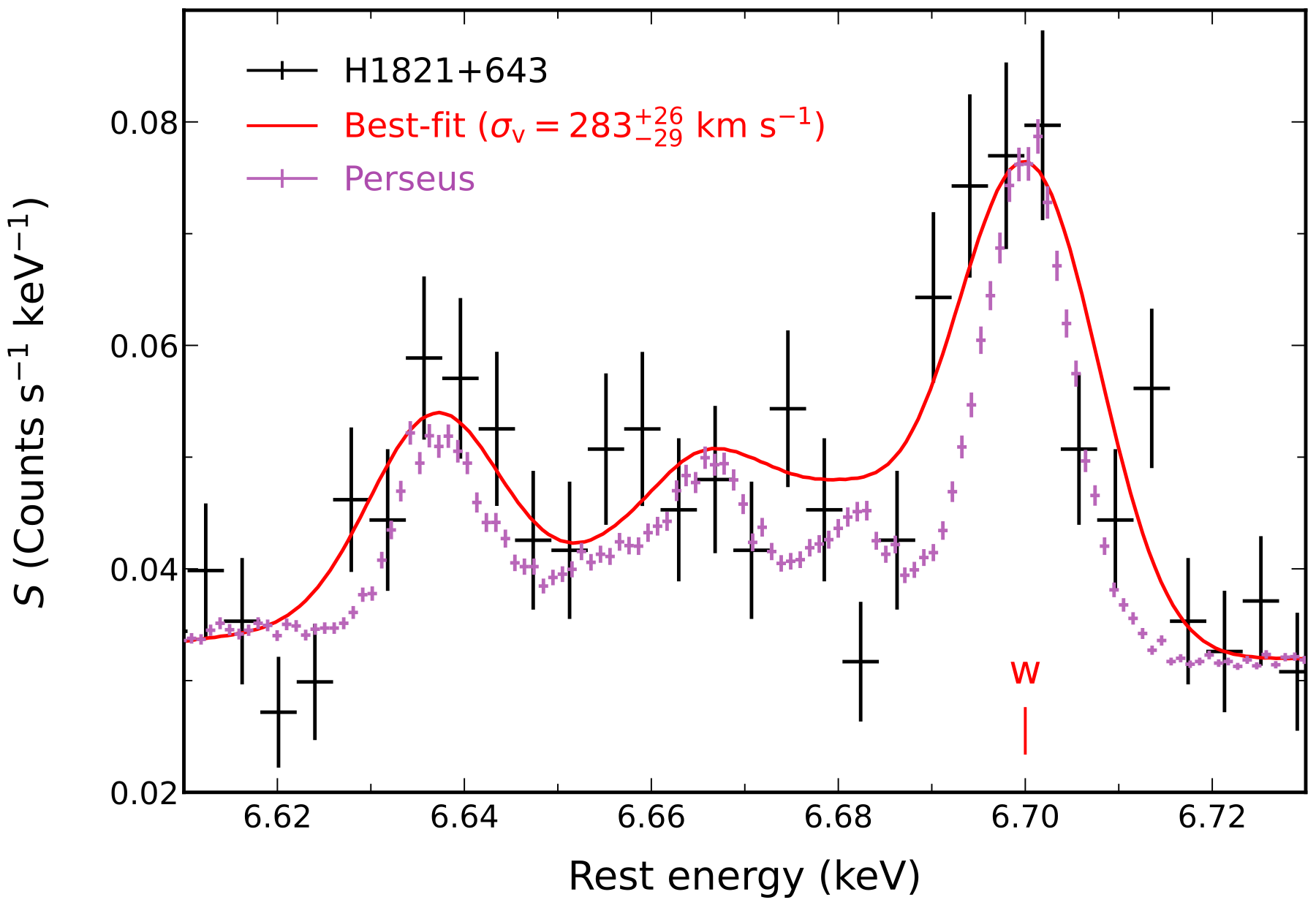
XRISM/Resolve spectroscopy of the z=0.297 quasar cluster H1821+643 measures unusually broad ICM Fe XXV lines, implying substantial non-thermal motions on 20–100 kpc scales. The authors interpret these motions as quasar-feedback coupling, but resonance scattering and sloshing remain relevant alternatives.

Figure 2 from Outflows in super-Eddington quasars drive clumpy circumgalactic medium and extended H$α$ nebulae at $z \gtrsim 6$

2026-07-27 · 2607.21719v1 · Research note

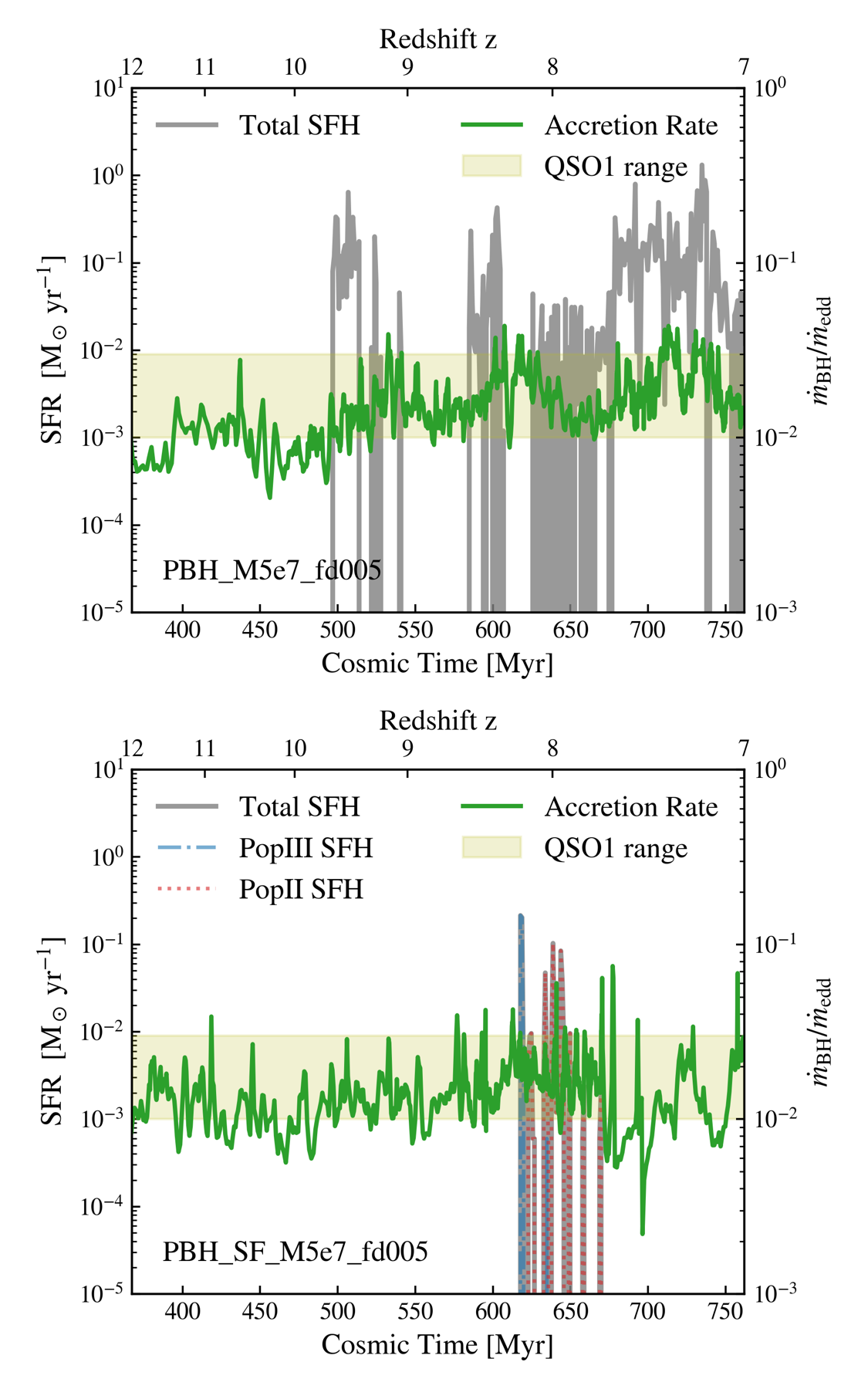
Outflows in super-Eddington quasars drive clumpy circumgalactic medium and extended H$α$ nebulae at $z \gtrsim 6$

Lucas Tortora, Tiago Costa, Debora Sijacki, et al.

In one extreme z~6 halo, simulations predict that earlier seeding plus mildly super-Eddington growth drives cold, fast, neutral CGM clumps and extended Hα after feedback clears nuclear sightlines; this is a model prediction, not a population measurement.

Figure 3 from An (in)complete NIRSpec census of Balmer absorption in Type 1 AGN -- radiation-driven outflows in little red dots, quasars and variable stars

2026-07-22 · 2607.19057v1 · Research note

An (in)complete NIRSpec census of Balmer absorption in Type 1 AGN -- radiation-driven outflows in little red dots, quasars and variable stars

Ignas Juodžbalis, Xihan Ji, Francesco D'Eugenio, et al.

Completeness-corrected JWST/NIRSpec fits indicate strong Hα absorption is common in little red dots (LRDs) but not detected in little blue dots, favoring blueshifted, likely outflowing gas while leaving rest-frame absorption substantially incomplete.

Figure 2 from Optically Thick Outflow Driven by Supercritical Accretion May Explain Little Red Dots

2026-07-21 · 2607.17448v1 · Research note

Optically Thick Outflow Driven by Supercritical Accretion May Explain Little Red Dots

Jun-Rong Liu, Hua Feng, Luis C. Ho

The authors argue that supercritical accretion can launch an optically thick LRD outflow whose red photosphere, line broadening, and Balmer-break properties are broadly compatible with observations, while its Balmer decrements remain underpredicted.

Figure 2 from First detection of ultra-fast outflows in a quiescent galaxy

2026-07-09 · 2607.06844v1 · Research note

First detection of ultra-fast outflows in a quiescent galaxy

Yerong Xu, Malgorzata Siudek, Victor Rodríguez Morales, et al.

Using X-ray spectra of the single nearby, long-quenched galaxy KUG 1208+386, the authors report a ≈0.07c nuclear ultra-fast outflow. Its ≥3σ trial-corrected line evidence makes feedback in a quiescent host plausible, but not yet a demonstrated maintenance mechanism.

Figure 3 from AGN Feedback: The impact of galactic-scale radio jets on the interstellar medium in starbursting obscured AGN

2026-07-01 · 2606.31673v1 · Research note

AGN Feedback: The impact of galactic-scale radio jets on the interstellar medium in starbursting obscured AGN

M. Polletta, C. J. Lonsdale, P. Pallavi, et al.

This is a proposed ELT/VESPER integral-field program, not a feedback detection: it will map eleven z=1.5–2.5 obscured, starbursting radio AGN to test whether spatially resolved jet–ISM associations coincide with shocks, outflows, and altered star formation.

Figure 1 from Little Red Dots as Intermediate Mass, Super-Eddington Engines: Insights from Type IIn Supernovae and The 1837-1856 Great Eruption of $η$ Carinae

2026-07-01 · 2606.30711v1 · Research note

Little Red Dots as Intermediate Mass, Super-Eddington Engines: Insights from Type IIn Supernovae and The 1837-1856 Great Eruption of $η$ Carinae

Rohan P. Naidu, Jorryt Matthee, Anna de Graaff, et al.

The authors propose that Little Red Dots are dense-wind, super-Eddington engines analogous to Type IIn supernova interaction phases, rather than virial broad-line AGN. Their escape-velocity interpretation gives a typical-engine upper limit below 10^5 solar masses.

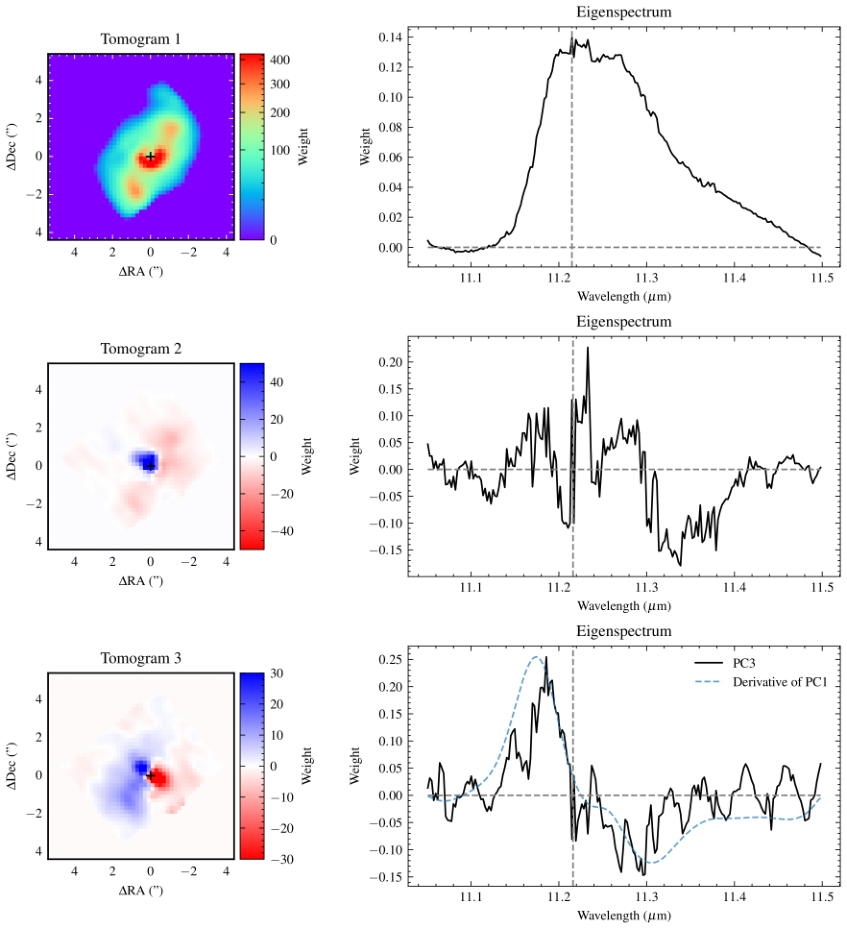
Figure 2 from Kinematic detection of dusty outflows from active galactic nuclei: Polycyclic aromatic hydrocarbon kinematics of type 2 quasars with JWST/MIRI spectroscopy

2026-06-29 · 2606.28311v1 · Research note

Kinematic detection of dusty outflows from active galactic nuclei: Polycyclic aromatic hydrocarbon kinematics of type 2 quasars with JWST/MIRI spectroscopy

Fergus R. Donnan, Cristina Ramos Almeida, Omaira González Martín, et al.

JWST/MIRI PCA tomography recovers 11.3-μm PAH velocity maps in three of five z~0.1 type-2 quasars; all three show dust-traced outflow kinematics, with molecular-gas residuals consistent with outflow after disk subtraction.

2026-06-18 · 2606.18342v1 · Research note

Compact Core, Extended Reach: A Bipolar kpc-Scale Elongation in a Little Red Dot at $z \approx 5.5$

Zhiyuan Ji, Yang Sun, Mauro Giavalisco, et al.

For the single z=5.482 Little Red Dot LRD-204851, aligned UV, optical-line, and Lyα structures indicate a narrow bipolar channel extending several kpc. Lyα transfer fitting favors slow expansion, but cannot distinguish an outflow from a quasi-static ionization cone.

2026-06-17 · 2606.17144v1 · Research note

Decoupled Kinematics and Excitation in the Compton-thick AGN NGC 6552: Spatially Resolved KOOLS-IFU Observations

Kyuseok Oh, Yoshihiro Ueda, Kanta Fujiwara, et al.

KOOLS-IFU maps of NGC 6552 find broad [O III] emission declining with radius but no significant full-sample association between local kinematics and [O III]/Hβ excitation, favoring spatial dynamical structure over a detected excitation–kinematics coupling.

2026-06-15 · 2606.13819v1 · Research note

GA-NIFS: The interplay between feedback and star formation at 3 < z < 9 probed by JWST/NIRSpec IFU

L. Ulivi, M. Perna, S. Arribas, et al.

Across six JWST/NIRSpec IFU targets at z=3–9, resolved stellar-population histories associate strong AGN-driven ionized outflows with recent nuclear quenching in the most massive systems, while starburst-driven outflows accompany continued growth in lower-mass galaxies.

Figure 5 from The Multi-phase Biconical Outflow in the local IR-Luminous Merger IRASF01364-1042

2026-06-05 · 2606.06005v1 · Research note

The Multi-phase Biconical Outflow in the local IR-Luminous Merger IRASF01364-1042

Y. Song</name> <arxiv:affiliation>European Southern Observatory, Chile</arxiv:affiliation> <arxiv:affiliation>Joint ALMA Observatory, Chile</arxiv:affiliation> <arxiv:affiliation>Max-Planck-Institut für Radioastronomie, Germany</arxiv:affiliation> </author> <author> <name>V. U</name> <arxiv:affiliation>IPAC, California Institute of Technology, USA</arxiv:affiliation> <arxiv:affiliation>University of California, Irvine, USA</arxiv:affiliation> </author> <author> <name>J. Kader</name> <arxiv:affiliation>University of California, Irvine, USA</arxiv:affiliation> </author> <author> <name>M. Bianchin</name> <arxiv:affiliation>University of California, Irvine, USA</arxiv:affiliation> <arxiv:affiliation>Instituto de Astrof\' isica de Canarias, Spain</arxiv:affiliation> <arxiv:affiliation>Universidad de La Laguna, Spain</arxiv:affiliation> </author> <author> <name>J. Agostino</name> <arxiv:affiliation>Ritter Astrophysical Research Center and Department of Physics and Astronomy, University of Toledo, USA</arxiv:affiliation> </author> <author> <name>L. Barcos-Muñoz</name> <arxiv:affiliation>National Radio Astronomy Observatory, Charlottesville, USA</arxiv:affiliation> <arxiv:affiliation>Department of Astronomy, University of Virginia, Charlottesville, USA</arxiv:affiliation> </author> <author> <name>N. Torres-Albà</name> <arxiv:affiliation>Department of Astronomy, University of Virginia, Charlottesville, USA</arxiv:affiliation> </author> <author> <name>A. Medling</name> <arxiv:affiliation>Ritter Astrophysical Research Center and Department of Physics and Astronomy, University of Toledo, USA</arxiv:affiliation> </author> <author> <name>C. Ricci</name> <arxiv:affiliation>Department of Astronomy, University of Geneva, Switzerland</arxiv:affiliation> <arxiv:affiliation>Instituto de Estudios Astrofísicos, Facultad de Ingeniería y Ciencias, Universidad Diego Portales, Chile</arxiv:affiliation> </author> <author> <name>L. Armus</name> <arxiv:affiliation>IPAC, California Institute of Technology, USA</arxiv:affiliation> </author> <author> <name>T. Lai</name> <arxiv:affiliation>IPAC, California Institute of Technology, USA</arxiv:affiliation> </author> <author> <name>L. Ghodsi</name> <arxiv:affiliation>Hiroshima Astrophysical Science Center, Hiroshima University, Japan</arxiv:affiliation> </author> <author> <name>A. Evans</name> <arxiv:affiliation>National Radio Astronomy Observatory, Charlottesville, USA</arxiv:affiliation> <arxiv:affiliation>Department of Astronomy, University of Virginia, Charlottesville, USA</arxiv:affiliation> </author> <author> <name>H. Inami</name> <arxiv:affiliation>Occidental College, Physics Department, USA</arxiv:affiliation> </author> <author> <name>S. Stierwalt</name> <arxiv:affiliation>Leiden Observatory, Leiden University, The Netherlands</arxiv:affiliation> </author> <author> <name>T. Bohn</name> <arxiv:affiliation>Occidental College, Physics Department, USA</arxiv:affiliation> </author> <author> <name>K. L. Emig</name> <arxiv:affiliation>National Radio Astronomy Observatory, Charlottesville, USA</arxiv:affiliation> </author> <author> <name>V. Buiten</name> <arxiv:affiliation>Instituto de Alta Investigación, Universidad de Tarapacá, Chile</arxiv:affiliation> </author> <author> <name>G. Donnelly</name> <arxiv:affiliation>Ritter Astrophysical Research Center and Department of Physics and Astronomy, University of Toledo, USA</arxiv:affiliation> </author> <author> <name>E. Treister</name> <arxiv:affiliation>European Space Agency, c/o STScI, USA</arxiv:affiliation> </author> <author> <name>A. Jimenez-Gallardo</name> <arxiv:affiliation>European Southern Observatory, Chile</arxiv:affiliation> </author> <author> <name>T. Böker</name> <arxiv:affiliation>Centre for Astrophysics Research, University of Hertfordshire, UK</arxiv:affiliation> </author> <author> <name>D. Kakkad</name> <arxiv:affiliation>Steward Observatory, University of Arizona, USA</arxiv:affiliation> </author> <author> <name>S. Linden</name> <arxiv:affiliation>School of Sciences, European University Cyprus, Cyprus</arxiv:affiliation> </author> <author> <name>P. van der Werf</name> <arxiv:affiliation>Instituto de Alta Investigación, Universidad de Tarapacá, Chile</arxiv:affiliation> </author> <author> <name>V. Charmandaris</name> <arxiv:affiliation>Institute of Astrophysics, Foundation for Research and Technology-Hellas</arxiv:affiliation> <arxiv:affiliation>Department of Physics, University of Crete, Greece</arxiv:affiliation> <arxiv:affiliation>Department of Astronomy, University of Florida, USA</arxiv:affiliation> </author> <author> <name>R. Remigio</name> <arxiv:affiliation>University of California, Irvine, USA</arxiv:affiliation> </author> <author> <name>L. Lenkic</name> <arxiv:affiliation>IPAC, California Institute of Technology, USA</arxiv:affiliation> </author> <author> <name>C. Finlez</name> <arxiv:affiliation>European Southern Observatory, Chile</arxiv:affiliation> <arxiv:affiliation>Joint ALMA Observatory, Chile</arxiv:affiliation> </author> <author> <name>M. Sanchez-García</name> <arxiv:affiliation>Department of Physics, University of Crete, Greece</arxiv:affiliation> <arxiv:affiliation>Department of Astronomy, University of Florida, USA</arxiv:affiliation> </author> <author> <name>C. Lofaro</name> <arxiv:affiliation>Department of Physics, University of Crete, Greece</arxiv:affiliation> <arxiv:affiliation>Department of Astronomy, University of Florida, USA</arxiv:affiliation> </author> <author> <name>A. Saravia</name> <arxiv:affiliation>National Radio Astronomy Observatory, Charlottesville, USA</arxiv:affiliation> <arxiv:affiliation>Department of Astronomy, University of Virginia, Charlottesville, USA</arxiv:affiliation> </author> <author> <name>I. Yoon</name> <arxiv:affiliation>National Radio Astronomy Observatory, Charlottesville, USA</arxiv:affiliation> </author> <author> <name>G. C. Privon</name> <arxiv:affiliation>National Radio Astronomy Observatory, Charlottesville, USA</arxiv:affiliation> <arxiv:affiliation>Department of Astronomy, University of Virginia, Charlottesville, USA</arxiv:affiliation> <arxiv:affiliation>Research School of Astronomy and Astrophysics, Australian National University, Australia</arxiv:affiliation> </author> <author> <name>T. Gao</name> <arxiv:affiliation>ARC Centre of Excellence for All Sky Astrophysics in 3 Dimensions</arxiv:affiliation> <arxiv:affiliation>W. M. Keck Observatory, USA</arxiv:affiliation> </author> <author> <name>H. Aziz</name> <arxiv:affiliation>University of California, Irvine, USA</arxiv:affiliation> </author> <author> <name>R. McGurk</name> <arxiv:affiliation>Institute for Astronomy, University of Hawaii, USA</arxiv:affiliation> </author> <author> <name>T. Díaz-Santos</name> <arxiv:affiliation>Department of Physics, University of Crete, Greece</arxiv:affiliation> <arxiv:affiliation>Department of Astronomy, University of Florida, USA</arxiv:affiliation> </author> <author> <name>D. Kunneriath</name> <arxiv:affiliation>National Radio Astronomy Observatory, Charlottesville, USA</arxiv:affiliation> </author> <author> <name>David B. Sanders

Spatially resolved JWST, ALMA and KCWI data support a multiphase, minor-axis biconical outflow in the dusty local merger IRAS F01364-1042. The authors infer faster ionized than molecular gas and argue a nuclear starburst can energetically drive it despite an obscured AGN.

Figure 3 from OCEANS of Absorption: High-resolution NIRSpec Spectroscopy Reveals Diverse Balmer-line Absorption in Little Red Dots

2026-06-02 · 2606.00258v1 · Research note

OCEANS of Absorption: High-resolution NIRSpec Spectroscopy Reveals Diverse Balmer-line Absorption in Little Red Dots

Kelcey Davis, Madisyn Brooks, Raymond C. Simons, et al.

High-resolution JWST/NIRSpec spectra of 10 compact, color-selected LRDs at 3<z<7 recover Balmer absorption in four. The authors argue resolution exposes frequent, diverse excited-hydrogen absorption, but the small, selected sample limits population-level inferences.

2026-05-20 · 2605.21574v1 · Research note

(LRDs)$^2$: The Low-ReDshift Little Red Dots Survey. II. DESI DR1 Sample

Xiaojing Lin, Xiaohui Fan, Zheng Cai, et al.

A DESI DR1 selection identifies 27 candidate low-redshift LRDs at z=0.2–0.9; near-IR spectra of 18 show broad, highly decremented Balmer lines and unusual continua, supporting—but not independently proving—continuity with high-redshift LRD phenomenology.

Figure 4 from Resolving the Multiphase Outflow, Shock Signatures, and PAHs in the AGN-Starburst Composite ULIRG F10565+2448 with JWST MIRI/MRS

2026-05-04 · 2605.03016v1 · Research note

Resolving the Multiphase Outflow, Shock Signatures, and PAHs in the AGN-Starburst Composite ULIRG F10565+2448 with JWST MIRI/MRS

Kylie Yui Dan, Jerome Seebeck, Sylvain Veilleux, et al.

JWST/MIRI-MRS resolves a warm-H₂ outflow in the composite ULIRG F10565+2448: it is hotter than the disk but apparently sub-escape-speed, while a faster unresolved ionized component and localized shock candidates support multiphase feedback.

2026-05-04 · 2605.02663v1 · Research note

Jet-driven shocks and turbulence in radio-loud Active Galactic Nuclei observed with JWST MIRI/MRS

Rogemar A. Riffel, Gabriel L. Souza-Oliveira, Luis Colina, et al.

JWST/MIRI-MRS mapping of seven nearby radio-loud AGN links elevated warm-H2 excitation and broadened multiphase gas to radio-jet environments, including transverse regions. The authors interpret the correlations as predominantly jet-driven shocks, while recognizing source-dependent exceptions.

Figure 5 from Decoupling the AGN outflow and star-forming disk kinematics in the nuclear region of NGC 7582 with JWST NIRSpec and MIRI/MRS

2026-04-27 · 2604.24892v1 · Research note

Decoupling the AGN outflow and star-forming disk kinematics in the nuclear region of NGC 7582 with JWST NIRSpec and MIRI/MRS

Oscar Veenema, Niranjan Thatte, Dimitra Rigopoulou, et al.

JWST IFU spectroscopy of NGC 7582 separates rotating circumnuclear-disk gas from an AGN bicone by ionisation potential and line-profile decomposition, finding distinct kinematic axes and broader outflow lines; mixed-ionisation tracers require two components.

Figure 1 from GLIMPSED: Direct evidence for a fast AGN-driven outflow from a z=6.64 Little Red Dot host galaxy

2026-04-09 · 2604.08687v1 · Research note

GLIMPSED: Direct evidence for a fast AGN-driven outflow from a z=6.64 Little Red Dot host galaxy

Damien Korber, Rui Marques-Chaves, Daniel Schaerer, et al.

Medium-resolution JWST/NIRSpec data spatially separate an LRD-like AGN and its host at z=6.64, revealing exceptionally broad ionised gas consistent with AGN driving but a low inferred mass-loading factor and therefore limited immediate star-formation impact.

Figure 1 from A Black Hole Star at Cosmic Noon: Extreme Balmer break, photospheric continuum, and broad absorption by thick winds in a Little Red Dot at z=1.7

2026-03-30 · 2603.28335v1 · Research note

A Black Hole Star at Cosmic Noon: Extreme Balmer break, photospheric continuum, and broad absorption by thick winds in a Little Red Dot at z=1.7

Alberto Torralba, Jorryt Matthee, Andrea Weibel, et al.

PAN-BH*-1 is a single z=1.731 Little Red Dot at cosmic noon with an extreme Balmer break, compact red continuum, and broad Hα absorption. Its data are consistent with—but do not establish—a thick, rotating photospheric disk wind.

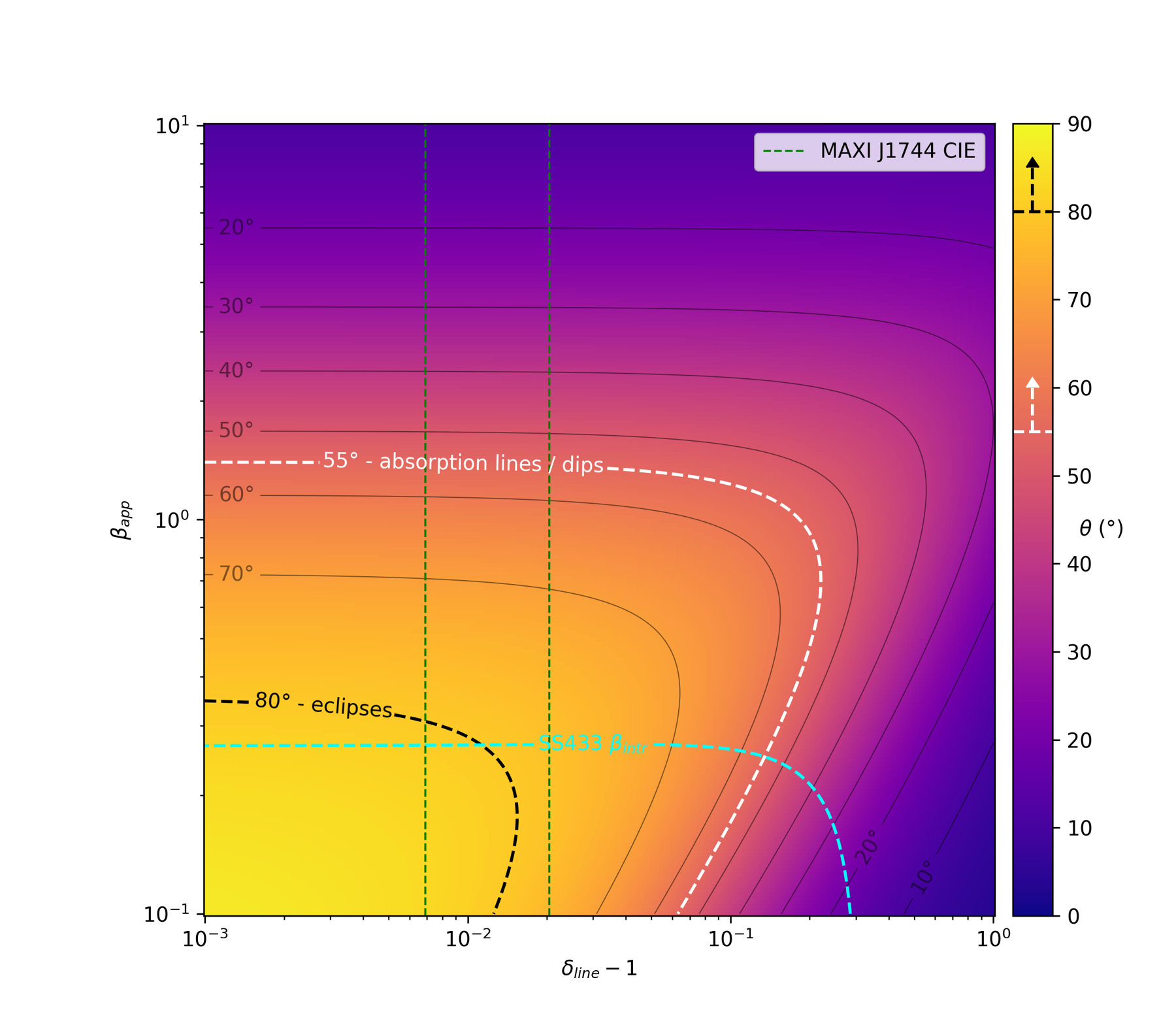
Figure 13 from XRISM spectroscopy of a crowded Galactic center region -- II. Narrow emission lines in the Black Hole candidate MAXI J1744-294/Swift J174540.2-290037

2026-03-28 · 2603.27235v1 · Research note

XRISM spectroscopy of a crowded Galactic center region -- II. Narrow emission lines in the Black Hole candidate MAXI J1744-294/Swift J174540.2-290037

Maxime Parra, Shifra Mandel, Kai Matsunaga, et al.

XRISM Resolve spectroscopy of the crowded Galactic-centre field isolates narrow iron-line emission attributed to the black-hole candidate MAXI J1744-294, including static highly ionized gas and atypical features consistent with blueshifted material, though plasma origin and background systematics remain unresolved.

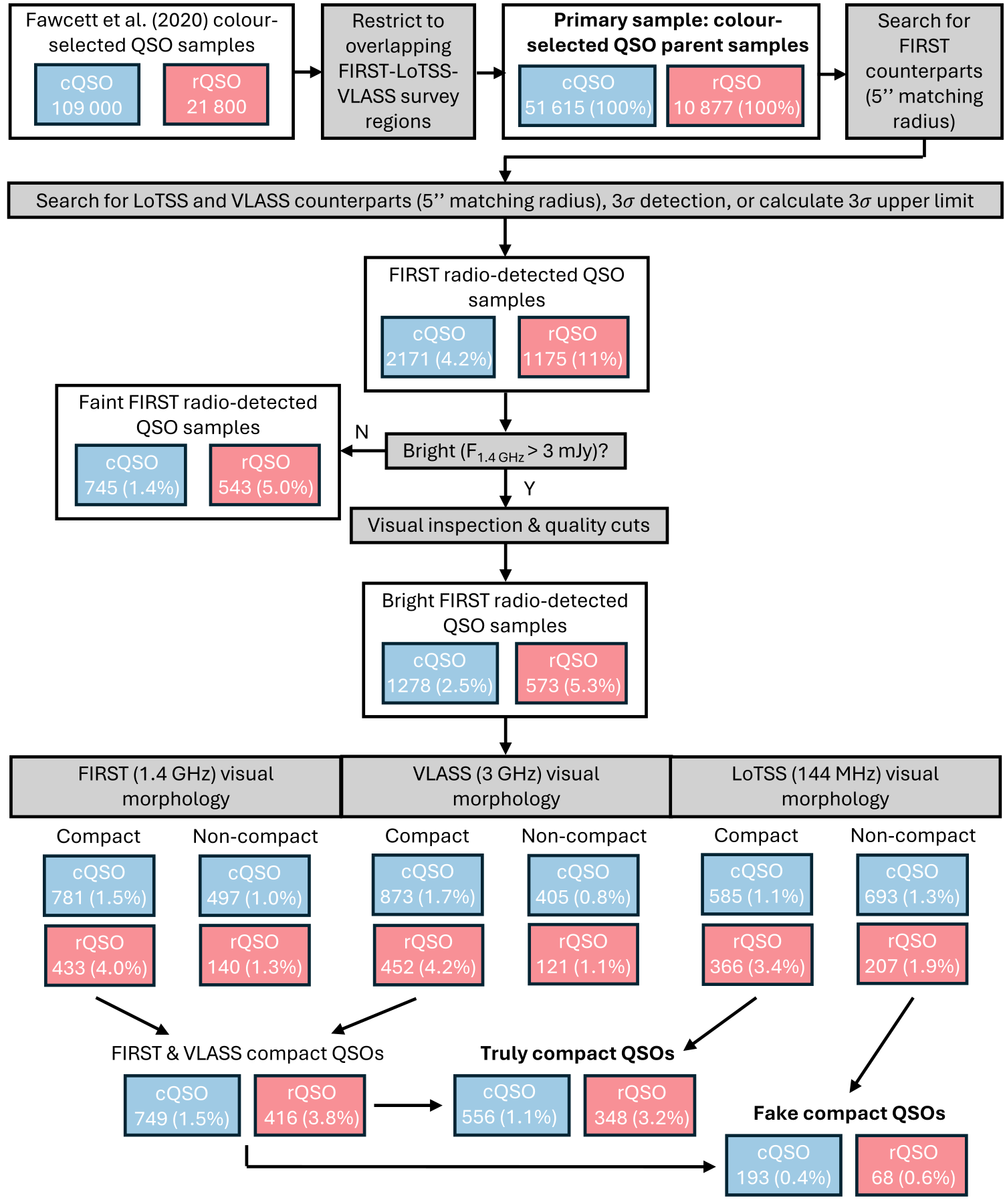
Figure 2 from A striking excess of red quasars with steep radio spectral slopes: a dusty blow-out phase revealed through AGN-driven shocks?

2026-03-25 · 2603.24739v1 · Research note

A striking excess of red quasars with steep radio spectral slopes: a dusty blow-out phase revealed through AGN-driven shocks?

Ciera L. Sargent, David M. Alexander, Claire L. Greenwell, et al.

Across SDSS quasars at 0.2<z<2.4, compact red quasars show an excess near α1.4–3 GHz≈−1 that strengthens with dust extinction. The authors interpret this as wind/jet–ISM shocks during a dusty blow-out phase, but radio spectra alone do not establish that mechanism.

2026-03-18 · 2603.17667v1 · Research note

The Engine and its Flows: Little Red Dot spectra are shaped by the column densities of their gas envelopes

Jorryt Matthee, Alberto Torralba, Gabriele Pezzulli, et al.

In 18 z≈3–7 broad-Hα emitters, Balmer cores progress from narrow emission to P-Cygni-like and absorption-dominated profiles as UV–optical colour reddens. The authors interpret this as changing envelope column density and optical depth, not purely dynamical line broadening.

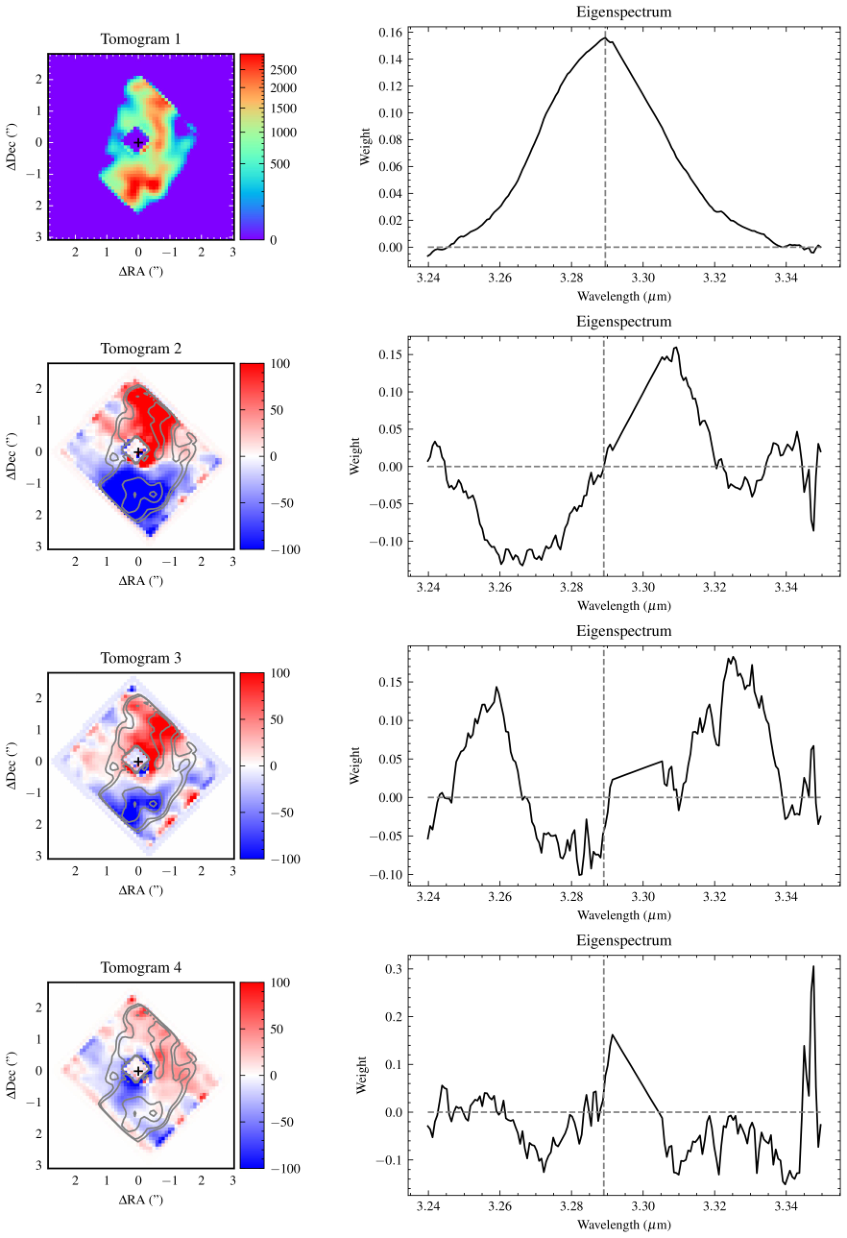
Figure 1 from GATOS N: The first direct kinematic evidence of dusty outflows from AGN via PAH kinematics of local Seyfert galaxies with JWST

2026-03-12 · 2603.12200v1 · Research note

GATOS N: The first direct kinematic evidence of dusty outflows from AGN via PAH kinematics of local Seyfert galaxies with JWST

Fergus R. Donnan, Ismael García-Bernete, Dimitra Rigopoulou, et al.

JWST IFU observations of 10 local Seyferts use PCA tomography of broad PAH bands to map dust-phase kinematics. The authors report neutral, larger PAHs sharing molecular and ionised-outflow signatures in NGC 5728 and NGC 7582, while 3.3 μm PAHs trace disks.

2026-01-13 · 2601.08212v1 · Research note

Diverse Origins of Broad H$α$ Lines in Heavily Obscured AGNs Revealed by Multi-epoch Spectroscopy

Shoichiro Mizukoshi, Takeo Minezaki, Subaru Ubukata, et al.

Five-epoch spectroscopy of three AGNs with A_V>50 mag finds broad-Hα behavior is not uniform: Mrk 268 varies at 4.3σ, consistent with direct BLR emission, whereas MCG -3-34-64 and UGC 5101 favor outflow and/or scattering contributions.

2026-01-12 · 2601.07990v1 · Research note

Evidence of Feedback Effects in Low-luminosity Active Galactic Nuclei Revealed by JWST Spectroscopy

Lulu Zhang, Chris Packham, Erin K. S. Hicks, et al.

JWST 3–28 μm nuclear spectroscopy of four low-luminosity AGN associates weak high-ionization emission, shock-like line ratios, altered PAH populations, and non-thermal H₂ excitation with feedback, while leaving the proposed jet connection indirect.

2026-01-09 · 2601.06255v1 · Research note

GA-NIFS: high prevalence of dusty and metal-enriched outflows in massive and luminous star-forming galaxies at $z\sim3-9$

B. Rodríguez Del Pino, S. Arribas, M. Perna, et al.

JWST/NIRSpec IFU data identify ionized-outflow signatures in 14 of 40 regions of massive, non-AGN star-forming systems at z≈3–9. The authors infer dusty, metal-enriched but gravitationally retained gas, implying redistribution rather than efficient ejective feedback.

Figure 4 from GATOS XI : Excess dust heating in the Narrow Line Regions of nearby AGN revealed with JWST/MIRI

2026-01-06 · 2601.02865v1 · Research note

GATOS XI : Excess dust heating in the Narrow Line Regions of nearby AGN revealed with JWST/MIRI

Houda Haidar, David J. Rosario, Ismael García-Bernete, et al.

JWST/MIRI imaging of eight nearby Seyferts finds resolved 100–200 pc NLR dust in four. Its warm, steep mid-IR SEDs exceed simple AGN-heating predictions; the authors therefore favor local shock heating, while treating shocks as an interpretation rather than a direct calorimetric detection.

Figure 1 from Shedding the envelope: JWST reveals a kiloparsec-scale [OIII]-weak Balmer shell around a z=7.64 quasar

2025-12-17 · 2512.15881v1 · Research note

Shedding the envelope: JWST reveals a kiloparsec-scale [OIII]-weak Balmer shell around a z=7.64 quasar

Julien Wolf, Eduardo Bañados, Xiaohui Fan, et al.

JWST/NIRSpec IFU data reveal Hβ emission to ~1.8 kpc around the z=7.64 quasar J0313−1806 but no significant [O III]. The authors favor dense, clumpy fossil-outflow gas, while the single-object data leave its geometry and evolutionary interpretation uncertain.

Figure 9 from Probing AGN Feedback in Dwarf Galaxies with Spatially Resolved NIR Coronal Lines from JWST

2025-12-04 · 2512.05041v1 · Research note

Probing AGN Feedback in Dwarf Galaxies with Spatially Resolved NIR Coronal Lines from JWST

Archana Aravindan, Thomas Bohn, Gabriela Canalizo, et al.

JWST/NIRSpec IFU maps of four dwarf AGN with [O III] outflows find extended, predominantly AGN-photoionized near-IR coronal emission and compact broad components. The results link coronal-line visibility to outflows, but small-sample correlations do not establish causation.

2025-12-01 · 2512.02093v1 · Research note

COSMOS-3D: Dense Circumnuclear Gas across Black Hole Growth Phases at z ~ 3

Zi-Jian Li, Siwei Zou, Jianwei Lyu, et al.

Two z~3 X-ray AGNs with He I λ10830 absorption indicate dense, broad-line-region-scale circumnuclear gas, but their contrasting obscuration, accretion rates, and outflow signatures provide only a two-object, model-dependent case for an evolutionary sequence.

2025-11-12 · 2511.09278v1 · Research note

Little red dots as embryos of active galactic nuclei

Jian-Min Wang, Yi-Lin Wang, Yong-Jie Chen, et al.

This abstract-only paper proposes that little red dots are nascent AGN systems containing sub-million-solar-mass central black holes plus a more massive embedded stellar-mass-black-hole population, attributing their V-shaped SEDs and Balmer absorption to distinct, model-dependent components.

Figure 2 from A JWST/NIRSpec Integral Field Unit Survey of Luminous Quasars at z ~ 5-6 (Q-IFU): Rest-frame Optical Nuclear Properties and Extended Nebulae

2025-11-08 · 2511.06085v1 · Research note

A JWST/NIRSpec Integral Field Unit Survey of Luminous Quasars at z ~ 5-6 (Q-IFU): Rest-frame Optical Nuclear Properties and Extended Nebulae

Weizhe Liu, Xiaohui Fan, Huan Li, et al.

JWST/NIRSpec IFU observations of 27 luminous z≈5–6 quasars find ≈10^9 M⊙ actively accreting black holes and extended [O III] in six systems; nuclear optical properties broadly resemble lower-redshift quasars, while shallow data limit environmental inferences.

2025-10-30 · 2510.26990v1 · Research note

Faint active galactic nuclei supplied 31-75% of hydrogen-ionizing photons at z>5

Mainak Singha, Sangeeta Malhotra, James Ely Rhoads

A joint luminosity-function and escape-fraction model attributes 31–75% of z>5 ionizing photons to AGN, but the result depends on assumed galaxy escape fractions and an outflow-based AGN LyC-escape prescription available here only in the abstract.

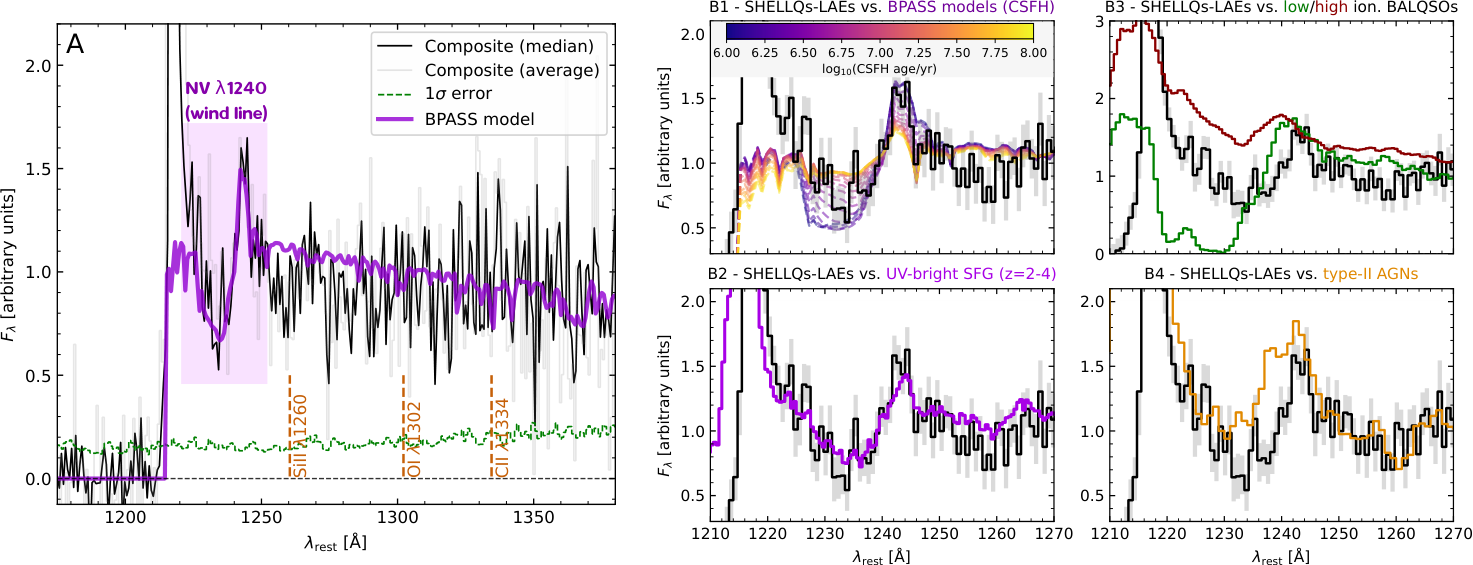
Figure 2 from SHELLQs-JWST: Revealing the Spectra of Extended Emission in 12 z > 6 Quasar Host Galaxies using the JWST NIRSpec Fixed Slit

2025-10-25 · 2510.22403v1 · Research note

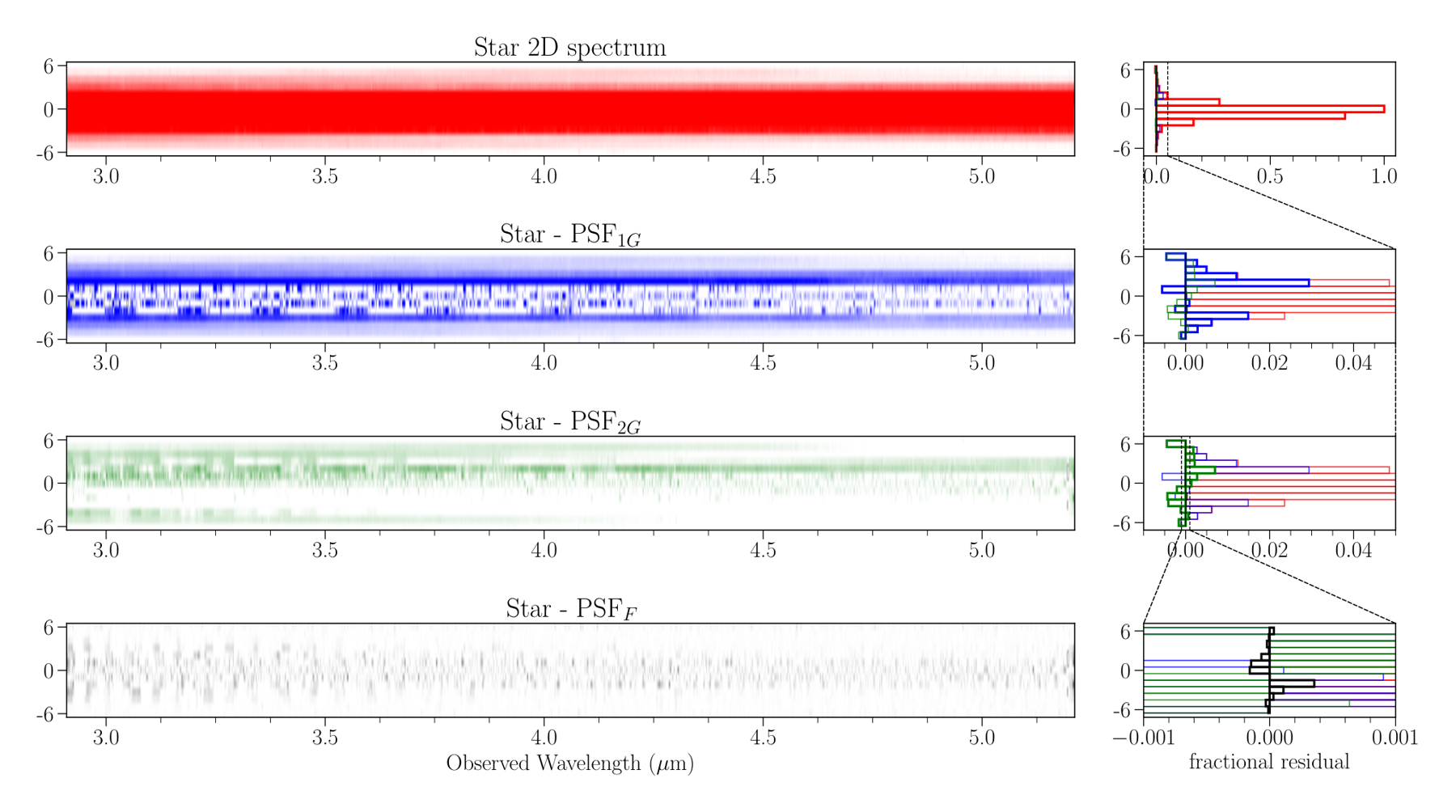
SHELLQs-JWST: Revealing the Spectra of Extended Emission in 12 z > 6 Quasar Host Galaxies using the JWST NIRSpec Fixed Slit

Camryn L. Phillips, Michael A. Strauss, Masafusa Onoue, et al.

In twelve z=6.0–6.4 low-luminosity SHELLQs quasars, wavelength-dependent PSF subtraction isolates extended host emission. The authors report mostly main-sequence-consistent Hα upper-limit SFRs, one [O III] outflow, and one disk-like rotation, while narrow-line-region contamination complicates interpretation.

Figure 2 from Extremely UV-bright starbursts at the end of cosmic reionization

2025-10-14 · 2510.12411v1 · Research note

Extremely UV-bright starbursts at the end of cosmic reionization

R. Marques-Chaves, D. Schaerer, M. Dessauges-Zavadsky, et al.

A 27-object z~6 SHELLQs sample is interpreted as very young, ionizing starbursts; JWST/ALMA observations of J0217-0208 link its exceptional UV brightness to compact star formation and a dusty ionized outflow, though the proposed causal link remains model-dependent.

Figure 1 from A z ~ 0.4 Galaxy Reflecting the high-redshift Little Red Dots: An Extended Starburst with an Overmassive Black Hole

2025-10-03 · 2510.02801v1 · Research note

A z ~ 0.4 Galaxy Reflecting the high-redshift Little Red Dots: An Extended Starburst with an Overmassive Black Hole

Xiaoyang Chen, Kohei Ichikawa, Masayuki Akiyama, et al.

Gemini/GMOS IFU plus archival SED data identify J2048 at z=0.4330 as an LRD-like AGN with spatially extended young-starburst and ionized-outflow signatures; the authors infer a ~400 M⊙ yr⁻¹ SFR and an unusually high inferred black-hole-to-stellar-mass ratio.

2025-10-02 · 2510.02517v1 · Research note

Impact of AGN and nuclear star formation on the ISM turbulence of galaxies: Insights from JWST/MIRI spectroscopy

Rogemar A. Riffel, Luis Colina, José Henrique Costa-Souza, et al.

JWST/MIRI mapping of 54 nearby galaxies finds broader ionized than warm-H2 lines in AGN, especially radio-strong systems; line-ratio/model comparisons associate the most turbulent gas with shocks, while the authors cautiously propose AGN or stellar-feedback origins.

Figure 7 from The warm outer layer of a Little Red Dot as the source of [Fe II] and collisional Balmer lines with scattering wings

2025-09-30 · 2510.00103v1 · Research note

The warm outer layer of a Little Red Dot as the source of [Fe II] and collisional Balmer lines with scattering wings

Alberto Torralba, Jorryt Matthee, Gabriele Pezzulli, et al.

Deep JWST spectra of the single z=5.535 LRD GN-9771 reveal optical [Fe II] and unusual Balmer profiles consistent with a dense, ∼7000 K radiative-transfer layer; if scattering dominates the wings, standard virial black-hole masses may be biased high.

2025-09-29 · 2509.25483v1 · Research note

Shocked, Heated, and Now Resolved: H$_2$ excitation in the low-luminosity AGN at M58 core with JWST

I. E. López, E. Bertola, V. Reynaldi, et al.

JWST spectroscopy of M58’s central kiloparsec resolves warm H₂ in dust lanes and a turbulent inner region; the authors infer predominantly low-velocity C-type shocks, with lower-density non-thermal excitation affecting rovibrational lines near the LLAGN.

2025-09-18 · 2509.14555v1

Stratified wind from a super-Eddington X-ray binary is slower than expected

XRISM collaboration, Marc Audard</name> <arxiv:affiliation>Durham-CEA, UK</arxiv:affiliation> </author> <author> <name>Hisamitsu Awaki</name> <arxiv:affiliation>Durham-CEA, UK</arxiv:affiliation> </author> <author> <name>Ralf Ballhausen</name> <arxiv:affiliation>Durham-CEA, UK</arxiv:affiliation> </author> <author> <name>Aya Bamba</name> <arxiv:affiliation>Durham-CEA, UK</arxiv:affiliation> </author> <author> <name>Ehud Behar</name> <arxiv:affiliation>Durham-CEA, UK</arxiv:affiliation> </author> <author> <name>Rozenn Boissay-Malaquin</name> <arxiv:affiliation>Durham-CEA, UK</arxiv:affiliation> </author> <author> <name>Laura Brenneman</name> <arxiv:affiliation>Durham-CEA, UK</arxiv:affiliation> </author> <author> <name>Gregory V. Brown</name> <arxiv:affiliation>Durham-CEA, UK</arxiv:affiliation> </author> <author> <name>Lia Corrales</name> <arxiv:affiliation>Durham-CEA, UK</arxiv:affiliation> </author> <author> <name>Elisa Costantini</name> <arxiv:affiliation>Durham-CEA, UK</arxiv:affiliation> </author> <author> <name>Renata Cumbee</name> <arxiv:affiliation>Durham-CEA, UK</arxiv:affiliation> </author> <author> <name>Maria Diaz Trigo</name> <arxiv:affiliation>Durham-CEA, UK</arxiv:affiliation> </author> <author> <name>Chris Done</name> <arxiv:affiliation>Durham-CEA, UK</arxiv:affiliation> </author> <author> <name>Tadayasu Dotani</name> <arxiv:affiliation>Fukuoka, Japan</arxiv:affiliation> </author> <author> <name>Ken Ebisawa</name> <arxiv:affiliation>Fukuoka, Japan</arxiv:affiliation> </author> <author> <name>Megan Eckart</name> <arxiv:affiliation>Fukuoka, Japan</arxiv:affiliation> </author> <author> <name>Dominique Eckert</name> <arxiv:affiliation>Fukuoka, Japan</arxiv:affiliation> </author> <author> <name>Teruaki Enoto</name> <arxiv:affiliation>Fukuoka, Japan</arxiv:affiliation> </author> <author> <name>Satoshi Eguchi</name> <arxiv:affiliation>Fukuoka, Japan</arxiv:affiliation> </author> <author> <name>Yuichiro Ezoe</name> <arxiv:affiliation>Fukuoka, Japan</arxiv:affiliation> </author> <author> <name>Adam Foster</name> <arxiv:affiliation>Fukuoka, Japan</arxiv:affiliation> </author> <author> <name>Ryuichi Fujimoto</name> <arxiv:affiliation>Fukuoka, Japan</arxiv:affiliation> </author> <author> <name>Yutaka Fujita</name> <arxiv:affiliation>Fukuoka, Japan</arxiv:affiliation> </author> <author> <name>Yasushi Fukazawa</name> <arxiv:affiliation>Fukuoka, Japan</arxiv:affiliation> </author> <author> <name>Kotaro Fukushima</name> <arxiv:affiliation>Fukuoka, Japan</arxiv:affiliation> </author> <author> <name>Akihiro Furuzawa</name> <arxiv:affiliation>Fukuoka, Japan</arxiv:affiliation> </author> <author> <name>Luigi Gallo</name> <arxiv:affiliation>Fukuoka, Japan</arxiv:affiliation> </author> <author> <name>Javier A. Garcia</name> <arxiv:affiliation>Fukuoka, Japan</arxiv:affiliation> </author> <author> <name>Liyi Gu</name> <arxiv:affiliation>Fukuoka, Japan</arxiv:affiliation> </author> <author> <name>Matteo Guainazzi</name> <arxiv:affiliation>Fukuoka, Japan</arxiv:affiliation> </author> <author> <name>Kouichi Hagino</name> <arxiv:affiliation>Fukuoka, Japan</arxiv:affiliation> </author> <author> <name>Kenji Hamaguchi</name> <arxiv:affiliation>Fukuoka, Japan</arxiv:affiliation> </author> <author> <name>Isamu Hatsukade</name> <arxiv:affiliation>Fukuoka, Japan</arxiv:affiliation> </author> <author> <name>Katsuhiro Hayashi</name> <arxiv:affiliation>Fukuoka, Japan</arxiv:affiliation> </author> <author> <name>Takayuki Hayashi</name> <arxiv:affiliation>Fukuoka, Japan</arxiv:affiliation> </author> <author> <name>Natalie Hell</name> <arxiv:affiliation>Fukuoka, Japan</arxiv:affiliation> </author> <author> <name>Edmund Hodges-Kluck</name> <arxiv:affiliation>Fukuoka, Japan</arxiv:affiliation> </author> <author> <name>Ann Hornschemeier</name> <arxiv:affiliation>Fukuoka, Japan</arxiv:affiliation> </author> <author> <name>Yuto Ichinohe</name> <arxiv:affiliation>Fukuoka, Japan</arxiv:affiliation> </author> <author> <name>Manabu Ishida</name> <arxiv:affiliation>Fukuoka, Japan</arxiv:affiliation> </author> <author> <name>Kumi Ishikawa</name> <arxiv:affiliation>Fukuoka, Japan</arxiv:affiliation> </author> <author> <name>Yoshitaka Ishisaki</name> <arxiv:affiliation>Fukuoka, Japan</arxiv:affiliation> </author> <author> <name>Jelle Kaastra</name> <arxiv:affiliation>Fukuoka, Japan</arxiv:affiliation> </author> <author> <name>Timothy Kallman</name> <arxiv:affiliation>Fukuoka, Japan</arxiv:affiliation> </author> <author> <name>Erin Kara</name> <arxiv:affiliation>Fukuoka, Japan</arxiv:affiliation> </author> <author> <name>Satoru Katsuda</name> <arxiv:affiliation>Fukuoka, Japan</arxiv:affiliation> </author> <author> <name>Yoshiaki Kanemaru</name> <arxiv:affiliation>Fukuoka, Japan</arxiv:affiliation> </author> <author> <name>Richard Kelley</name> <arxiv:affiliation>Fukuoka, Japan</arxiv:affiliation> </author> <author> <name>Caroline Kilbourne</name> <arxiv:affiliation>Fukuoka, Japan</arxiv:affiliation> </author> <author> <name>Shunji Kitamoto</name> <arxiv:affiliation>Fukuoka, Japan</arxiv:affiliation> </author> <author> <name>Shogo Kobayashi</name> <arxiv:affiliation>Fukuoka, Japan</arxiv:affiliation> </author> <author> <name>Takayoshi Kohmura</name> <arxiv:affiliation>Fukuoka, Japan</arxiv:affiliation> </author> <author> <name>Aya Kubota</name> <arxiv:affiliation>Fukuoka, Japan</arxiv:affiliation> </author> <author> <name>Maurice Leutenegger</name> <arxiv:affiliation>Fukuoka, Japan</arxiv:affiliation> </author> <author> <name>Michael Loewenstein</name> <arxiv:affiliation>Fukuoka, Japan</arxiv:affiliation> </author> <author> <name>Yoshitomo Maeda</name> <arxiv:affiliation>Fukuoka, Japan</arxiv:affiliation> </author> <author> <name>Maxim Markevitch</name> <arxiv:affiliation>Fukuoka, Japan</arxiv:affiliation> </author> <author> <name>Hironori Matsumoto</name> <arxiv:affiliation>Fukuoka, Japan</arxiv:affiliation> </author> <author> <name>Kyoko Matsushita</name> <arxiv:affiliation>Fukuoka, Japan</arxiv:affiliation> </author> <author> <name>Dan McCammon</name> <arxiv:affiliation>Fukuoka, Japan</arxiv:affiliation> </author> <author> <name>Brian McNamara</name> <arxiv:affiliation>Fukuoka, Japan</arxiv:affiliation> </author> <author> <name>Francois Mernier</name> <arxiv:affiliation>Fukuoka, Japan</arxiv:affiliation> </author> <author> <name>Eric D. Miller</name> <arxiv:affiliation>Fukuoka, Japan</arxiv:affiliation> </author> <author> <name>Jon M. Miller</name> <arxiv:affiliation>Fukuoka, Japan</arxiv:affiliation> </author> <author> <name>Ikuyuki Mitsuishi</name> <arxiv:affiliation>Fukuoka, Japan</arxiv:affiliation> </author> <author> <name>Misaki Mizumoto</name> <arxiv:affiliation>Fukuoka, Japan</arxiv:affiliation> </author> <author> <name>Tsunefumi Mizuno</name> <arxiv:affiliation>Villanova, USA</arxiv:affiliation> </author> <author> <name>Koji Mori</name> <arxiv:affiliation>Villanova, USA</arxiv:affiliation> </author> <author> <name>Koji Mukai</name> <arxiv:affiliation>Villanova, USA</arxiv:affiliation> </author> <author> <name>Hiroshi Murakami</name> <arxiv:affiliation>Villanova, USA</arxiv:affiliation> </author> <author> <name>Richard Mushotzky</name> <arxiv:affiliation>Villanova, USA</arxiv:affiliation> </author> <author> <name>Hiroshi Nakajima</name> <arxiv:affiliation>Villanova, USA</arxiv:affiliation> </author> <author> <name>Kazuhiro Nakazawa</name> <arxiv:affiliation>Villanova, USA</arxiv:affiliation> </author> <author> <name>Jan-Uwe Ness</name> <arxiv:affiliation>Villanova, USA</arxiv:affiliation> </author> <author> <name>Kumiko Nobukawa</name> <arxiv:affiliation>Villanova, USA</arxiv:affiliation> </author> <author> <name>Masayoshi Nobukawa</name> <arxiv:affiliation>Villanova, USA</arxiv:affiliation> </author> <author> <name>Hirofumi Noda</name> <arxiv:affiliation>Villanova, USA</arxiv:affiliation> </author> <author> <name>Hirokazu Odaka</name> <arxiv:affiliation>Villanova, USA</arxiv:affiliation> </author> <author> <name>Shoji Ogawa</name> <arxiv:affiliation>Villanova, USA</arxiv:affiliation> </author> <author> <name>Anna Ogorzalek</name> <arxiv:affiliation>Villanova, USA</arxiv:affiliation> </author> <author> <name>Takashi Okajima</name> <arxiv:affiliation>Villanova, USA</arxiv:affiliation> </author> <author> <name>Naomi Ota</name> <arxiv:affiliation>Villanova, USA</arxiv:affiliation> </author> <author> <name>Stephane Paltani</name> <arxiv:affiliation>Villanova, USA</arxiv:affiliation> </author> <author> <name>Robert Petre</name> <arxiv:affiliation>Villanova, USA</arxiv:affiliation> </author> <author> <name>Paul Plucinsky</name> <arxiv:affiliation>Villanova, USA</arxiv:affiliation> </author> <author> <name>Frederick Scott Porter</name> <arxiv:affiliation>Villanova, USA</arxiv:affiliation> </author> <author> <name>Katja Pottschmidt</name> <arxiv:affiliation>Villanova, USA</arxiv:affiliation> </author> <author> <name>Kosuke Sato</name> <arxiv:affiliation>Villanova, USA</arxiv:affiliation> </author> <author> <name>Toshiki Sato</name> <arxiv:affiliation>Villanova, USA</arxiv:affiliation> </author> <author> <name>Makoto Sawada</name> <arxiv:affiliation>Villanova, USA</arxiv:affiliation> </author> <author> <name>Hiromi Seta</name> <arxiv:affiliation>Villanova, USA</arxiv:affiliation> </author> <author> <name>Megumi Shidatsu</name> <arxiv:affiliation>Villanova, USA</arxiv:affiliation> </author> <author> <name>Aurora Simionescu</name> <arxiv:affiliation>Villanova, USA</arxiv:affiliation> </author> <author> <name>Randall Smith</name> <arxiv:affiliation>Villanova, USA</arxiv:affiliation> </author> <author> <name>Hiromasa Suzuki</name> <arxiv:affiliation>Villanova, USA</arxiv:affiliation> </author> <author> <name>Andrew Szymkowiak</name> <arxiv:affiliation>Villanova, USA</arxiv:affiliation> </author> <author> <name>Hiromitsu Takahashi</name> <arxiv:affiliation>Villanova, USA</arxiv:affiliation> </author> <author> <name>Mai Takeo</name> <arxiv:affiliation>Villanova, USA</arxiv:affiliation> </author> <author> <name>Toru Tamagawa</name> <arxiv:affiliation>Villanova, USA</arxiv:affiliation> </author> <author> <name>Keisuke Tamura</name> <arxiv:affiliation>Villanova, USA</arxiv:affiliation> </author> <author> <name>Takaaki Tanaka</name> <arxiv:affiliation>Villanova, USA</arxiv:affiliation> </author> <author> <name>Atsushi Tanimoto</name> <arxiv:affiliation>Villanova, USA</arxiv:affiliation> </author> <author> <name>Makoto Tashiro</name> <arxiv:affiliation>Villanova, USA</arxiv:affiliation> </author> <author> <name>Yukikatsu Terada</name> <arxiv:affiliation>Villanova, USA</arxiv:affiliation> </author> <author> <name>Yuichi Terashima</name> <arxiv:affiliation>Villanova, USA</arxiv:affiliation> </author> <author> <name>Yohko Tsuboi</name> <arxiv:affiliation>Villanova, USA</arxiv:affiliation> </author> <author> <name>Masahiro Tsujimoto</name> <arxiv:affiliation>Villanova, USA</arxiv:affiliation> </author> <author> <name>Hiroshi Tsunemi</name> <arxiv:affiliation>Villanova, USA</arxiv:affiliation> </author> <author> <name>Takeshi G. Tsuru</name> <arxiv:affiliation>Villanova, USA</arxiv:affiliation> </author> <author> <name>Aysegul Tumer</name> <arxiv:affiliation>Villanova, USA</arxiv:affiliation> </author> <author> <name>Hiroyuki Uchida</name> <arxiv:affiliation>Villanova, USA</arxiv:affiliation> </author> <author> <name>Nagomi Uchida</name> <arxiv:affiliation>Villanova, USA</arxiv:affiliation> </author> <author> <name>Yuusuke Uchida</name> <arxiv:affiliation>Villanova, USA</arxiv:affiliation> </author> <author> <name>Hideki Uchiyama</name> <arxiv:affiliation>Villanova, USA</arxiv:affiliation> </author> <author> <name>Yoshihiro Ueda</name> <arxiv:affiliation>Villanova, USA</arxiv:affiliation> </author> <author> <name>Shinichiro Uno</name> <arxiv:affiliation>Villanova, USA</arxiv:affiliation> </author> <author> <name>Jacco Vink</name> <arxiv:affiliation>Villanova, USA</arxiv:affiliation> </author> <author> <name>Shin Watanabe</name> <arxiv:affiliation>Villanova, USA</arxiv:affiliation> </author> <author> <name>Brian J. Williams</name> <arxiv:affiliation>Villanova, USA</arxiv:affiliation> </author> <author> <name>Satoshi Yamada</name> <arxiv:affiliation>Villanova, USA</arxiv:affiliation> </author> <author> <name>Shinya Yamada</name> <arxiv:affiliation>Villanova, USA</arxiv:affiliation> </author> <author> <name>Hiroya Yamaguchi</name> <arxiv:affiliation>Villanova, USA</arxiv:affiliation> </author> <author> <name>Kazutaka Yamaoka</name> <arxiv:affiliation>Villanova, USA</arxiv:affiliation> </author> <author> <name>Noriko Yamasaki</name> <arxiv:affiliation>Villanova, USA</arxiv:affiliation> </author> <author> <name>Makoto Yamauchi</name> <arxiv:affiliation>Villanova, USA</arxiv:affiliation> </author> <author> <name>Shigeo Yamauchi</name> <arxiv:affiliation>Villanova, USA</arxiv:affiliation> </author> <author> <name>Tahir Yaqoob</name> <arxiv:affiliation>Villanova, USA</arxiv:affiliation> </author> <author> <name>Tomokage Yoneyama</name> <arxiv:affiliation>Villanova, USA</arxiv:affiliation> </author> <author> <name>Tessei Yoshida</name> <arxiv:affiliation>Villanova, USA</arxiv:affiliation> </author> <author> <name>Mihoko Yukita</name> <arxiv:affiliation>Villanova, USA</arxiv:affiliation> </author> <author> <name>Irina Zhuravleva</name> <arxiv:affiliation>Villanova, USA</arxiv:affiliation> </author> <author> <name>Joey Neilsen</name> <arxiv:affiliation>Villanova, USA</arxiv:affiliation> </author> <author> <name>Ryota Tomaru</name> <arxiv:affiliation>Osaka, Japan</arxiv:affiliation> </author> <author> <name>Missagh Mehdipour

XRISM/Resolve’s 2024-02-25 spectrum of the neutron-star binary GX 13+1 reveals a stratified, highly ionised, Compton-thick wind via dozens of narrow, slightly blueshifted lines from Si–Ni, including high-order Fe XXV/XXVI features above 7 keV. Photoionisation fits require a slow, very dense absorber plus a faster (~700 km/s), more ionised layer to reproduce the Fe XXVI Ly blue wing and residual core flux from wind reprocessing. After correcting for electron-scattering attenuation, the intrinsic luminosity is at or above Eddington, yet the outflow is extremely slow, favouring a thermal‑radiative outer-disc origin over an inner-disc radiation‑pressure (Eddington) wind. The contrast with ultrafast (~0.3c) SMBH winds at similar Eddington ratios points to fundamentally different launch mechanisms across mass scales.
2025-09-12 · 2509.10638v1

Radiation GRMHD Models of Accretion onto Stellar-Mass Black Holes: II. Super-Eddington Accretion

Lizhong Zhang, James M. Stone, Christopher J. White, et al.

A radiation–GRMHD suite with angle-discretized transport follows super‑Eddington inflow across accretion rates, spins a*≈0.3–0.94, and single/double‑loop fields, finding robust, radiation‑pressure supported thick disks. Inner‑disk radiation drives powerful outflows that carve conical funnels, trap photons, and keep radiative efficiencies low while thermal transport is dominated by advection. Angular momentum is carried mainly by Maxwell stress; jets occur in weak and strong modes, with strong jets (net vertical flux + high spin) evacuating the funnel and enabling geometrically beamed escape, whereas weak jets leave the funnel clogged and dimmer—implications for ULXs and little red dots. Spiral density waves appear in the plunging region, adding structure to the inner flow.