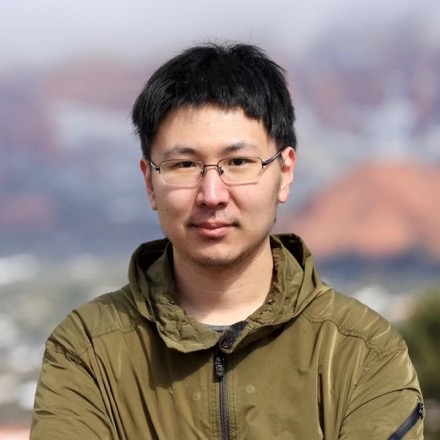
I received my Ph.D. from the University of Arizona in 2023 (advisor: Prof. Eiichi Egami), and spent the next three years as a postdoc: first continuing at the University of Arizona with Prof. Marcia Rieke (2023–2024), and then at Harvard University with Prof. Daniel Eisenstein (2024–2026). In September 2026, I came back to China and joined the young Westlake University in the historic and scenic city of Hangzhou.
Postdocs — the SAFE fellowship and up to two positions in my group. Applications due December 31, 2026 (AAS job ad).
Students — we welcome prospective or short-term visiting students interested in our research (Westlake PhD Program).
I have a variety of technical interests to maximize the capability of existing observational facilities (especially JWST/NIRCam WFSS) to chart the unexplored scientific domains and innovative parameter spaces, specifically in extragalactic astronomy and the high-redshift Universe. I am (co)-leading 11 approved JWST programs since Cycle-2 (2023) as PIs and co-PIs, totaling more than 900 telescope hours, and I contribute to a further 48 programs as a co-investigator. Through the combination of both calibration and scientific observations, I wish to demonstrate the new technical feasibilities and new scientific opportunities to support the research from the broader community of observational astronomy.
JWSTWFSSLensingALMA / radioTime-domain
Such technical interests have driven my scientific research in a wide range of directions, and my refereed publications cover the areas from Milky Way star-forming regions (NASA news blog) to the cosmic redshift frontier (ESA news blog). My main research focuses on the spectroscopic census of star-forming galaxies around the Epoch of Reionization, which requires multiple techniques including space-telescope imaging, slit and slitless spectroscopy, radio interferometry, and sometimes the cosmic magnifiers (gravitational lensing). My interests span a variety of phenomena and physics, including but not limited to active galactic nuclei (AGN), chemical abundance, circumgalactic medium (CGM), cosmic reionization, cosmic star formation, dust, galaxy evolution, galaxy kinematics, gravitational lensing and microlensing, interstellar medium (ISM), large-scale structures, quasars, quenching, stellar population, submillimeter galaxies, supernovae and transients (in alphabetic order).
Early galaxiesReionizationLRDs & AGNsDusty galaxiesTransients
I am more than happy to talk with you to discuss new scientific explorations that can capitalize on our technologies and data.